
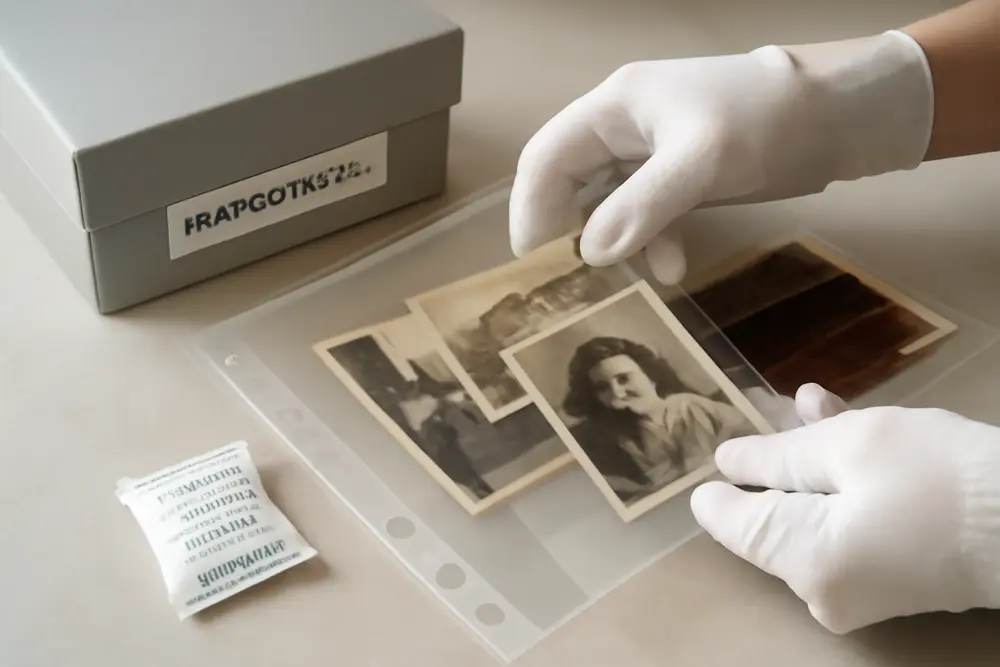
Your great-grandpa’s wedding photo and that box of film negatives are basically a buffet for mold. Gelatin emulsions, paper fibers, and cozy boxes create a five-star spa for spores. Once mold etches an image, it’s not just “patina” – it’s permanent damage. Here’s how to outsmart mold with a storage setup that keeps your photos and film breathing, dry, and out of the danger zone. We’ll hit ideal temp and RH, enclosures that don’t trap moisture, smart desiccant use, how to monitor, what to do if things get damp, and when to call a conservator who can save the day without making things worse.
Set The Storage Climate
Mold loves humidity more than your cousin loves free pizza. Keep relative humidity under 50% and as steady as you can. Targets that work for photograph preservation and film negative preservation are 40-50% RH in living spaces and storage rooms, with temperatures around 55-70 F. Howard Environmental recommends 30-50% RH to slow mold in enclosed storage, and 40-50% is a sweet spot for photos because adhesives and some films dislike air that’s too dry. Big swings are the real villain, so avoid garages, attics, basements, and exterior wall closets that yo-yo with the seasons (Howard Environmental).
For long-term film negative preservation, especially color or acetate-based film, colder storage is standard in archives. If you have the resources, consider cold or frozen storage for long-term stability using archival enclosures designed for it, with proper acclimation routines to prevent condensation (National Archives).
| Material | RH Target | Temp Target | Notes |
|---|---|---|---|
| Prints & Albums | 40-50% | 60-70 F | Stable beats perfect. Avoid exterior walls and floors. |
| Slides & B&W Negatives | 40-50% | 55-70 F | Cool, stable rooms or a safe-style cabinet with RH control. |
| Color & Acetate Negatives | 30-50% | Cold storage if possible | Colder extends life. Watch for vinegar odor or warping. |
Keep boxes off concrete, leave a few inches from walls, and allow gentle airflow around storage furniture. A small room dehumidifier paired with a hygrometer is the real MVP here (Howard Environmental).
Pick Enclosures That Breathe
The right enclosure protects from dust, handling, and light. The wrong one traps moisture like a steamy shower. Choose sleeves, folders, and boxes that are acid-free and lignin-free. Look for materials that have passed the Photographic Activity Test, often listed as PAT, so you know they won’t chemically attack your images (Library of Congress).
For prints, buffered paper enclosures are usually fine, but color prints and certain historic processes can prefer unbuffered. For film, choose inert plastics like uncoated polyester, polyethylene, or polypropylene. Skip PVC anything, no rubber bands, and no pressure-sensitive adhesives or “magnetic” albums. Plastic sleeves are great in a controlled room, but in a damp area they can lock in condensation against the emulsion. If your storage runs humid, paper envelopes inside an archival box are safer while you work on RH control (Library of Congress).
For fragile formats like acetate or nitrate film, or glass plates, use supportive enclosures sized correctly. If you’re seeing edge channelling, bubbling, or that sharp vinegar smell from acetate, stop and read the section on calling a conservator (National Archives).
Desiccants And Monitoring
Silica gel is your quiet bodyguard. In any closed or semi-closed container, add indicating silica gel packs so you can see when they’re spent. As a rule of thumb, use one 10-20 gram pack per 5-10 gallons of enclosed space, and distribute several smaller packs across layers instead of one chunky brick at the bottom. Regenerate packs per the manufacturer’s directions when the indicator changes color. Toss a humidity indicator card in the box for quick checks (Howard Environmental).
Use a reliable hygrometer where you store the collection. In sticky climates, check weekly during summer and monthly otherwise. In milder regions, seasonal checks are fine. You want to catch RH creeping past 50-60%, any musty odor, or condensation on container walls. If a safe or cabinet runs a tad humid, desiccant plus a small dehumidifier nearby can fix it (Howard Environmental).
Damp Or Wet? Do This Fast
Clock’s ticking. You have 24-48 hours before mold throws a party. First, triage: color materials are priority one, then black-and-white prints, then film negatives unless your negatives are acetate and already warping or smell vinegary. Handle by edges. Never rub surfaces or peel stuck layers. If there’s debris, a clean, cool water rinse can be safe for some modern prints and films, but if you are unsure, skip it and move straight to drying (NEDCC).
Air-dry flat on clean screens, racks, or unprinted paper. Keep photos and negatives single-layer with gentle air movement from a fan across the room, not blowing directly. No heat, no hairdryers, no ovens. If items are stuck together, do not force them apart.
If you cannot dry completely within a day or two, freeze to stop mold and buy time. Slip items into clean zip bags with interleaving sheets if you can, expel extra air, and freeze. Freezing stabilizes damp materials so a conservator or a better drying setup can finish the job later. It halts deterioration, but it does not dry them (NEDCC).
Ongoing Care That Actually Works
Check storage a few times a year for haze, fuzzy spots, or that gym-sock aroma. Wipe shelves, keep dust down, and use HEPA filtration if your space is dusty. Do not pack boxes to the gills. Labels face up, nothing slumps. Keep items off the floor and a few inches from exterior walls. Limit light exposure and unnecessary handling. If you do handle negatives a lot, clean dry hands are usually fine, but nitrile gloves can help for oily fingerprints. Retire any album with sticky pages or crumbling adhesives.
When To Call A Conservator
Phone a professional photo conservator if you see mold woven into the emulsion, not just a light surface bloom. If film smells like vinegar, is buckling, shrinking, or weeping, that’s cellulose acetate decay and it needs expert treatment and likely cold storage. Cracked or lifting emulsions on glass plates are fragile and risky to handle. If items were soaked, covered in silt, or if the emotional or historical value is high, do not experiment. A conservator can stabilize, clean, rehouse, and help you plan digitization. Start with the National Archives film guidance and the Library of Congress care page, and find qualified help via the American Institute for Conservation’s directory. References: National Archives, Library of Congress.
Quick Supplies Checklist
- Archival boxes and envelopes that are acid-free and lignin-free, PAT-passed
- Polyester, polyethylene, or polypropylene sleeves sized for prints, slides, and negatives
- Indicating silica gel packs and humidity indicator cards
- Digital hygrometer for the storage room or cabinet
- Clean drying screens or racks for emergencies
- Soft, non-abrasive interleaving sheets
- Zip freezer bags for temporary freeze-stabilization
FAQ
Should I Use A Dehumidifier In The Photo Room?
Yes, if your RH runs over 50%. Pair it with a hygrometer and set a target around 45%. Keep doors closed during humid months and maintain gentle airflow around storage.
Are Plastic Sleeves Safe For Long-Term Storage?
Yes, if they’re uncoated polyester, polyethylene, or polypropylene and your RH is controlled. In damp spaces, paper enclosures inside an archival box are safer so moisture does not condense inside a sleeve. Look for PAT-passed materials (Library of Congress).
Can I Sun-Dry Wet Photos On The Porch?
No. Sun warps and bakes emulsions and accelerates fading. Use indoor air-drying with indirect airflow. If you cannot dry quickly, package and freeze until proper drying is possible (NEDCC).
Is Rice A Good Substitute For Silica Gel?
No. Rice is weak as a desiccant and can shed dust and starch. Use indicating silica gel sized for your container and regenerate it when saturated (Howard Environmental).
What RH Is Too Dry For Photos And Film?
Below roughly 30% RH, some adhesives, rubbers, and film coatings can embrittle or crack. Aim for a steady 40-50% RH for most home collections (Howard Environmental).
Can I Wipe Mold Off With Alcohol Or Bleach?
Please don’t. Liquids can set stains, dissolve binders, and smear images. If you suspect active mold, isolate the item, lower RH to under 45%, and call a photograph conservator for treatment options.
Bottom line: stable 40-50% RH, cool temps, breathable archival enclosures, smart desiccants, and regular monitoring will outsmart mold before it starts. Photograph preservation and film negative preservation are all about control, not heroics.