
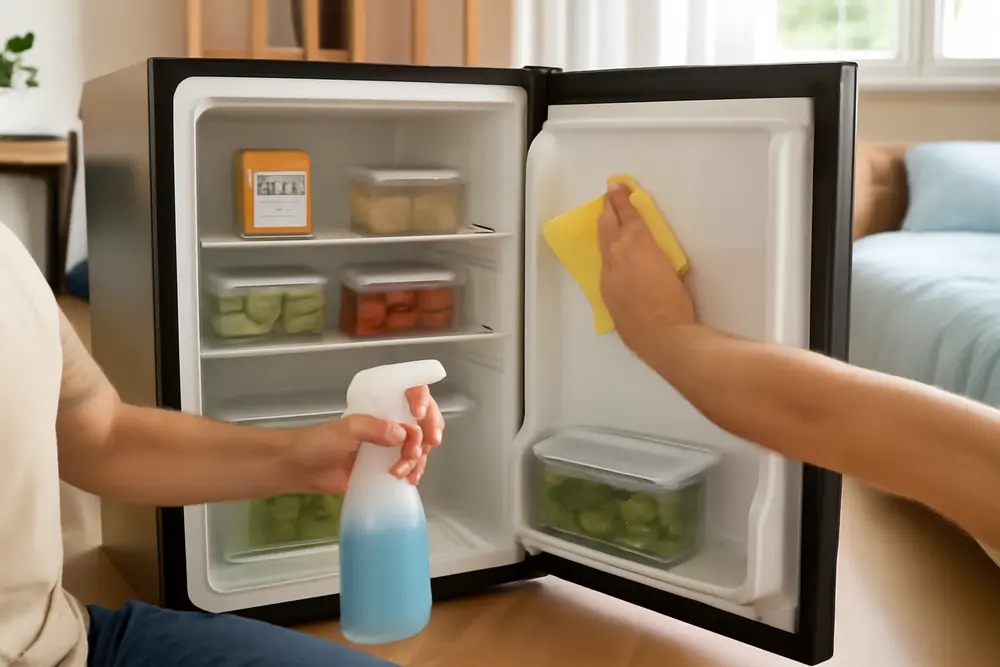
If you can keep a houseplant alive and your GPA above sea level, you can keep mold from turning your dorm room into a mushroom farm. This guide is the no-nonsense, low-drama playbook for students who live small and share everything from outlets to odors. We will hit mini fridge hygiene that actually works, how to dry towels and sneakers without weaponizing the smell, stealth humidity control that will not get you side-eyed by your RA, and exactly how to work your university housing mold policy if you spot the fuzzy stuff.
Why Mini Fridge Hygiene Matters
Your mini fridge is basically a mold startup incubator. It has the three things mold wants most: moisture, food residue, and poor airflow. A single crumb under the crisper, pooled condensation in the door gasket, or a fridge that got unplugged and sealed over break can kick off a full-blown colony. Howard Environmental points out that dampness plus food debris inside appliances is a classic mold magnet, and refrigerator gaskets and drip trays are usual suspects. You do not need a biology class to see where this is going.
Beyond the gross factor, mold can trigger allergies and asthma and turn your room into a cough-powered symphony. The fix is not complicated, but it does require consistency. Mold thrives on neglect. You do not have to be a neat freak. You just have to be predictable.
Mold in appliances often starts with three ingredients: moisture, food residue, and zero airflow. Source: Howard Environmental
Mini Fridge Hygiene Done Right
Think of mini fridge hygiene like gym hygiene for your leftovers. Show up regularly, wipe things down, and stop pretending that ranch from move-in day is still fine.
Start with temperature and airflow. Set your fridge between 34 and 40 degrees F. Any higher and you are basically marinating bacteria. Do not stuff it so full that air cannot circulate. Keep items off the back wall to prevent ice build-up and sticky frozen cans that tear open the second you yank them. If frost is building to the point it messes with the door seal, defrost. You want a tight seal and dry gaskets, not an iceberg audition in your cube.
Now the cleaning routine. Once a week, pull out obvious trash, wipe spills, and take 2 minutes to run a cloth around the door gasket where moisture hides. Once a month, commit to a deeper clean:
1) Unplug the fridge so the light is not heating a tiny sauna. 2) Remove food, shelves, and bins. 3) Wash removable parts with warm soapy water and let them air dry fully. 4) Wipe interior surfaces with a mild detergent or white vinegar solution, paying attention to corners, gaskets, and the drip tray if your unit has one. 5) Dry everything until it is actually dry, not vibes-based dry. 6) Plug it back in and restock like you care about your future self.
Heading home for a break? Never close an unplugged fridge. Clean it, dry it, and leave the door propped open with a towel or spoon so air can move. That tip is straight out of the mold-in-appliances playbook for a reason. Sealed humidity plus food residue equals mold party.
Never close up an unplugged fridge without cleaning and leaving the door cracked for ventilation. Source: Howard Environmental
Daily And Weekly Upkeep That Works
You do not need chore charts. You need five-minute habits.
Daily: if you spill, wipe it. If food is sketchy, toss it. Quick swipe around the gasket with a paper towel if you see moisture. If condensation builds, check the temperature and door seal. Close the door fully every time. Mini fridges that do not seal are basically humid boxes with lights.
Weekly: clear old food, wash one bin or shelf, wipe the interior with soapy water, then dry. Check the drip tray if there is one. Ice creep around the freezer compartment means it is time to defrost. Dry the gasket with the door open for 10 minutes so you are not trapping moisture. Every time you restock, wipe the bottoms of jars and bottles. Mold loves sticky rings under jam and soy sauce bottles.
Quiet Humidity Control In Small Rooms
If the fridge is your microclimate, the room is your ecosystem. Mold growth indoors is mostly a humidity problem, and dorms tend to run humid from showers, laundry, and 2 a.m. Ramen steam. Grab a small digital hygrometer and find out where you stand. Aim for 40 to 50 percent relative humidity most of the time. UT Knoxville’s Mold 101 guidance lists 30 to 60 percent as acceptable for general comfort and mold prevention. The sweet spot keeps mold sluggish without turning your skin into parchment.
How to get there quietly:
Pick a low-noise dehumidifier if your housing rules allow it. Look for models under roughly 50 decibels on low, with auto-shutoff and a drain hose port if you can run it to a sink or shower. Thermo-electric units are compact and quiet but have limited capacity. Compressor units pull more moisture but can be heavier. Either way, placement matters. Put the unit where air can flow around it, not buried behind your futon. Close windows when it runs, and keep interior doors ajar for better circulation. Howard Environmental’s dehumidifier cleaning guide is clear about the basics: keep coils and filters clean and maintain drainage so your dehumidifier does not become its own mold farm. Find it here: Dehumidifier Cleaning With Drain Setup.
Bonus micro-moves that help a lot: dry showers and sinks after use, do not block the AC or radiator with furniture, and do not line your entire windowsill with wet mugs and plant trays. Insulate cold surfaces if condensation forms often, even with a simple towel or removable film approved by your housing office. And if you rely on AC, set it to continuous low fan with a reasonable cooling target instead of short blasts that cool the room but leave humidity high.
Aim for indoor RH between 40 and 50 percent where mold has a bad day but you are still comfortable. Source: Howard Environmental
Towel, Bedding, And Shoe Drying That Does Not Stink
Mold does not just love fridges. It will happily move into damp towels, cluttered laundry bins, and the mystery corner behind your bed. The cure is airflow and timing.
Towels: hang them fully open after use. Double-hooking two towels on one peg creates a permanent wet taco. If your room has a fan, aim it at a small rack for 15 minutes, then off. Switch to quick-dry microfiber if your bath sheet hangs wet for hours. Wash towels every 3 to 4 uses, not every 3 to 4 months.
Shoes: if they get wet, pull the insoles and stuff the toes with paper for an hour, then remove and let them air dry. Stash a small rack under your bed or by the door. Do not park wet sneakers in a sealed plastic bin. If you are a regular at rainy night walks, a compact shoe dryer is a worthy buy if allowed by housing.
Bedding and clothing: do not cram a damp hoodie into the closet. Lay it flat to dry or hang it with space around it. If condensation forms on your window glass, pull fabric back so it is not touching the cold pane. And if your laundry room is notorious for half-dry results, run an extra spin before you bring clothes back up.
Spot Mold In Your Fridge Or Dorm?
First, do not panic. Mold on non-porous surfaces like plastic bins and fridge walls is usually fixable with cleaning and drying. Mold on porous items like cardboard, fabric, or acoustic tiles generally needs to be discarded or professionally remediated. Here is the smart, quick response for your mini fridge or small areas on finished hard surfaces:
1) Unplug the appliance. 2) Empty food and toss anything that touched visible mold or smells off. 3) Wash the surface with warm soapy water to remove grime and biofilm. 4) Follow with white vinegar or 3 percent hydrogen peroxide on the cleaned, non-porous surfaces. Give it contact time. Think at least 10 minutes for peroxide, then wipe and dry. Vinegar is great for gaskets and plastic interiors. 5) Rinse surfaces that contact food and dry them completely. 6) Clean or replace any drip tray, and scrub the door gasket folds where moisture hides. 7) Plug the unit back in, verify temperature, and restock.
Skip mixing chemicals and keep bleach away from metal parts and gaskets unless your housing staff recommends it and you can rinse thoroughly. Never mix bleach with vinegar or ammonia. If you notice the same spot recurring quickly, check for causes like a leaky defrost drain, a damaged door seal, or a fridge that runs too warm.
If you find mold on building materials or from moisture sources you do not control, like window leaks, HVAC issues, or wet drywall, do not try to fix that yourself. That is a maintenance issue, and the fix runs through your university housing mold policy.
Your University Housing Mold Policy
Every university should have a written policy that covers how to report possible mold, how fast staff will inspect, and what remediation looks like if they find it. It should also say what your responsibilities are as a resident for daily moisture control and cleanliness. Two quick examples:
Columbia University Housing states they will visually inspect reported concerns within a business day in most cases and carry out cleaning, drying, and repainting with mildew-resistant finishes when needed. That is a tight timeline and a clear process you can reference. Their policy is here: Mold In Your Room Or Suite.
The University of Tennessee’s Mold 101 guide reminds residents to manage indoor humidity and promptly report leaks or mold concerns through a maintenance request. They also cite a general 30 to 60 percent humidity range to discourage mold. See it here: UT Housing Mold 101.
How to use your policy like a pro:
Report early and factually. Submit an online maintenance ticket or call the listed number. Include your building and room, where you see mold, roughly how large it is, what it is on, any moisture source you suspect, and how long it has been present. Attach two or three clear photos. Note humidity readings if you have a hygrometer. If odors are strong, say so. Ask for the expected response time according to the policy and write it down.
Keep the space accessible. Clear the area and remove personal items so staff can work. If the issue is inside the fridge or on a roommate’s towel pile, coordinate a shared cleanup and still report if there is building moisture involved, like a leaking window or AC.
Know the split in responsibility. You are expected to keep things clean, control day-to-day moisture within reason, and report issues quickly. Housing is responsible for leaks, HVAC problems, structural moisture, and proper remediation if building materials are affected. If symptoms persist or mold returns after their visit, follow up in writing with dates, photos, and humidity readings. Policies exist so you do not end up playing mold whack-a-mole every weekend.
What If Maintenance Does Not Fix It?
Most housing teams handle mold reports quickly and effectively. If you are stuck in Groundhog Day with the same spot coming back, get organized. Keep a log with dates and times you reported, who responded, what they did, and what you observed after. Continue to run your mini fridge hygiene routine, keep RH documented, and photograph any recurrence with a simple ruler or card in the frame for scale.
Escalate politely. Reference your university housing mold policy and request a follow-up inspection by maintenance or environmental health and safety. If health symptoms are part of your concern, loop in student health services and, where applicable, disability services for temporary accommodations. You are not being dramatic. You are communicating clearly in a shared building with a documented issue. If you get resolution, thank the staff. If you do not, ask how to escalate to a housing manager and attach your log to that email. Staying factual keeps it moving.
Quick Checks Before Breaks
Breaks are when mini fridges go feral. Do a 10-minute pre-departure lap:
Empty and clean the fridge, dry it, and prop the door. Take the trash out. Crack the closet doors so fabric is not smashed against walls. Hang towels and leave them dry. Leave a hygrometer visible so you can compare readings when you come back. If you have a dehumidifier and housing allows it to run, check the drain line or empty the tank, then set it to 45 percent and low fan. If it must be off, unplug it, clean the filter, and leave it dry and open.
Mini Questions, Faster Answers
Can I use a dehumidifier in my dorm?
Check your housing handbook. Some universities allow compact units with auto-shutoff and a drain hose. Others only allow them for documented needs. If allowed, pick a quiet model and keep it clean. Howard Environmental has a solid maintenance guide: Dehumidifier Cleaning.
What RH should I aim for?
Target 40 to 50 percent most of the time. UTK presents 30 to 60 percent as a workable range. If your hygrometer reads above 60 percent for long stretches, mold risk rises fast.
What causes fridge mold the fastest?
Warm temps, spills that never got wiped, door gaskets that stay damp, and sealing an unplugged fridge. Tiny crumbs in hidden corners matter. Gaskets and drip trays are classic hotspots.
Does baking soda prevent mold?
Baking soda is great for odor control, not mold control. It will not fix moisture or kill growth. Clean, dry, and control humidity. Then use baking soda for smell management.
Is an air purifier helpful for mold?
A HEPA purifier can reduce airborne spores and dust, but it does not fix the source. It is an add-on, not a solution. You still need cleaning and humidity control.
How do I clean a moldy gasket without ruining it?
Warm soapy water first, then white vinegar in the folds with a soft brush, then dry thoroughly. Avoid harsh scrubbing that tears the rubber. Check that the door seals snugly afterward.
Where should I put my hygrometer?
Waist height, away from direct sun or AC blasts, and not right next to the fridge or window. If your room is split, check both sides. Move it around weekly to learn your room’s patterns.
My fridge smells even after cleaning. Now what?
Clean again focusing on drip trays and hidden seams, dry fully, then run it empty for a few hours at the correct temperature. Add a fresh box of baking soda or a small odor absorber. If odor returns within days and you see moisture where it should not be, submit a maintenance ticket.
Can I just spray bleach and be done with it?
Bleach is not a magic eraser and is harsh on gaskets and metals. Stick with soap and water first, then vinegar or 3 percent hydrogen peroxide for non-porous surfaces, and rinse food-contact areas. Never mix chemicals.
Your Mold-Resistant Dorm Routine
Here is the low-drama routine that keeps mold from moving in: set the mini fridge to 34 to 40 degrees F, do a 2-minute interior wipe each week, keep the door gasket clean and dry, never seal an unplugged fridge, run a hygrometer and keep the room near 40 to 50 percent RH, hang towels and dry shoes with airflow, and report building leaks or musty walls through your university housing mold policy with photos and specifics. When you keep moisture in check and air moving, mold has a hard time getting a foothold. When it does show up, you have a clear plan to shut it down fast.
If you want a deeper look at appliance mold habits and humidity control, these resources are worth a bookmark:
Mold In Dishwashers And Refrigerators by Howard Environmental, and
Dehumidifier Cleaning With Drain Setup by Howard Environmental.
For housing policy examples that show what a strong response looks like, check:
Columbia University Housing Mold Policy and
University of Tennessee Housing Mold 101.