
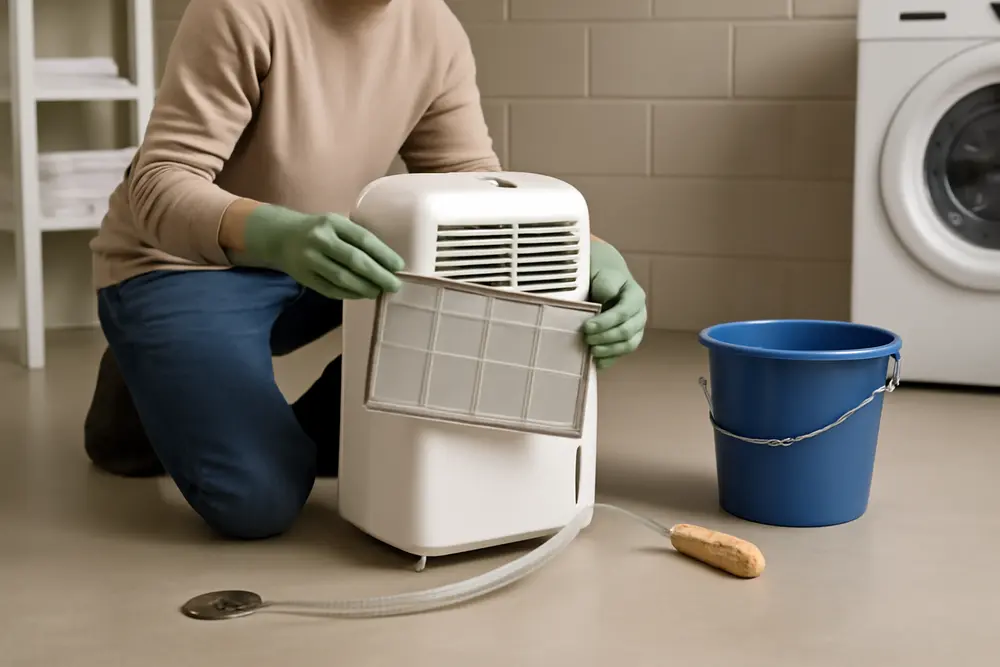
You bought a dehumidifier to tell mold to take a hike, not to roll out a welcome mat and a snack table. Yet I get called to mold inspections where the dehumidifier is the grossest thing in the room. Buckets grow slime, hoses back up, coils get furry, and boom… your mold-fighter becomes a mold-maker. If you want your machine to actually fix humidity and not fling spores, you need two things: consistent dehumidifier cleaning and a reliable condensate drain setup. Toss in smart placement and basic filter care, and you’ll stop mold at the source instead of giving it a spa day.
Why Dehumidifiers Turn Moldy
Dehumidifiers pull moisture from air and dump it into a reservoir or drain line. If that water sits, growth happens fast. Standing water in a bucket, pan, or sagging hose is perfect breeding space for mold and bacteria. You’ll smell it first: that sweet, musty funk. If your nose says “swampy,” you’re not imagining it. Backed-up hoses and half-empty buckets are prime offenders, especially in basements where the air is already cool and damp. Routine draining and a proper slope on the hose prevent pooling and slime.
Filters and coils also play host. Dust and hair collect on the intake filter, then stay damp while the unit runs. That dust is organic material, and mold loves it. Coils sit cold, catch condensation, and hold fine debris. When the unit cycles off, moisture lingers. If the fins or drain channel get grimed up, you’ll see biofilm or even visible flecks of growth on the coil edge. Gentle cleaning cures that.
Then there’s humidity creep. If you’re letting indoor relative humidity ride above about 50 to 60 percent, you’re inviting mold to settle in on walls, windows, and inside your machine. A good target for living spaces is generally in the 30 to 50 percent range, with the lower end preferred in basements and during warm months when outside air is humid.
Finally, poor placement sabotages performance. If your unit is crammed against a wall, behind storage totes, or pointed at a cold foundation, airflow tanks and moisture condenses on the housing. Elevating it a few inches helps, and giving it breathing room improves drying across the entire room.
Dehumidifier Cleaning Routine
Let’s keep your unit from turning into a biology lesson. Here’s the exact routine I recommend to customers. Always unplug before you clean. Double-check your manufacturer’s instructions if you’re unsure about which parts can be removed or rinsed.
| Task | Frequency | How To Do It Right |
|---|---|---|
| Bucket or Reservoir | Every 1 to 2 weeks in humid weather; monthly in mild seasons | Empty fully. Wash with warm soapy water. For film or odor, soak with white vinegar or a 1:1 vinegar-water mix for 15 minutes. Rinse and dry fully before reinstalling. |
| Filter | Check monthly; clean or replace as needed | Vacuum dust from the intake side first. If it’s washable, rinse with lukewarm water, then air-dry completely. Replace disposable filters as soon as they look tired or odor sticks around. |
| Coils & Interior | Every 3 months, or when you see buildup | Unplug. Remove grille. Use a soft brush or vacuum with a soft-bristle attachment on fins. For grime, lightly wipe with vinegar solution or mild detergent on a cloth. Don’t bend fins. |
| Exterior & Vents | Monthly | Wipe the cabinet with a damp cloth. Clear dust from louvers. If it smells musty after cleaning, go back and recheck the bucket, hose, and filter. |
Seasonal tip: if you store the dehumidifier for the winter, drain it completely, clean the bucket and hose, clean the filter and coils, then let every part dry before you tuck it away. Nothing creates a spring surprise like one teaspoon of trapped water sitting in a warm closet for months.
What about disinfectants? For hard plastic buckets or hose ends, a dilute household disinfectant is fine if your manufacturer allows it. Never use strong bleach on coils or near fins. If you use a mild disinfectant in the bucket, rinse thoroughly and let it dry so you’re not atomizing chemicals during the next cycle.
Condensate Drain Setup
You want your water to leave the building, every hour, every day, without you lifting a finger. That means a dependable continuous drain. There are two basic ways to do it: gravity or pump. Do not settle for a hose that loops up and then droops down like spaghetti. Trapped low points grow slime and clog, and then your bucket overflows at 2 a.m., right before your in-laws arrive.
Gravity drain is simplest. Most portables have a rear or side port that accepts a hose. Use a proper condensate hose, typically in the 5/8 to 3/4 inch range that matches your unit’s port. Run it downhill the entire way to a floor drain, a laundry sink, or a sump basin. Keep a steady slope, about a quarter-inch drop per foot. Every dip creates a mini swamp that eventually clogs with algae and debris. Secure the connection with a clamp so it doesn’t pop off. Keep the hose short, avoid kinks, and route it where it won’t get stepped on.
If the drain point is higher than the dehumidifier, you need a condensate pump. The pump sits near the unit, collects water, and sends it up and over to a drain line. Get a pump with a check valve so the line doesn’t backflow, and test the float switch so it actually kicks on. Pumps benefit from a backup plan: at minimum, mount it where you’d notice a failure, or add a small leak alarm near the pump reservoir. Every month or two, flush the pump reservoir and the line with warm water to clear slime.
Where should the water go? Indoors to a floor drain or laundry sink is easiest. If you discharge to a sump basin, secure the line, keep the outlet above the water line to avoid siphoning back, and make sure the sump lid seals around the tube. If you want to run it outdoors, check your local code first, route the line through a sealed wall pass-through, and protect the discharge from freezing. Frozen lines are the bucket-overflow factory. Outdoors, end the hose over a gravel splash area so it doesn’t erode soil or create a puddle that sends moisture right back into your foundation.
Maintenance for any condensate drain setup is simple: once a month, disconnect the hose from the unit and flush it with warm water or a vinegar solution until it runs clear. Reconnect and check for leaks. If you notice slow drainage or gurgling, find and fix the low points in the line, and trim the hose if it’s excessively long.
Filter Care That Actually Works
Filters are the first line of defense against dust turning into a fuzzy sweater on your coils. Most portable units use washable mesh filters. You’ll want to check them monthly during heavy use. Vacuuming the intake side pulls off the fine dust without pushing it deeper. If washing is allowed, rinse with lukewarm water, never hot, and set it to dry upright. It has to be completely dry before it goes back in or you’ll grow a petri dish right at the intake. If your unit uses a disposable filter, do not try to stretch it for a second season if you’re seeing discoloration or smelling mustiness.
How do you know the filter is the problem? If humidity reduction slows down and your unit runs longer than usual, check the filter first. If odor remains after a clean filter and bucket scrub, the coils or drain channel are probably harboring biofilm and need attention. A cheap filter can cripple a pricey dehumidifier, so treat it like a replaceable part, not a family heirloom.
Placement That Prevents Mold
Where you park the unit changes everything. Give it at least a foot of space on all sides that move air. If you aim the exhaust at a wall or sofa, you’re just recirculating damp air into a dead zone. Central placement works best in open areas. In tricky rooms, point the exhaust toward the worst damp spot or a central aisle so the air has to travel across the space before returning to the intake.
Elevate the unit a few inches. A low metal stand or a solid plastic riser works great. That keeps the machine out of minor puddles, discourages floor-level condensation, and makes gravity draining easier. Don’t aim it at cold concrete or single-pane windows, because the housing can sweat and make a wet halo that molds around the feet of the machine.
Keep it near a sensible drain path and a safe outlet. A short, straight hose with a steady slope beats a long loop every time. Avoid direct sun or heat sources that can mess with the built-in humidistat. Set your target humidity between 40 and 50 percent for most homes. Basements often like the lower end. If you see condensation on windows or smell must, dial it down a notch until the smell disappears.
Signs Yours Is Spreading Mold
You shouldn’t smell the dehumidifier. If the air coming off it has a sweet-damp odor or you get a whiff of locker room when it kicks on, that’s growth inside. Pull the bucket and check for slime or a thin translucent film. Shine a flashlight through the drain hose. If it looks like a green smoothie, you’ve found your culprit. Coils that look cloudy or streaky, white mineral residue from hard water, or soft performance even though the room is humid are all red flags.
Another tell: the bucket stays surprisingly clean but humidity just won’t drop. That usually points to a clogged filter throttling airflow or fins clogged with fine dust. A 10-minute cleaning often restores performance. If you clean thoroughly and humidity reduction still lags, the problem may be bigger than maintenance. The unit might be undersized, leaking air may be flooding the space with moisture, or you might have hidden mold feeding the humidity load.
Common Setups We Fix All The Time
Basement bucket bonanza. You know the one. The unit fills the bucket every day, and someone empties it at night until the novelty wears off. Then it overflows once, twice, and suddenly the basement smells like a damp towel. The fix is simple: elevate the unit near the floor drain or sump, hook up a proper gravity hose with a steady downhill slope, clean the bucket thoroughly, and let the fan run on auto with a humidity target around 45 percent. We’ll also check for cold corners and move it so the exhaust sweeps the center of the room instead of the wall.
Laundry room sauna. Dryers and washers are sneaky humidity generators. The dehumidifier works overtime and the bucket grows biofilm. We run a short hose into the laundry sink with a clamp, flush the hose monthly, and bump the humidity target to 45 percent during wash days. Keep the unit out of the dryer’s hot exhaust path and give it breathing room. A washable filter here will need more frequent attention than in a guest room.
Fish room splash zone. Aquariums create mind-boggling humidity. A drain pump is often necessary because floor drains aren’t always nearby. We use a good condensate pump with a check valve and a secure discharge to a sink line. Filters are cleaned every few weeks, hoses flushed monthly, and we aim the exhaust across the tank area. If you do reef tanks, plan for a larger capacity unit than you think and put it on its own riser so stray splashes don’t wind up inside the intake.
Portable vs whole-home. Portable units need visible cleaning and drain care, while whole-home dehumidifiers tie into ductwork and often drain to a dedicated line or pump. If you’ve got a whole-home system, inspect the drip pan and drain line each season, just like you would an AC condensate line. A blocked line here is just as messy as a clogged bucket on a portable, and it can quietly wet insulation or framing if it backs up.
FAQ
How often should I do dehumidifier cleaning?
In humid seasons, clean the bucket and check the filter every 1 to 2 weeks. Coils and the interior usually need attention every 2 to 3 months. If the unit smells musty at any time, clean it immediately rather than waiting for the calendar.
What should my condensate drain setup look like?
Use a short, straight hose that runs downhill at about a quarter-inch per foot into a proper drain. If your drain is higher than the unit, add a condensate pump with a check valve and a float switch. Clamp every connection, avoid kinks, and flush the line monthly.
Can I use bleach to clean the bucket?
You can use a dilute disinfectant on hard plastic buckets if your manufacturer allows it, but rinse thoroughly and let it dry before reinstalling. Do not use harsh cleaners on coils or fins. Warm soapy water or a mild vinegar solution is plenty for routine cleaning.
Is it okay to drain the hose outside?
Sometimes. Check local rules first. If you go outside, route the hose through a sealed opening, keep it protected from freezing, and discharge over gravel so you do not create a puddle that wicks back toward your foundation. In cold climates, indoor drainage is usually safer.
What humidity should I set?
Most homes do well between 40 and 50 percent. Basements often benefit from the lower end of that range. If you see condensation on windows or smell must, lower the setting a few points until it clears. If you feel overly dry or get static shocks, raise it a notch.
Why does my unit smell even after I empty the bucket?
Odor usually hangs out in the hose biofilm, the drain channel, or on the coils and filter. Clean the filter, scrub the bucket, flush the hose, and gently clean the coils and interior. If the smell persists after a thorough clean, the pump reservoir or the drain endpoint may be the source.
Do I need a trap on the condensate line?
For most portable dehumidifiers using gravity drain, no trap is needed and can actually cause pooling. Keep the run simple and sloped. For systems tied into shared drains or pumps, follow the pump or manufacturer’s guidance.
How high should I elevate the unit?
Even 2 to 4 inches helps. In basements, a sturdy 6-inch riser is common to keep the housing out of minor water and to improve hose slope. Just make sure the platform is level and can support the weight of a full bucket if you ever switch back from continuous drain.
How do I keep algae out of the hose?
Flush monthly with warm water or a vinegar solution. Keep the hose in the dark where possible since light fuels growth. Trim extra length so water does not sit in loops.
When DIY Is Not Cutting It
If the unit smells a day after a deep clean, if your humidity never drops despite long runtimes, or if you spot visible growth on walls or trim, you might be dealing with hidden moisture or an active mold source in the building, not just a cranky appliance. That is where we come in. We inspect, test, and track moisture pathways so you’re not masking a bigger problem. Keep the dehumidifier maintained, keep the water flowing out, and if the space still feels swampy, reach out. We’ll bring the gauges, the testing kits, and the straight talk to get your air back on track.