
If you want your cigars to taste like they were rolled in a swamp, skip humidor seasoning, toss your hygrometer in a drawer, and crank the RH until your sticks feel like wet pasta. If you prefer flavor over fungus, welcome to the grown-up table. I inspect mold for a living, and I can tell you mold loves two things: warm air and wishful thinking. Here’s how to keep your humidor stable, your cigars clean, and your palate happy without turning your prized box into a mushroom farm. We’ll hit RH targets, humidor seasoning, hygrometer calibration, airflow, plume versus mold, flavor-safe cleanup, and tricks for electric units.
Target RH and Temperature
Think of relative humidity and temperature like a tag-team. Get either one wrong and mold gets a VIP pass. For everyday storage, most cigar authorities land your target RH in the 65 to 70 percent pocket. This keeps wrappers supple without making cigars smoke like damp firewood. Boveda and other humidity-control pros suggest a general range of 65 to 72 percent for typical storage, while many collectors prefer slightly drier 62 to 65 percent for long-term aging to minimize mold risk and slow the clock on flavor development. Temperatures around 70 degrees Fahrenheit are the sweet spot. Warmer air holds more moisture, so 72 percent RH at 78 degrees is way riskier than the same RH at 68 degrees.
Too high and you invite mold, soggy draws, and possibly tobacco beetles. Too low and you get cracked wrappers and flat flavor. Pair your RH goal with a steady temperature near 70 degrees and avoid big swings. If your room spikes over 75 degrees, even a well-tuned humidor starts sweating bullets.
| Goal | Target RH | Notes |
|---|---|---|
| Long-term aging | 62 to 65 percent | Lower mold risk, more controlled maturation |
| Daily storage | 65 to 70 percent | Balanced flavor and burn for most blends |
| Borderline high | 70 to 72 percent | Watch closely or you may feed fungus |
| High risk | Over 72 percent | Mold, swelling, beetles become more likely |
Helpful references for RH targets and the temperature relationship: Boveda and Humi-Smart.
Humidor Seasoning Without Ruining It
Fresh or dormant wooden humidors are thirsty. If you skip humidor seasoning, that Spanish cedar will yank moisture from your cigars faster than your buddy raids your top shelf. The goal is to let the wood drink first so it buffers moisture gently and holds a steady RH. You can use a seasoning kit or a distilled-water approach. Here’s a sane, flavor-safe route that avoids soaking the wood like a dish sponge.
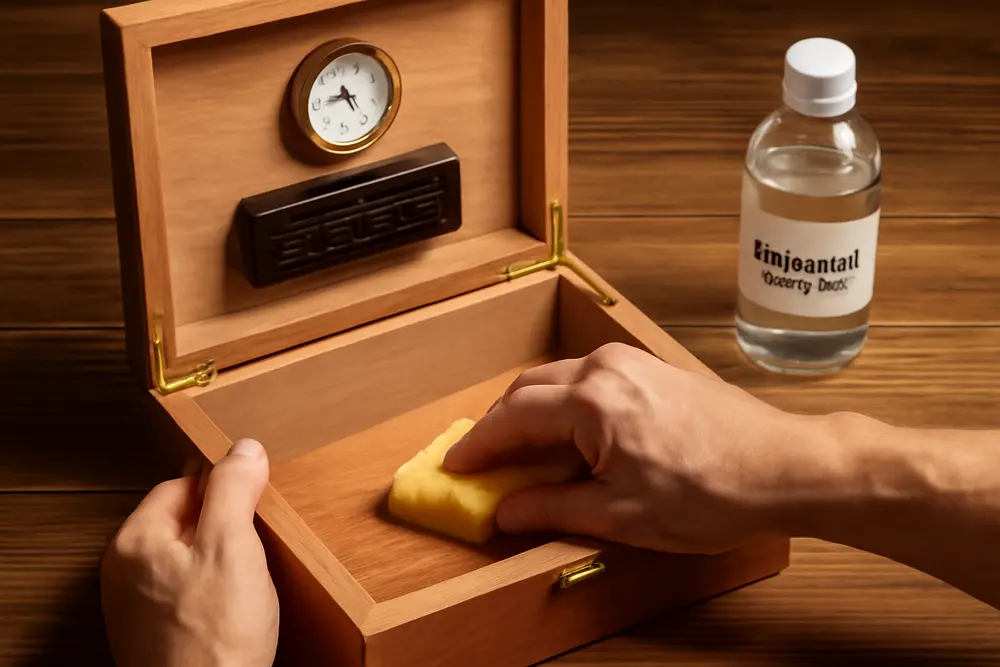
For the classic method, wipe the interior lightly with a clean, lint-free cloth dampened with distilled water. Not wet, not dripping. Place a humidification source inside set to 72 percent if you’re using packs, and put your calibrated hygrometer inside. Close the lid. Check progress after 24 hours, then every day or two. If the RH shoots up fast then falls quickly, the wood is still absorbing. When you see RH hold near your target for a full day without big swings, you’re close. Most wooden humidors land in the 7 to 14 day window with seasoning packs, sometimes quicker for smaller boxes.
Pro tip: avoid dousing the wood or puddling moisture in the corners. Over-wetting can warp panels and invite the exact mold problem you’re trying to prevent. Humi-Smart’s guidance on wood moisture and stabilization lines up with this tame, patient approach. See their basics for perspective on why wood buffering matters.
Hygrometer Calibration That Actually Works
If you’re trusting an uncalibrated hygrometer, you’re basically flying blind with a blindfold. Even solid models drift over time. Plan on hygrometer calibration every 6 to 12 months. The salt test is simple: place a bottle cap of damp table salt inside a sealed bag with your hygrometer for 8 to 12 hours. It should read about 75 percent RH. Adjust the unit if it allows, or note the offset. We break down calibration and placement details in our own humidity control guides, like this hygrometer calibration piece. Keep your hygrometer mid-height in the box, not pressed against the humidifier, walls, or hinges, and avoid warm corners that can skew readings.
Airflow, Seal, And Wood
Mold loves a stagnant corner. Even in a wooden box, aim for gentle airflow and no tight brick walls of cigars. Give your sticks a little breathing room. Trays with gaps help. Spanish cedar is your ally because it buffers humidity and releases a pleasant aroma that complements tobacco. A decent seal matters too. If your lid is whistling like a teapot, your RH will rollercoaster. A quick dollar-bill test helps: close the lid on a bill and tug. Slight resistance all around is a good sign. For stability, keep your humidor in a room near 70 degrees and away from sunny windows, heaters, and vents. High room humidity pushes your internal RH up, and sudden temperature drops can cause condensation in corners, which is basically mold bait.
Collectors and maturation nerds often mention avoiding stratification by leaving airflow paths and not stacking every inch. You do not need a fan in a traditional wood box, just avoid packing it tighter than a subway at rush hour. References on airflow and maturation: Centient Group and the wood moisture points from Humi-Smart.
Plume Or Mold?
Plume is the unicorn everyone wants to see, and mold is the gremlin you actually will see if you ignore your numbers. Plume appears as a delicate white or off-white crystalline dusting that brushes off easily and sits flat against the wrapper. Mold often looks fuzzy or webby, may be green, blue, or black, and tends to grip the leaf. If it smells like a damp basement, that is not plume. Use a soft brush to test a spot. If it resists and smears, you’re probably dealing with mold. When in doubt, isolate the suspect cigars. Plume does not have roots or tendrils. Mold does. And yes, you can have both bad storage and wishful thinking.
Flavor-Safe Cleaning That Works
If you spot mold inside the box, act like a pro, not a panic-stricken pirate. First, remove all cigars and quarantine the ones with visible growth in a separate container set near 62 percent RH. Light surface mold on wrappers may be brushed off outdoors or over a trash can with a soft brush. Heavily colonized cigars are a hard pass. Do not wipe cigars with water, alcohol, or vinegar. You’ll just trade mold for off flavors.
For wood interiors, use as little liquid as possible. Start with a microfiber cloth lightly dampened with distilled water to pick up spores. For disinfecting non-porous parts like metal hinges or acrylic trays, 70 percent isopropyl alcohol or 3 percent hydrogen peroxide works well, then wipe with distilled water and allow complete drying. For mineral scale on trays or water reservoirs, a quick wipe with white vinegar followed by a distilled water rinse removes residue. Never use bleach inside a humidor. Chlorine odors will haunt your cigars like a bad cologne.
Remove and replace any questionable humidification media. Old sponges and mystery gels are mold hotels. If you use packs or beads, follow the manufacturer’s reconditioning rules and swap out anything that looks compromised. After cleaning, let the humidor air dry completely with the lid open for several hours. Then re-season if needed to stabilize RH before reintroducing cigars. We cover flavor-safe cleaning logic in our humidity articles at HowArdenvironmental, like the sections on hygienic handling and calibration in this guide.
Electric Humidor Tips
Electric humidors play by similar rules, but they hit the setpoints for you. Problem is, sensors drift and condensation happens. Set your unit to 65 to 70 percent RH and about 70 degrees. Use an external calibrated hygrometer to check the built-in display. If you see pooled condensation on metal shelves or glass, drop the RH a couple of points, raise air circulation if your unit allows, and check the door gasket. Keep reservoirs filled with distilled water only. Tap water invites minerals and biofilm. Clean the reservoir and any wicking parts with distilled water and a small amount of white vinegar, rinse thoroughly, then dry before refilling.
Electric units tend to have small fans. Make sure they spin freely and aren’t blocked by a wall of boxes. Replace filters on schedule and avoid scented cleaners that can off-gas. If your space is brutally humid in summer, consider a small room dehumidifier to help the humidor maintain target RH without overworking. Redundant monitoring is smart. A second digital hygrometer inside the unit will tell you when the sensor is lying to you. Target ranges are similar to passive boxes per Humi-Smart, but stability is where electric shines, so use it well.
Preventive Habits That Actually Prevent
If you want to keep mold bored and unemployed, consistency beats miracles. Open the lid only as long as you need. Rotate tightly packed rows every few weeks. Keep similar sizes together so you do not create dead-air pockets. Do not mix freshly moist cigars with well-rested ones without monitoring, since newbies can spike the RH locally and trigger spot growth. Store the box in a stable room, not on a sunny shelf or near an AC vent. If the outside climate is weird, expect the inside to try to follow unless your seal and wood are top tier.
For long-term storage or aging, use a slightly lower RH and log readings weekly. That little notebook saves cigars. When you see a creeping RH rise without changing anything, check the humidifier media for over-saturation or bacterial funk. Replace media early rather than trying to resuscitate it with wishful rinses. If you travel with a herfador or tupperdor, 62 percent packs help prevent mold in a small sealed environment where swings happen faster. For small boxes and travel cases, you can borrow a page from our desiccant playbook here: silica gel basics. Just do not dry your cigars to jerky. Balance is the word.
The No-Panic Mold Response Plan
Mold shows up. It is not a moral failing, it is physics. Act methodically and you can often save the box and most of the stash.
Isolate the suspect cigars first. Experience says many cases are surface-level growth from a local wet pocket. Light brushing can remove the visible fuzz. If you see mold at the foot, between bands, or deep in veins, that cigar is done. Wipe the interior wood with a minimal amount of distilled water to pick up spores, then follow with targeted disinfection on non-porous bits. Dry thoroughly. Reset humidification with fresh, clean media. Bring the RH back up gradually. Reintroduce cleaned cigars only after you see 48 hours of steady readings near your target. Track readings daily for a week. If RH keeps yo-yoing, your seasoning or seal needs attention, or your humidifier is over-delivering.
Advanced Monitoring For Nerds Who Hate Mold
If you enjoy removing uncertainty like a splinter, double up your data. Use two independent sensors from different brands so you’re not fooled by a single device’s drift. Log RH and temperature weekly in a simple spreadsheet or notebook. Note events like adding a new box, recharging packs, or a heat wave. Trends will jump off the page. If your humidor is larger or cabinet style, consider a small, low-noise fan on a timer to even out air pockets. Just do not blast your cigars. Gentle circulation prevents that one smug corner from becoming a mushroom condo.
Troubleshooting Weird Readings
If RH will not climb after seasoning, check the seal, confirm the hygrometer calibration, and verify your humidification device is not bone dry or expired. If RH keeps climbing and cigars feel swollen, pull the humidifier out for a day and let the cedar buffer down. Reintroduce smaller humidification or lower-RH packs. If your temperature reading seems off, move the box away from radiant heat or cold surfaces. For electric units with stubborn high RH, inspect for condensation points, clean drains, and make sure the door closes cleanly without gasket kinks.
Humidor Seasoning Myths To Ignore
Myth 1: Soak the wood to season faster. Reality: over-wetting warps panels and feeds mold. Use light, even moisture and patience. Myth 2: Any water is fine. Reality: use distilled water. Minerals and microbes in tap water cause residue and funky films. Myth 3: Set it and forget it. Reality: wood changes with seasons. Recheck seasoning yearly or any time you store the box empty for weeks. Myth 4: All humidors like 72 percent RH. Reality: plenty of cigars live happier at 65 to 68 percent, especially if you prefer a cleaner burn and lower mold risk.
Quick Setup And Care Checklist
- Season slow with distilled water or 72 percent seasoning packs for 7 to 14 days.
- Target 65 to 70 percent RH at about 70 degrees for daily storage.
- Use 62 to 65 percent for long-term aging and travel containers.
- Do hygrometer calibration every 6 to 12 months with a salt test.
- Place the hygrometer mid-height, away from humidifiers and walls.
- Space cigars so air can move. Avoid overstuffing the box.
- Clean with distilled water and, for non-porous bits, 70 percent isopropyl or 3 percent peroxide. No bleach.
- Replace questionable humidification media instead of nursing it along.
- For electric units, verify setpoints with a second hygrometer and keep reservoirs squeaky clean.
FAQ
Can I save a cigar that had a little mold?
Sometimes. If it is surface fuzz that brushes off easily and the cigar still smells like tobacco, you can quarantine it at 62 percent RH for a couple of weeks and reassess. If mold is at the foot, under the band, or embedded, toss it.
Is plume real or just cigar forum folklore?
Plume is real but less common than Instagram would have you think. It is a fine, crystalline, non-fuzzy dust that wipes clean. If it is fuzzy or colored, call it what it is.
What’s the best RH pack for most people?
If you smoke regularly, 65 or 69 percent packs are great starting points. For aging or small travel containers, 62 percent reduces mold risk and keeps draw resistance more consistent.
How often should I redo humidor seasoning?
If the box sits empty for a month or more, or if you notice RH dropping fast after refills, give it a short seasoning cycle. Wood dries out with time and needs a reset now and then.
Do I need a fan in a wooden desktop humidor?
No. Just avoid cramming cigars together. Fans make sense in larger cabinets or electric units where stratification and dead zones are more likely.
Can I use silica gel in a humidor?
Silica gel can pull moisture effectively, which is useful for travel cases or emergency over-humidification. For everyday cigar storage, balanced two-way humidity packs are simpler. If you do use desiccants, monitor closely so you do not overdry. See our primer on small-space desiccants here: silica gel packs.
Is vinegar safe for cleaning inside the box?
Use it sparingly and only on non-porous parts or for descaling. On wood, stick to a lightly damp cloth with distilled water. If you can smell vinegar after cleaning, so will your cigars.
If You Smell Mold, Do This
Odor is your early warning. If the box smells musty but you do not see growth, your RH is probably running hot or you have a damp corner. Pull the cigars, air out the box, check for condensation, clean non-porous parts with alcohol or peroxide, then run the humidor dry for a few hours. Re-season to your target and watch the numbers for 48 hours before loading. If the smell persists in the wood, keep airing it out. Cedar can trap odors, and patience beats blasting it with chemicals that will haunt your next smoke.
The Case For Redundant Readings
A single hygrometer is like a single smoke alarm that you took the battery out of in 2019. Get a second, different brand unit and park it on the opposite side of the box. Calibrate both. If they agree within a couple of points, you are good. If they disagree wildly, run a salt test on both and trust the one that behaves. Place either one away from humidifiers and warm glass. For electric cabinets, a small data logger that graphs RH and temperature is worth its weight in saved cigars.
Why Mold Loves Overachievers
Mold shows up when people try too hard. Over-seasoning, over-humidifying, over-stuffing, over-cleaning with scented sprays, and over-believing uncalibrated hygrometers. Keep it boring and balanced. Spanish cedar, a solid seal, moderate RH, stable temperature, and clean humidification media are a better defense than any heroic rescue mission. The experts who make humidity-control products say the same thing for a reason: stability beats extremes. Check Boveda’s target guidance and Humi-Smart’s humidity-temperature basics if you want receipts. And if you want calibration sanity checks, our hygrometer calibration guide translates one-to-one in a humidor.
Aging Strategy Without Growing Penicillin
If you are sitting on a box for the long haul, go slightly drier and cooler. Aim 62 to 65 percent RH at 65 to 70 degrees. This curbs mold risk and slows the aging curve so flavors meld rather than muddle. Use packs that match your target, rotate boxes every month or two, and log sensor readings. If you crack the box to peek often, expect more variability. Let the cedar and the packs do their thing without constant meddling. If RH creeps up as weather changes, step down a few points with your packs and lighten the humidification load. Patience tastes better than penicillin.