
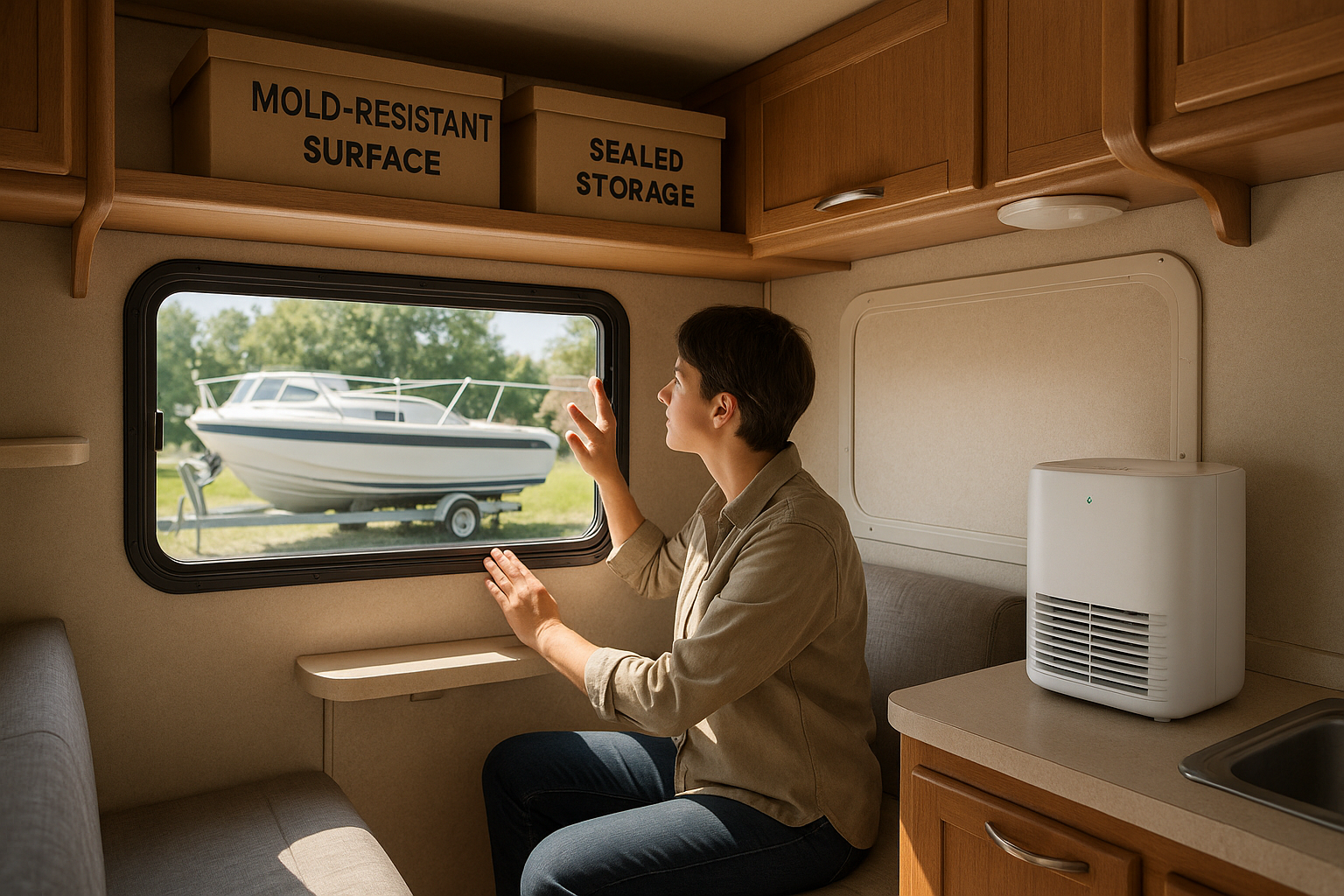
Boats and RVs are basically tiny houses that move, sweat, and trap smells. That combo is a fan club for mold. The good news is you can flip the script with smart humidity control, savvy leak checks, and the right materials. This guide breaks down boat dehumidifier placement for mold prevention, plus RV leak sealing that actually keeps water out. Expect practical steps, a little sass, and no fluffy myths. Let’s keep your cabin or coach dry, clean, and not funky.
Why boats and RVs get mold
Mold wants three things. Moisture. Food. Time. Your boat or RV has plenty of cellulose and dust for mold to snack on. Give it damp air or a roof drip and the clock starts. Confined compartments and temperature swings add extra moisture from condensation. That winter haul out or off season campground stay can turn into a petri dish if humidity climbs and leaks linger. The solution starts with moisture control. Keep interior relative humidity below 60 percent at all times. Aim for 30 to 50 percent for best results. That range comes straight from the EPA mold and moisture guidance and the CDC mold prevention and health info. Any wet materials should be dried within 24 to 48 hours or mold can establish.
If you want a deeper primer on humidity thresholds, prevention basics, and how moisture sneaks in, see our plain language breakdown on mold causes and humidity control. We cover the physics of condensation in small spaces and why your nose detects that stubborn musty note first.
Condensation in small tight spaces
Cabins and RV interiors are compact. Airflow is limited, temperature swings are constant, and cold surfaces collect moisture. Cook a meal or bring wet gear below and you just fed the mold machine. Cold hulls or roof panels hit dew point faster than you think. Moisture from breath or showers condenses on liners, behind cushions, inside lockers, and under mattresses. A simple hygrometer tells you when you are drifting into the danger zone. Target 30 to 50 percent. Never let the needle sit over 60 percent for long. Keep vents cracked when you can. Move air with fans. Run a dehumidifier when shore power or hookups are available. This small routine beats a thousand bleach scrubs later.
Leaks tanks and hidden moisture
Boats hide moisture in the bilge, under sole boards, behind head liners, and inside lockers. RVs hide it in roof seams, around skylights and vents, under slide floors, and behind wall panels. The mold rule still applies. Water intrusion that is not dried within 24 to 48 hours raises risk fast. If you suspect a leak or had a recent water incident in your rig or cabin, use our checklist on dry and repair leaks within 24 to 48 hours to get ahead of it. You will save cushions, woodwork, insulation, and your sinuses.
Boat dehumidifier placement
Boat dehumidifier placement is the difference between crisp cabin air or a science experiment in the v berth. The goal is even drying across the largest enclosed space, not one dry table next to a puddle three feet away. The best practice is simple. Place the unit in the center of the main cabin or salon with open airflow to nearby berths and lockers. Leave at least a half foot of clearance around the intake and exhaust. Keep it level on a stable surface. If your boat has multiple enclosed cabins, run two smaller units rather than one big beast in a closet. Multiple inlets and distributed airflow beat a clogged up single point every time. Independent testers who put marine dehumidifiers through their paces echo this advice, see marine dehumidifier placement and marine fabrics and this concise placement rundown from The Small Tools.
Humidity targets matter. A dehumidifier is not a win unless the actual cabin air drops into that 30 to 50 percent sweet spot. Keep a hygrometer on board to track the numbers. The EPA mold and moisture guidance sets the range for homes, which applies to boats too. You are not trying to turn your cabin into the Sahara. You are just denying mold the foggy spa day it wants.
Placement tips that actually work
Clear the intake and the exhaust by at least six to twelve inches. The unit needs fresh air, not a face full of curtain. Secure the power cord so it does not wick water or sit in a puddle. Use a GFCI protected outlet. Tidy up hoses and keep tripping hazards off the sole. If your boat is in a humid marina or tropical storage, run the unit continuously. In temperate climates, run it during wet spells or stormy weeks. When you have multiple cabin doors, leave them open for airflow. If lockers do not see light or air, toss a few desiccant tubs inside for a little extra help. Active drying plus passive desiccant control keeps the nooks and crannies from turning funky.
Drain routing that does not haunt your bilge
Do not drain a portable unit into the bilge. Repeat that out loud. The whole point is to remove moisture from the cabin, not recycle it below the sole. Constant water in the bilge bumps humidity, perfumes the boat with Eau de Mildew, and can corrode metals. In some setups it can even tease bilge float switches. Route the drain to an interior sink or a dedicated overboard connection that stays dry when the unit is off. Many owners share this as their number one placement mistake to avoid. See practical notes from sailors and techs alike in this thread and test report from the cruising crowd and the marine press. Owner placement tips and product tests and drain advice.
Desiccant vs compressor on the water
Compressor units are efficient when the cabin is warm. Desiccant style dehumidifiers excel in cool storage, chilly nights, or winter layup. If you store the boat where temperatures flirt with freezing, a desiccant unit will keep pulling moisture while a compressor unit naps. Salt air eats gear for breakfast, so look for marine friendly coatings or models with corrosion resistance if your boat lives near the coast. Yachting World and Meaco have a solid rundown on which type shines in which season. Start with this primer on marine dehumidifier placement and marine fabrics.
Boat placement quick checklist
Pick the biggest enclosed cabin for your unit. Open doors and hatches inside the boat so air reaches into lockers. Keep six to twelve inches of space around the unit. Strap it or wedge it so a wake does not send it flying. Route the drain to a sink or overboard. Never into the bilge. If you have two cabins, use two smaller units instead of one hero machine. Track humidity with a hygrometer and aim for 30 to 50 percent. When power is not available, add desiccant tubs inside closed lockers and under bunks as backup control.
RV leak sealing workflow
Mold prevention in an RV starts on the roof and finishes wherever seams, windows, or slides let water sneak inside. The most common entry points are the roof perimeter, ladder standoffs, roof mounted vents and skylights, air conditioner gaskets, antennas, sidewall trim, marker lights, slide topper rails, and window frames. Catch issues early with a routine inspection. Twice a year at minimum is a smart cadence. After big wind or hail or after a multi day rain, do a quick scan. A pressure water test with a low flow hose can help isolate a tough leak. See the solid overview at RV roof sealing basics.
Inspection method that saves interiors
Start on the roof if it is safe to access. Clean grime so you can see hairline cracks. Carry a plastic scraper to lift loose caulk, a rag, denatured alcohol or the cleaner specified by your sealant maker, fresh sealants, seam tape, and a caulk gun. Check every roof penetration. Look at skylight corners, vent flanges, and the seam where the roof meets the sidewall. Move to slide room top corners, wiper seals, and the floor edge. Work down to windows and side trim. Water stains inside mean the leak started earlier. If you have a helper, the water hose test can pinpoint the guilty seam. Apply water for a minute in one section at a time. Watch inside for drips. The RV roof repair step by step guide from Good Sam breaks that process down in plain language.
Sealant choices that match materials
Your roof membrane matters. EPDM, TPO, PVC, fiberglass, and aluminum roofs have different chemistry. Use products the RV builder recommends or those specifically labeled for your membrane type. Household silicone can be a problem on some roof membranes. It may not bond well and can complicate future repairs. Self leveling lap sealant is designed for flat horizontal roof areas around vents and skylights. Non sag sealant is for vertical seams where you do not want it to flow. Butyl tape can back up fittings under flanges. EternaBond style seam tape can bridge gaps and provide a long lived barrier when applied to clean dry surfaces. For a tool and material list with product categories and use cases, see RV roof sealant guidance and the easy action list from RV roof repair step by step.
Compatibility comes first. Call your RV manufacturer service line if you are unsure. Read cure times and temperature limits on the label. Rushing a product that needs twelve hours of dry weather is the fastest way to create a false sense of security. Test a small patch before you commit to the entire seam.
Quick fix vs permanent repair
On the road and found a drip on a rainy night. Dry the area with towels. Clean dirt and oils with alcohol if the surface allows. Press butyl tape into the joint under the flange where possible. Apply non sag sealant to vertical cracks or self leveling lap sealant on flat areas. Feather the edge with a gloved finger or tool. A strip of seam tape can bridge larger cracks if the surface is prepped and dry enough. Once the weather clears, remove temporary materials if needed and reseal properly with manufacturer approved products. Then do a controlled water test. Follow up in a week to confirm no stains or musty odor appeared inside.
Mold resistant materials
Moisture control is king, but materials can give you margin. Marine textiles and RV friendly panels that resist moisture and inhibit microbial growth make maintenance easier. They will not stop a leak by themselves, but they will recover faster after a damp spell.
Marine grade fabrics and cushion habits
Marine fabrics with mildew resistant treatments plus good airflow habits are your friend on the water. Sunbrella and similar marine weaves resist moisture and UV. A fresh coat of a fabric guard or vinyl protectant such as 303 helps repel spills and makes cleaning easier. Keep cushions off the hull skin with slats or spacers to let air move behind them. Take textiles home to dry during off season storage. Wipe surfaces before storage with products that do not damage the material. Practical Sailor has straight shooting tips on care that hold up to real boating life. Start with this marine fabric mildew prevention guide. For a quick refresher on outdoor fabric care, see this fabric prevention primer.
If you already see light surface growth on boat vinyl or fabric, skip the harsh bleach bath that scars stitching or dulls finishes. We prefer material safe approaches tested on homes that translate well to cabins and coaches. See our guide to safe mold cleaners for details on vinegar vs bleach and where each belongs.
RV interior panels and remodel choices
Remodeling an RV or replacing damaged wall panels. Fiberglass faced gypsum boards with mold guard tech resist paper based feeding frenzy. They are designed for areas that may see intermittent moisture and dry faster after a minor incident. For specs and use cases, review XP Gypsum Board and the ToughRock Mold Guard lines. Always confirm weight and thickness against your rig’s framing and fastener pattern. In tight corners or under cabinets where spills happen, consider PVC faced panels or washable wall coverings that tolerate frequent cleaning.
Off season storage checklist
Storage can cure moisture or make it worse. A clean, dry, breathable setup gives mold nothing to work with. A sticky, sealed up box with a hidden drip gives mold a full buffet. The difference comes down to a short routine you can repeat every time you park the RV or haul the boat.
Pre storage tasks
Start with a deep clean. Hard surfaces, nooks, seating, curtains, and carpets all collect organic dust. Vacuum then wipe with a cleaner that will not harm finishes. Remove textiles you can launder or at least dry completely. Drain and flush RV fresh water tanks, water heaters, and lines. On boats, pump the bilge, wipe it dry, then leave it bone dry. Leave interior doors and cabinets open to encourage air movement while you work.
Humidity control during storage
If you have shore power or hookups, run a dehumidifier. Keep the humidistat at a setting that holds 30 to 50 percent. Place it in the main cabin or living area and let the air move freely through the space. For storage lots without power, place desiccant tubs in lockers, under the v berth or bed platform, and inside cabinets. Replace or recharge them as needed. Both KOA and Neighbor storage pros share these tactics in their guides for RV owners who park for months. See the storage briefs from Neighbor on RV mold prevention and a simple boat storage primer from Simply Storage Idaho.
Ventilation and covers
Good ventilation without rain entry is the sweet spot. If stored indoors, crack a roof vent slightly to let moisture escape. Solar vents can help on boats under covers. Outdoors, use a breathable cover that sheds water while letting moisture migrate out. Avoid blue tarps that trap condensation. Inspect the rig or boat periodically, even in winter. A quick peek after a storm can save you a weekend with a shop vac. A simple outdoor storage truth from the self storage world still applies. Waterproof on the outside and breathable on the inside. See examples in this storage blog on how to prevent mold in RV during storage.
Quick checklist you can print
- Inspect roof seams, windows, vents, and slide seals. Fix issues before storage.
- Clean all surfaces. Dry textiles. Remove cushions or stand them on edge for airflow.
- Drain RV water systems and boat bilges. Leave interior compartments open.
- Run a dehumidifier on shore power. Use desiccant tubs in closed lockers.
- Crack vents if stored indoors. Use breathable covers outside. Check monthly.
Want a printable version for your dock box or glove compartment. We can email a one page pre storage checklist, just ask.
When to call a pro
If musty odor lingers after you dry out the cabin or coach, suspect hidden moisture. If you see staining that keeps spreading or you get headaches or congestion in the space, stop guessing. Hidden pockets behind panels or under flooring feed mold quietly. Get a mold inspection and moisture mapping. We can check humidity, scan for leaks, and tell you what is growing and why. Not sure if that spot is dirt or something nastier. Our resource on routine inspections and seasonal maintenance lists quick checks you can do before you call. If you want to scrub small areas safely on your own, our guide to safe mold cleaners covers where vinegar shines and where bleach does not belong.
FAQ
Where is the best place to put a dehumidifier in a boat
Put it in the largest enclosed cabin, not crammed in a head or a tiny locker. Give it open airflow to berths and lockers. Leave room around the intake and outlet. Route the drain to an interior sink or a dry overboard setup. Do not send condensate to the bilge. For more placement tips and tested products, see this dehumidifier placement brief and these owner notes.
How often should I reseal my RV roof to prevent mold
Inspect at least twice per year and after major storms. Reseal seams and penetrations as soon as you see cracking, gaps, or lifting edges. Proactive seam care prevents leaks which prevents mold. A good starting guide is RV roof sealing basics.
Can I just use silica packs instead of a dehumidifier
Silica gel or DampRid style tubs help in small lockers or when power is not available. They do not control humidity well in larger cabins or living spaces for long periods. A powered dehumidifier gives active control that reaches the full space. See a good comparison from Neighbor and a sizing and placement rundown at The Small Tools.
How quickly will mold grow after a leak
Under the right conditions mold can begin to grow within 24 to 48 hours on damp materials. That is why quick drying and repairs matter. The EPA mold and moisture guidance backs that timeline, and we show real world steps that help in our page on dry and repair leaks within 24 to 48 hours.
Boat and RV humidity targets that work
Keep the cabin or coach at 30 to 50 percent relative humidity whenever you can. Never let it sit above 60 percent for long stretches. Use a simple hygrometer. Run a dehumidifier when you have power. Use desiccants in sealed spaces. Vent during dry weather. Dry wet materials fast. The CDC and EPA agree on those thresholds and timelines, see the CDC mold prevention and health info as well as the EPA mold and moisture guidance.
Bonus tips for mold in mobile homes
Plenty of readers live part time in mobile homes or park model units near the water or in humid regions. The moisture rules are identical. Track humidity. Seal roof and wall penetrations. Ventilate. Dry any leak quickly within 24 to 48 hours. If you are seeing frequent window condensation in cool months, increase ventilation, run a small dehumidifier, and keep window coverings off the glass to let air move. If you have unresolved musty odor after all that, it is time to schedule an inspection. Mold does not care if the walls float or roll. It only cares that your air is damp and that it has a snack.
Set yourself up to win
There is nothing glamorous about chasing leaks or babysitting humidity, but it beats ripping out cabinets. Boats and RVs reward a little routine. Place your dehumidifier correctly. Keep humidity in the 30 to 50 percent band. Track it with a cheap meter. Walk the roof with a keen eye twice a year. Match sealants to your roof membrane. Give your cushions space to breathe. Clean, dry, then store with ventilation. If you need a sanity check, or if a leak got away from you, we can help.
Worried about hidden growth, mystery moisture, or an odor that never quits. Book an inspection with our team. We are friendly, blunt, and allergic to mold drama. Schedule now and get answers fast.