
If mold had a dating profile, it would say: loves humidity, adores warm floors, and prefers long walks under your favorite area rug where nobody will look for months. That dark, cozy rug-on-floor sandwich is top-tier real estate for spores. If you want to keep your hardwood or concrete looking like floors and not petri dishes, you need two things: rug pad ventilation and ruthless spill management. Add in airflow, a humble hygrometer, and a subfloor that isn’t sweating through your slab or crawlspace, and congratulations, you’ve just made mold homeless.
Why Rugs Hide Mold Underneath
Mold needs three things: moisture, warmth, and a surface it can colonize. That surface doesn’t need to be a wood buffet either. It can be the rug backing, dust trapped in the pad, finish on the hardwood, minuscule debris on concrete, or the pad itself if it stays damp. Once relative humidity passes about 50 percent and moisture lingers 24 to 48 hours, mold is drafting a lease. That 24 to 48 hour window matters. Dry wet materials quickly or you’re gifting mold a head start. See the base science here: moisture is king, ventilation is your bouncer, and time is either your friend or your lawsuit. For background on what fuels growth, check out the basics on moisture and mold causes from Howard Environmental.
Where’s the water coming from? Three usual suspects: a spill that wasn’t handled fast, room air that’s too humid, or a subfloor that’s feeding vapor upward. That last one catches a lot of people. Concrete can wick moisture like a sponge if there’s no working vapor barrier beneath. Hardwood absorbs and holds moisture right at the plank edges and in the finish layer, especially when it’s smothered by a non-breathable pad. Keep your indoor RH in check and dry any wet spots within 24 to 48 hours and you’ve eliminated half the risk before it starts. Practical humidity targets are 30 to 50 percent indoors according to subfloor prevention guidance.
Hardwood vs Concrete: Different Moisture Games
Hardwood is like that friend who looks fine until you see the group chat. It can hide moisture in seams and finish layers. Trap that dampness under a dense rug pad and you’ve got swelling, cupping, and microbial growth nibbling at finish and fibers. Concrete looks tough but it’s porous and capillary-active. If your slab lacks a proper vapor barrier, it can push moisture vapor upward all year. That vapor condenses under cool rugs and pads then parties in silence between cleanings.
| Floor Type | Moisture Behavior | Pad Considerations |
|---|---|---|
| Hardwood | Absorbs moisture at seams and finish, can cup or discolor | Needs breathable, raised-texture pads that let vapor escape |
| Concrete | Wicks moisture from below if no vapor barrier, vapor rises and condenses | Open-grid pads and room dehumidification reduce surface condensation |
If you’ve ever lifted a rug and smelled a damp, earthy odor, that’s your early warning. Treat it like a smoke alarm. Find the moisture source, dry everything, and reassess your pad and airflow strategy.
How Rug Pad Ventilation Works
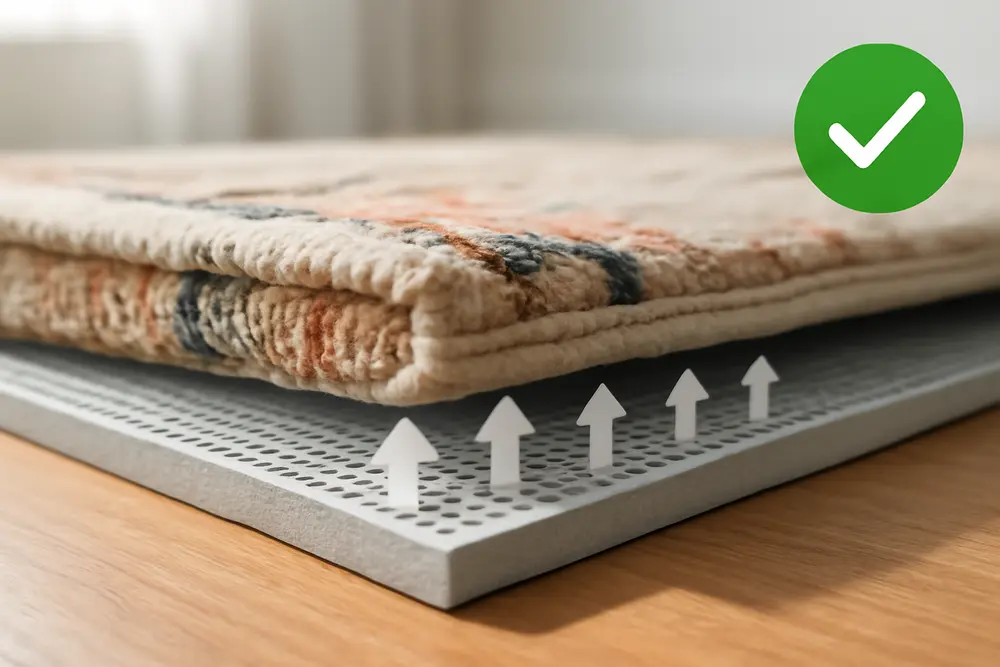
Rug pad ventilation isn’t a marketing buzzword. It’s the airflow your floor needs to avoid becoming a blotchy biology lesson. You want a pad that allows air circulation, spreads loads evenly, and doesn’t create a sealed plastic lid over the floor. Here’s what that looks like in the real world.
Choose breathable materials. Open-weave felt, natural rubber with perforations, or mesh designs let air move. Skip dense foam bricks and heavy solid rubber that trap vapor the way a lid traps soup steam. Retailers in humid regions often push breathable pads and seasonal airing for good reason. See examples of climate-aware rug care from a retailer in a humid market here.
Look for raised or textured surfaces. Ribbed or nubby textures create micro-air channels. Those tiny gaps keep condensation from clinging to one spot. Some natural rubber pads are designed with open-grid patterns that actively breathe and are marketed as mold or mildew resistant. You’ll find examples of those designs from specialty pad makers like Georgia Rug Pads. Aim for a pad that feels springy with visible air pathways, not a slab with zero texture.
Avoid impermeable backings. Plastic sheeting, vinyl runners, or any pad that blocks vapor entirely can lock moisture against wood and concrete. Unless a contractor specifically tells you to use a moisture-blocking underlayment for a floor system, don’t use plastic under your area rugs. If you must for a specific reason, leave generous breathing edges and plan routine lift-and-air sessions.
Size the pad a bit smaller than the rug. Leave at least a 1 to 2 inch air gap at the perimeter. That small border is a pressure relief valve for humidity under the rug. It also helps edges lie flat without gluing themselves to the floor.
Keep an eye on chemistry. Some low-grade synthetic pads can off-gas or stick to floor finishes. Choose pads that are finish-safe for your floor and actually advertise breathability. Bonus points if they use natural rubber or felt blends that are less likely to trap moisture or smear finishes.
Spill Management That Actually Works
Spill management is where mold prevention wins or loses. Liquids don’t care that your rug is pretty. They’ll go straight through fibers, pool on the pad, then soak into the floor. You’ve got 24 to 48 hours to beat mold to the finish line, and quicker is always better.
Start with blotting, not scrubbing. Press clean, absorbent towels into the spot and change them as they saturate. You’re trying to remove volume fast. Scrubbing just grinds the spill into fibers and foam.
Lift the rug and inspect the pad and floor. If the pad is thick, spongy, or smells like a wet dog, remove it. This is where people hesitate, but it’s cheaper to replace a pad than to remediate a subfloor. If the pad is open-grid and only lightly damp, stand it on edge for maximum airflow.
Promote airflow aggressively. Stand the rug like a tent, aim a fan across the floor surface, and run a dehumidifier if RH is above 50 percent. You’re trying to move dry air across wet surfaces. For foam or shag rugs that stay wet, consider using a wet-dry vac on the back side, then continue fan and dehumidifier use.
Verify dryness. If you own a pinless moisture meter, check the floor surface and a known-dry control area to compare. No meter? Keep fans running for a full day, then reassess by touch and smell. If any musty odor lingers, you’re not dry yet. The 24 to 48 hour target for full drying is a common industry rule of thumb and lines up with advice in subfloor mold prevention resources.
Treat stains last. Once moisture is under control, address rug stains with fiber-safe cleaners. Don’t re-wet the area without planning the drying phase again. If the spill was protein-based or sugary, bacteria can join the party, so thorough drying is even more critical.
Room Airflow And HVAC Support
Micro-climates are sneaky. If air barely moves at floor level, humidity can spike in that zone even when your thermostat looks fine. That’s why closets grow fuzz on shoes while the rest of the room looks normal. The same concept applies under a rug. Airflow fixes a lot.
Use ceiling or floor fans to keep gentle circulation across rugs. Do not block supply vents with giant area rugs or couch forts. If your HVAC is struggling to drop humidity, have it checked. Poor dehumidification or weak airflow can let RH creep above 50 percent, especially in shoulder seasons. If you’re curious why still air makes mold happy, the closet mold article does a neat job showing how local airflow issues encourage growth.
Check duct placement and returns. Rugs or furniture that cover baseboard returns reduce air mixing and temperature control at the floor. If you use standalone dehumidifiers in basements or on slabs, position them so dry air sweeps across common rug areas, not just in a corner. And if your home has ventilation quirks, take a page from attic airflow lessons. Blocked vents above cause condensation; blocked airflow below your rug does the same thing on a smaller scale. That airflow logic shows up clearly in attic mold prevention tips.
Subfloor Humidity Checks
You can’t manage what you don’t measure. A cheap digital hygrometer can save your floors by telling you when the air is driving moisture into materials. Place one near floor level in rooms with large rugs, and another in crawlspaces or basements below. Indoors, aim for 30 to 50 percent RH. In crawlspaces, keep RH under 50 percent and use vapor barriers on soil to stop ground moisture. Crawlspace dehumidifiers can be sized and placed to manage the whole underfloor volume, which pays off upstairs when your floors stop acting like sponges. Detailed targets and placement notes are covered in this crawlspace guide.
Concrete slabs need attention too. If you suspect slab moisture, tape a square of plastic to the floor for 24 hours in a hidden spot. If you see condensation, you’ve got vapor pushing upward. That calls for dehumidification, potentially surface sealers rated for vapor transmission, and pads with maximum ventilation. If the moisture is significant or chronic, it’s time for a professional moisture evaluation.
Routine Rug Care That Actually Works
You don’t need to baby your rugs, but you do need a routine. Lift and air large rugs seasonally, especially at the first sign of sticky weather. Rotate rugs so the same spots aren’t constantly squashed by furniture, which compresses pad channels and blocks airflow. Vacuum both sides when you can, because dust is mold’s snack drawer. Dust traps moisture and feeds colonies, so starving it out is a win. If your home swings humid in spring and fall, schedule a dehumidifier run during those months by default. Little habits here save you from big remediation bills later.
Red Flags And When To Call a Pro
You know that musty, gym-locker smell you pretend isn’t from your rug? That’s a red flag. So are visible dark stains or tacky finishes under the rug, frequent reappearance of spots after cleaning, or soft, swollen boards along plank seams. If you keep cleaning and the problem returns, moisture is still active somewhere. It might be a slow plumbing leak, vapor drive through a slab, or crawlspace humidity feeding through the subfloor.
Call a professional if mold covers more than about 10 square feet, if you find recurring growth under multiple rugs, or if you suspect subfloor damage. Visible mold larger than a beach towel is not a DIY weekend. You want a moisture investigation with instruments, not guesses. Any inspector worth their respirator will test with calibrated meters, check humidity at multiple levels, and tell you whether the fix is as simple as better rug pad ventilation or as involved as installing a vapor barrier in the crawlspace. If you’re curious about common moisture triggers and long-term fixes, the roundup on causes of mold is a solid primer.
Rug Pad Ventilation Buying Guide
When you shop for a pad, pretend you’re picking a breathable running shoe, not a cast. Words like open-grid, ventilated, perforated, and breathable are your friends. Natural rubber and felt blends with texture are often safe bets, but always verify floor-finish compatibility. Pads that specifically list mold or mildew resistance are helpful, but the design still needs airflow. If the pad looks like a yoga mat with no holes, that’s an airflow nope. Measure your rug, buy the pad slightly smaller, and don’t forget the edges need to breathe. If you live in a humid climate or sit over a crawlspace, prioritize ventilation features even more than cushion thickness. A little less plushness beats a lot more mildew.
Spill Management Playbook
Let’s put spill management in one place, because coffee waits for no one. First, blot like you mean it with clean cotton or microfiber. Second, lift the rug and inspect. If the pad is soaked, remove it. Third, dry from both sides with fans and a dehumidifier until everything, including the floor, is truly dry. Fourth, treat the stain on the rug only after moisture control is done. Fifth, reassess pad choice. If this is the third time you’ve had a spill drama, a faster-drying, open-grid pad saves future grief.
Quick Moisture Control Wins
Humidity creeps. Take back control with simple moves. Keep RH under 50 percent, and if you’re frequently above that, get a dehumidifier that can actually move air across the floor zone. Make sure supply and return vents aren’t smothered by rugs. Use ceiling fans in summer and low fan settings in winter to nudge air across the floor. In basements, run dehumidifiers and keep doors open so air circulates. If you’ve got a crawlspace, get a true ground vapor barrier and maintain the dehumidifier like you actually like your floors.
Common Mistakes That Create Moldy Rugs
There are a few classics. People toss plastic under a rug to protect the floor, only to discover they created a sweat lodge. Others use super-thick foam pads that feel great and dry terribly. Another frequent misstep is ignoring subfloor conditions. If your slab or crawlspace is humid, the rug is a symptom, not the problem. Last, folks spot-clean the top of a spill and never check beneath. If you’re going to scrub the top, you’ve got to dry the bottom. That’s the rule.
FAQ: Rug Pads, Mold, And Dry Floors
Do Rug Pads Cause Mold?
Rug pads don’t cause mold by themselves. Trapped moisture does. Dense, non-breathable pads trap moisture more easily and slow down drying, which raises risk. Ventilated pads reduce that risk by letting air circulate.
What Relative Humidity Should I Target Indoors?
Keep indoor RH between 30 and 50 percent. Once you drift above 50 percent consistently, you’ll see condensation and damp materials that invite growth. This target aligns with industry guidance for mold prevention.
How Fast Do I Need To Dry A Spill?
Within 24 to 48 hours. Faster is better. That clock includes the rug, pad, and floor surface. Use fans and dehumidifiers and lift the rug to create airflow.
Are Plastic Rug Pads Or Mats Ever A Good Idea?
Not for mold prevention. They can protect finishes from color transfer, but they trap moisture. If you must use one for a specific reason, leave wide breathing edges and lift-and-air frequently. A ventilated alternative is usually better.
What If My Slab Is Always Damp?
That points to vapor drive or a missing or compromised vapor barrier. You’ll need a moisture evaluation. Solutions often include dehumidification, surface treatments compatible with vapor, and changing to highly ventilated pads. Chronic slab moisture is a building issue, not just a rug issue.
Can I Save A Soaked Foam Pad?
Usually not worth the gamble. Foam holds water like a sponge and dries slowly. Replacing it is cheaper than treating recurring mold or a damaged floor.
Why Does My Rug Smell Musty Even When It Looks Clean?
Odors often show up before visible growth. Lift the rug, check the pad and floor, and verify humidity levels. If odor returns after cleaning, there’s still moisture.
Field-Tested Checklist For Dry Rugs
I’m all for fewer to-dos, but these work. Choose a ventilated rug pad with open-grid or ribbed texture and finish-safe materials. Keep the pad 1 to 2 inches smaller than the rug. Blot spills immediately, lift and dry from both sides, and aim fans across the floor. Keep room RH under 50 percent using HVAC and dehumidifiers. Avoid blocking supply or return vents with rugs or furniture. Lift and air rugs during humid seasons and vacuum both sides occasionally. Monitor slab or crawlspace humidity with hygrometers and address vapor barriers or dehumidification if needed. If mold keeps returning, get a professional moisture inspection and adjust your rug pad ventilation strategy accordingly.
If you’ve made it this far, you’re officially tougher than mold. Set up real rug pad ventilation, get ruthless about spill management, and manage humidity like a boss. Your floors will look better, your rugs will last longer, and the only thing growing under them will be your smug sense of victory.