
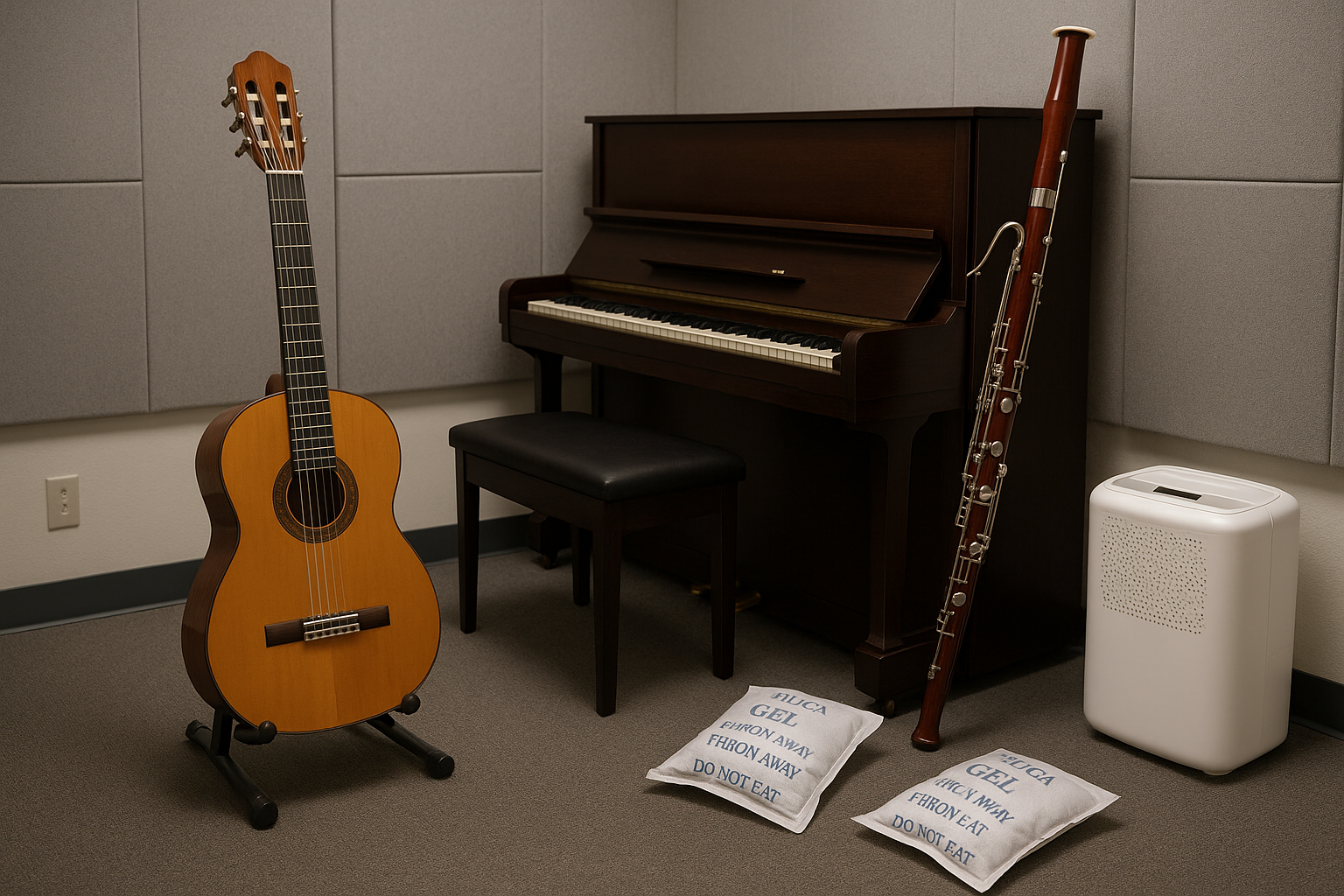
Musical instruments hate mold. Guitars shrink and crack, pianos go moody and wander out of tune, and woodwinds sprout fuzzy science projects on reeds. The enemy is not just mold spores, it is moisture and time. The good news is you can control both. As a mold remediation pro and unapologetic gear nerd, I am handing you a practical playbook for ideal humidity for guitars, real world piano humidity control, and reed and pad care that keeps woodwinds from turning into a petri dish. No fluff, just the right RH targets, case and room strategies, safe cleaning moves, and what to do if you open a case and get a whiff of eau de basement.
Why humidity matters to wood instruments
Wood breathes. That is great for tone and terrible for stability if humidity swings all over. When air is dry, wood gives up moisture and shrinks. When air is wet, it takes on moisture and swells. On an acoustic or hollow body guitar, that can mean fret sprout, top sink, high action, or cracked bridges. On pianos, moisture messes with the soundboard crown and pinblock which means pitch drift, sluggish action, rusty strings, and a new tuning bill. Woodwinds are a triple threat since you have wood bodies, pads, and organic reeds that soak up moisture from your breath like a sponge. Pads can delaminate, stick, and grow a nice gray coat if they never get the chance to dry out.
Then there is mold. Mold needs moisture, food, and time. Give it a humid case lining with some skin oils and reed juice, and it sets up shop. Indoors, you want humidity in a healthy band where mold is less likely to light up. Our home and studio guidance is simple. Keep indoor RH roughly 30 to 50 percent and avoid long periods above 60 percent. If something gets wet, dry it within 24 to 48 hours. That timeline cuts mold off at the knees. If you like the science and prevention basics, read our page on why humidity matters for mold.
Ideal RH targets
There are sweet spots that keep wood happy and reduce mold risk. Hit these, and you will save yourself repairs, re pads, and a lot of sad ballads.
Guitars
Acoustic and hollow body guitars feel best around 45 to 55 percent RH. A wider safe zone is 40 to 60 percent. That range comes straight from Taylor Guitars, and as builders they have seen every weather mistake under the sun. Put a small digital hygrometer in your case and in the room. If your ambient room dips under 40 percent for long stretches, use case humidifiers or two way humidity packs like D’Addario Humidipak to keep the case in range. If you live in a coastal steam bath, a small silica gel pack inside the case helps keep a lid on moisture between sessions. Taylor’s humidity tips are a solid reference for case and room strategies, and you can read them right here.
Pianos
Piano humidity control is a long game. The Piano Technicians Guild points many owners to a steady 42 percent RH target. The exact number is less magic than the consistency. Holding your piano around the low to mid 40s reduces seasonal pitch swings, helps the soundboard keep its shape, and cuts down on sticky action. If your climate swings wildly, consider a piano humidity control system that lives inside the cabinet or under the soundboard and uses mild heat and water to moderate the micro climate. That is where Dampp Chaser or similar systems come in. PTG lays out the logic for this target and approach here on their site PTG humidity control. For many homes, a room dehumidifier and careful placement away from vents and windows gets you close.
Woodwinds
For clarinets, saxes, oboes, and friends, the instrument body and pads like the same general room band of 40 to 60 percent RH. The bigger mold risk is from reeds and saliva soaked pads. Reeds must be dried after play. Do not seal a wet reed in a tight case and forget it for two days unless you want it to grow a sweater. Use a ventilated reed case and rotate your reeds. Some pros keep ready to play reeds in a humidity controlled case that holds a higher RH. That can work if you are careful and sanitize the case, but it is never a substitute for drying after each session. For specifics on reed mold prevention, this reed care guide covers the do and do not fundamentals.
| Instrument | Target RH | Safe Room Range | Case or room tools |
|---|---|---|---|
| Acoustic and hollow body guitars | 45 to 55 percent | 40 to 60 percent | Two way case packs, in case humidifier for dry rooms, silica gel for wet rooms |
| Pianos | About 42 percent steady | 35 to 55 percent common guidance | Room dehumidifier or installed piano system plus careful placement |
| Woodwinds and reeds | Room around 40 to 60 percent | Same as room | Ventilated reed case, swabs, silica for cases in wet climates |
Monitor first, then tweak
If you only adopt one habit, make it monitoring. Without a hygrometer, you are flying blind and guessing with your tone. Put a small digital hygrometer in the case and one in the room. For guitar cases, park the sensor in the storage pocket or at the headstock end where you can see it when you open the lid. For pianos, set a room hygrometer on top of the cabinet away from vents, windows, and direct sun. For reed storage, use a small case sensor or a humidity pack with a known set point so you are not guessing. Multiple sensors are better than one, because cases and rooms often disagree by ten points or more. If your readings swing fast from day to day, that can be worse for wood than a small steady offset. Stay steady and your setup will thank you.
If you use an ultrasonic humidifier in winter to fight dry air, clean it often. Ultrasonics can spit minerals and biofilm if neglected. We see white dust on furniture and gunk in the tank, which is not great for lungs or instruments. Our notes on humidifier care and safe RH targets walk through proper maintenance and simple water tips so you get moisture without the mess.
Case level protection
Cases are both a shield and a trap. If you close a warm sweaty instrument in a sealed case, you just created a sauna for mold. Treat the case like a mini climate that needs its own plan. Guitars are the easiest example. In dry regions, two way humidity packs stabilize the case around the 45 to 50 percent mark. You install a few packs in the soundhole and under the headstock and swap them when they dry out. Taylor suggests this approach for many owners and it works. In wetter regions, toss in a small silica gel canister instead to catch the extra moisture. Use regenerable packs so you can dry them in the oven and reuse. If you open the case and the sensor reads above 60 percent for days, you need more drying time after you play or a dehumidifier in the room.
Woodwind cases collect moisture in the lining and in the pad area. After a session, swab the bore, blot under the keys with a pad saver or cigarette paper, open the case for air flow, and let the instrument cool. Only then should you close it. Reeds should live in a ventilated case, not stuck wet on the mouthpiece inside a closed case. That habit alone cuts out most reed mold.
Piano cases are rooms with keys. The case level control for a piano is either a room solution or an installed humidity system in the cabinet. If humidity is consistently outside of your target, call your piano tech about a system that holds the internal RH steady around that 42 percent sweet spot. That kind of close control greatly reduces tuning drift and mold risk inside the action. The PTG page linked above explains why that number works well for many instruments.
Room level control
Practice rooms and storage rooms set the backdrop for your case. If the room is a swamp, your case has to fight hard. If the room is a desert, your case humidifier will burn through packs like crazy. The answer is simple. Put a dehumidifier or whole house solution to work and hold the room in range, then fine tune with case tools. Place the dehumidifier so air can circulate around it and do not shove it in a corner behind a drum throne. Close windows, seal obvious leaks, and let the built in humidistat guide the machine. We have a practical guide for placement, capacity, and when to combine with desiccants in small compartments here on where to place dehumidifiers & desiccant use.
For pianos, room control plus a piano installed system is often the dream team. Keep the room steady and the internal system smooths out the short term bumps near the soundboard. That means fewer seasonal swings and a happier action. Keep the piano away from exterior doors, radiators, and floor vents. Little things like that pay off.
Desiccant vs dehumidifier
I get this question a lot. Do I use silica gel or a dehumidifier. Use silica gel or other desiccants in small sealed spaces like instrument cases, lockers, or gear cabinets. Use a powered dehumidifier in open rooms, studios, basements, or any space where air is constantly exchanging. A fistful of silica gel in a large room is like a sponge in a swimming pool. It will not move the needle. Conversely, running a dehumidifier for a tiny sealed case is like bringing a tour bus to a driveway jam.
Guitars and woodwinds live in cases most of the time, so you can fine tune with case devices. Pianos live in rooms, so go room first and consider an installed system for fine control. If you are not sure which tool is right for your specific space, our team can look at the room size, RH pattern, and any moisture sources and recommend a setup that does not waste power or consumables.
Safe cleaning for wood, felt, pads, reeds
Cleaning is where well meaning owners do the most damage. Resist the urge to blast everything with bleach or random household sprays. Different materials want different care.
For guitar bodies and piano exteriors with varnish or lacquer, a soft dry microfiber cloth after each play session removes sweat and oils. If you need more, use polishes or cleaners that are made for guitars or pianos. Read your builder’s care guide. Many luthiers approve a light application of lemon oil on unfinished rosewood or ebony fingerboards. Test in a small spot first and never soak the wood. Avoid ammonia and strong solvents, and avoid anything abrasive. For a deeper how to, this general guitar care piece is a good refresher on cloths and purpose made products guitar cleaning basics.
For felt, hammers, and action parts inside a piano, skip wet cleaning. That felt holds moisture and offers mold all the food it needs. If it is dusty, a light vacuum with a soft brush attachment helps. Anything beyond light dust calls for a piano technician who can clean and regulate without wrecking alignment. If the felt is moldy, stop and call a tech. Mold in a piano action spreads, and aggressive DIY cleaning often makes it worse.
For woodwind pads and reeds, the first rule is drying. Reeds should be removed, rinsed lightly with clean water if needed, wiped, and placed in a ventilated reed case. If you see visible mold on a reed, many players will discard it. Some use a short soak in a dilute hydrogen peroxide solution followed by a rinse and full dry, but if mold is heavy you are better off replacing. Pads should not be soaked. Blot moisture with cigarette paper or pad saver sheets, and let the instrument air out. If pads are sticky or have mildew, your technician can clean and recondition them or replace as needed.
If you find small spots of mold on hard case surfaces or hardware, our general household guide on safe mold cleaners & DIY steps covers mild agents like white vinegar or 3 percent hydrogen peroxide for non porous surfaces. Always spot test inside the case first and keep liquids away from delicate finishes, glues, and padding. Instruments are not tile. When in doubt, ask your tech.
After gig routine
This is where mold prevention becomes habit. When you pack up after a sweaty set or a long practice, you want the instrument to shed moisture before you seal it up.
For woodwinds, swab the bore completely, open the instrument on a stand for a few minutes, remove the reed, wipe the mouthpiece, and blot keys and pads. Put reeds in a ventilated holder so they can dry with light air flow. Do not jam a wet reed back in a closed case, and do not leave a soaked pad pressurized under a key overnight. That is how you get sticky pads and green fuzzy stuff.
For guitars, wipe the strings and body with a clean dry cloth, let the guitar cool to room temperature if you were under stage lights, then place it in the case. If your room is dry, add your two way packs to the soundhole and under the headstock. If your climate is humid, use a small regenerable silica canister and check your case sensor the next day to confirm you are in range. Taylor’s case humidity advice is solid here and worth a read if you have not adopted a system yet Taylor humidity tips.
For pianos, the after gig routine is really an ongoing room routine. Keep the lid closed when you are not playing if your room tends to be humid, and run your dehumidifier on a schedule. If you transport a keyboard or an acoustic instrument across seasons, let it acclimate to the destination room before tuning or a serious session. Sudden swings are rough on wood.
What to do when mold appears
If you open a case and it smells like a thrift store basement, do not panic. Here is a calm triage plan that keeps things safe.
First, move the instrument to a clean dry area. Separate the instrument from the case so you can treat each part correctly. If the mold is only on the case lining, vacuum with a HEPA machine to remove loose growth. Then lightly clean the lining with a mild detergent solution or white vinegar and water on a cloth. Do not soak the foam or felt. Spot test the fabric first. If the lining is saturated or smells stubborn after drying, replacement is the simplest fix. Add fresh silica gel and monitor RH once the case is back in service.
If the mold is on instrument hardware or a sealed non porous part, a carefully applied 3 percent hydrogen peroxide or white vinegar on a cotton swab can help. Wipe and immediately dry. If the mold is on a sensitive finish, inside a soundbox, on piano felt, or in woodwind pads, stop and call your technician or our team. Aggressive cleaning can damage finish, glues, or felts. If the room also smells musty, you likely have a moisture source feeding the problem. Check humidity, inspect for leaks, dry wet materials within 24 to 48 hours, and use a dehumidifier to pull the room back into the safe band. Our article on where to place dehumidifiers & desiccant use explains how to set this up so you are not fighting the same battle every month.
Piano humidity control without drama
Pianos are fussy because they are complex wooden machines under constant string tension. The reason piano humidity control matters so much is pitch stability and action feel. Seasonal swings cause the soundboard to change shape, which changes downbearing and pitch. Technicians can tune around it, but owners who hold room RH steady around that 42 percent mark tend to report better stability and longer life on action parts. If your climate is mild, a good room dehumidifier plus smart placement usually does the job. If your climate whipsaws or your home HVAC cannot keep the room steady, a piano system gives you control right at the instrument. The Piano Technicians Guild provides clear guidance on how those systems work and why the 42 percent target sees wide use. Their page is here PTG humidity control.
Guitar case humidity without guesswork
Guitar owners have it easier than most because cases are small and modern products make it simple. Keep a digital hygrometer in the case. If the reading sits below 40 percent for more than a day or two, install two way humidity packs made for guitars. The packs add or remove moisture to hold the case near that sweet spot and are placed in the soundhole cradle and near the headstock. If the reading sits above 60 percent, skip the water and load up a small silica canister. Vent the case for a short time after play if the guitar is warm. Taylor has a straightforward guide that mirrors this approach Taylor humidity tips. Follow that and your top will keep its arch, your action will behave, and mold will not find a happy home in your plush case lining.
Reed and pad care that stops mold
Reeds are organic, which means mold thinks they are lunch. The only way to win is to control moisture and time. After every practice or gig, remove the reed, rinse briefly in clean water if needed, wipe, and place it in a ventilated reed case. Rotate reeds so none sit wet for long. Do not seal a wet reed in a plastic coffin and forget it. For the instrument, swab the bore, blot pads, and give it a few minutes to air before the case closes. Keep the room around 40 to 60 percent RH if you can. If you need ready to play reeds stored slightly humid for feel, use a purpose built reed case that manages RH and clean it on a schedule. The moment you see fuzzy spots on a reed, retire it or disinfect carefully and dry fully. This practical guide lays out the basics well reed mold prevention.
When to call a pro
If you keep cleaning the same case and the fuzz keeps coming back, the room is probably feeding it. If your piano action smells musty or shows mold on felt, call your technician. If you are seeing mold on multiple cases and a persistent musty odor in the practice room, it is time for an inspection. We track moisture, run air and surface tests when needed, and write a plan that fixes the source rather than just spraying a scent. If you want help right now, book a visit on our page for professional inspection and remediation.
Quick note on health. If anyone in the space is reacting with cough, wheeze, or headaches in that room, do not wait. Mold is not a good bandmate. We will find the moisture source, dry it, and clean up safely so you can get back to playing without the swamp vibes.
What Howard Environmental does for studios
We work with home studios, school band rooms, churches with pianos, and venues with gear closets that smell like low tide. Our team handles moisture diagnostics, humidity control advice, mold inspection and testing, and full remediation when growth is established. We also coach you on daily routines that keep cases and rooms in the safe zone. If you want a second set of eyes on your setup or need a quote on cleanup, reach out through our professional inspection and remediation page.
Common mistakes to dodge
I see the same avoidable mistakes over and over. Owners seal hot instruments in cases right after a set. Reeds get left wet inside a closed case all weekend. Pianos sit under AC vents that blast cold dry air every time the unit kicks on. People buy fancy case humidifiers but never put a hygrometer beside them to see if the system is working. Or they run an ultrasonic humidifier in winter, ignore the tank, and wonder why every surface has a film. The fix is simple. Monitor and then tweak. Dry first, then close. Keep rooms in range, then fine tune cases. Clean humidifiers so they do not turn into murk machines. Your tone and tuning will hold steadier and you will not be feeding mold.
FAQs
What RH should I keep my acoustic guitar at?
Aim for 45 to 55 percent RH in the case. A wider safe range is 40 to 60 percent. Use two way packs if ambient air is dry and silica gel if it is humid. Taylor Guitars backs these numbers in their humidity guidance, which you can read on their site.
Is 42 percent RH really necessary for pianos?
It is a common target because it stabilizes the soundboard and reduces pitch drift. The key is steady control more than the exact number, but many piano humidity systems aim for 42 percent for good reason. The Piano Technicians Guild explains the target and the benefits here PTG humidity control.
Can I use silica gel in my guitar case?
Yes, especially in humid climates or if your case tends to sit wet after gigs. In dry climates, use two way packs that add moisture instead. For rooms and larger spaces, switch to a dehumidifier. We break down both tools on where to place dehumidifiers & desiccant use.
How do I dry an instrument after a gig?
Woodwinds get a full swab, pads blotted, reed removed and dried in a ventilated case, and a few minutes of air before closing the case. Guitars get wiped down, allowed to cool, then placed in a case with the right packs. Pianos rely on room control rather than case steps. Reed mold prevention basics are shown here reed mold prevention.
What cleaners are safe for instrument finishes?
Use a dry microfiber cloth daily and manufacturer approved guitar or piano polishes if needed. Avoid bleach, ammonia, and strong solvents. Fingerboards that are unfinished can accept products meant for that wood species with a very light touch. A general guide is here guitar cleaning basics. For mold on non porous parts, see our page on safe mold cleaners & DIY steps and always spot test.
When should I call a mold inspector?
If mold is widespread, keeps returning, lives inside piano actions or cases, or you notice health symptoms in the space, schedule an inspection. We will track down the moisture source and write a targeted plan. Book here for professional inspection and remediation.
Put it all together
If you hold just a few truths, you will keep your instruments clean and happy. Monitor both case and room, not just one or the other. Keep rooms in the 30 to 50 percent band for general wellbeing and get nervous if you see over 60 percent with no end in sight. For guitars, target 45 to 55 percent in the case. For pianos, aim for a steady 42 percent with room help or an installed system. For woodwinds, treat reed drying as a ritual, not a suggestion. Use desiccants for small sealed spaces and dehumidifiers for rooms. Clean like a luthier or tech would, not like a bathroom ad. If something grows, stop it fast and fix the moisture source so it does not return. And if you need a hand, call the mold nerds who also respect good tone. We are ready to help you tune the air so your music can do the talking.