
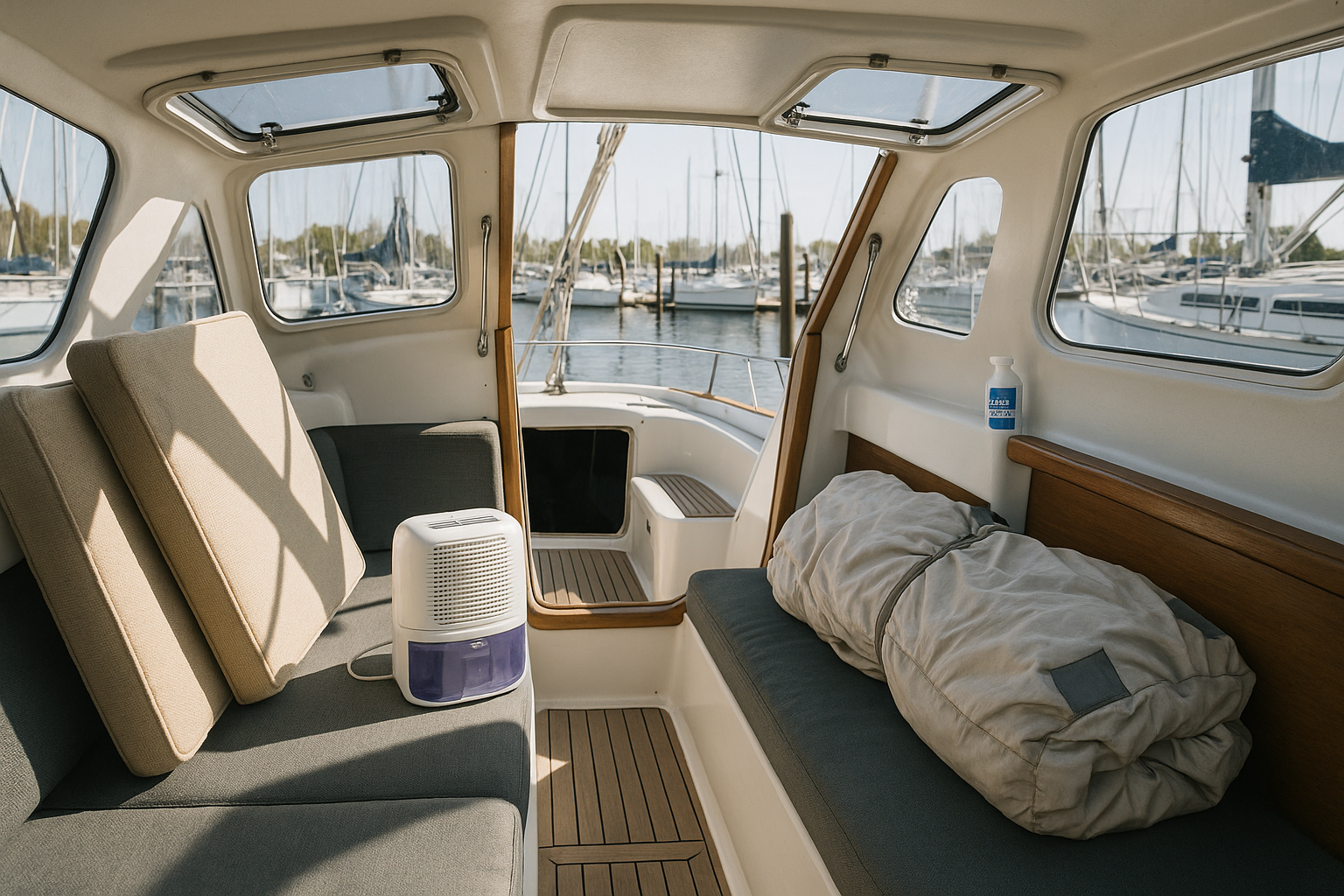
Boat mildew prevention is not a luxury, it is a survival tactic for your nose, your cushions, and your sanity. Marine cabin moisture control keeps your weekend from smelling like a forgotten gym bag. If you sail or power through the seasons, this guide gives you practical steps that actually work on a real boat, in real weather, with real wet gear. We will talk airflow at the dock and underway, how to keep the bilge from turning into a swamp, what to do with cushions and sails, which cleaners are safe, and how to store under shrinkwrap without growing a science project. If you suspect hidden growth already, or a musty odor keeps coming back, you can always schedule a mold inspection and we will come sniff out the culprit.
Why mildew appears on boats
Mildew needs moisture and time. Your boat supplies both in buckets if you let it. Moisture is the primary cause of indoor mold growth, so fix leaks and control humidity or the colonies will move in. That is mold science 101 and you can read our breakdown of what causes mold to see how quickly small water problems spiral into odor and staining. Practical Sailor testing also points at a target that works in the real world. Keep cabin relative humidity below about 50 to 55 percent to reduce mildew risk (Practical Sailor). That number is not random. Above it, spores find the party conditions they want.
Moisture plus stagnant air equals growth
Air that sits, saturates. Air that moves, dries. Ventilation kicks out the stale humid stuff and brings in fresh dry air. Dorade or cowl vents, solar vents, even a small fan can keep air exchange going which undercuts mildew fuel. Good ventilation is one of the best defenses on boats according to Practical Sailor and BoatUS (Practical Sailor) (BoatUS). Spores also drift around invisibly, settle on damp surfaces, then take hold. For a quick primer on how that happens in cabins, bilges, and lockers, see our page on how mold spreads.
Ventilation at dock and underway
Move air or mildew moves in. At the dock, get passive and active solutions working together. Screened dorade or cowl vents keep a constant trickle of air moving without letting rain or critters join the party. Place one forward and one aft to create through flow. If you have shore power, run a small marine dehumidifier or a Goldenrod style heater to knock down relative humidity, especially during shoulder seasons (Practical Sailor). If power is intermittent, a solar powered vent or a quiet 12 V fan is your best friend. Both Practical Sailor and BoatUS recommend solar vents for boats that sit on moorings or swing on a hook (BoatUS).
Underway, the cabin attitude changes with speed and sea state. Even if the companionway stays closed, crack hatches or cowl vents when safe to reduce stagnation. A compact 12 V fan that pulls air from the bilge toward an overhead vent helps clear damp air that otherwise lingers below the sole (Practical Sailor). Make a habit of opening the boat wide on sunny days at the dock too. BoatUS suggests airing out for a half hour to an hour to swap humid air for dry (BoatUS).
Keep a basic digital hygrometer in the cabin. Check morning humidity, then again after ventilation. If it sits above the mid fifties, step up air exchange or add dehumidification. You do not need a fancy system. You need a consistent routine.
Bilge and locker moisture control
If the bilge holds water, your cabin breathes that moisture all day. Standing bilge water drives humidity and it smells like low tide after a storm. Start with drainage and pump function. Verify the bilge pump, float switch, and limber holes are working. Fix backflow issues so the bilge does not refill quietly after the pump stops. Standing bilge water dramatically raises cabin humidity and odors (boats dot com). A clean dry bilge is the cheapest dehumidifier you will ever own.
Next, promote air movement. A small bilge blower or a quiet fan can push dense cool air out of the lowest corners. During layup, stash desiccant tubs in pockets that never seem to dry. Calcium chloride containers pull significant moisture but the liquid brine is caustic, so place tubs level and handle with care. Practical Sailor and BoatUS both support the use of chemical desiccants for winter storage where power is not available, with dehumidifiers and Goldenrod heaters as great tools when you have power at the dock (Practical Sailor) (BoatUS).
Lockers collect drips, muddy gear, and condensation. Add vents or louvers where you can to lockers that stay closed most of the time. Prop lids open when the boat sits. Throw a few reusable silica gel packs in each compartment and refresh them on a schedule. Moist gear belongs outside in the sun until it is dry to the core, not sealed into a warm locker that sweats at night and bakes by day.
Cushion and locker drying tips
Soft goods hold moisture like a grudge. Never stow cushions or bedding while damp. Sunlight is free and works wonders on foam. Pull covers when you can, dry the foam until weight and feel match a dry baseline, then reinstall. If you will leave the boat for weeks, take cushions home or store them upright with air space on all sides. Both Jamestown Distributors and BoatLife stress complete drying before storage to stop mildew in seams and under zipper tapes (Jamestown Distributors) (BoatLife).
Lockers that hold life jackets, foul weather gear, and fenders need air. Add breathability with vented panels. Use bins that allow air flow, not sealed plastic tubs that trap moisture. Toss in silica packs, then swap or bake them dry regularly. If a cushion smells musty even after a good dry, it might be time to replace the foam. Porous materials that grew mold can hold on to staining and odor even after surface cleaning.
Simple rule that saves headaches. If it goes in a locker, it goes in dry. If it cannot go in dry, it should not go in at all.
Sails canvas and wet gear storage
Wet sails stuffed into a sail locker have ended seasons early since the first cotton canvas met a drizzle. Dry sails completely before you bag them. Store them loosely folded in a cool dry place, not vacuum packed in plastic. Practical Sailor and boats dot com both recommend breathable sail bags that let any final traces of moisture ease out over time (Practical Sailor) (boats dot com). Canvas covers, biminis, and dodgers should get the same treatment. Rinse salt, dry fully, then store where air can circulate.
Foulies, wetsuits, and PFDs can be stealth troublemakers. Rinse after use, hang in the sun or a breezy spot, then place them where air still moves. Do not pile them in a bag and walk away. If something has a sour smell in a day or two, it was not dry enough. Repeat the process until there is no damp feel left in seams and layers.
Safe cleaners and PPE
Start gentle, then step up only if needed. For routine mildew on non sensitive surfaces, begin with mild soap and water. If staining remains, many boaters have success with oxygen based cleaners that lift organic marks without the harsh bite of chlorine. Practical Sailor testing follows that ladder. Start mild, escalate only when needed, and test in an inconspicuous spot first (Practical Sailor).
Chlorine bleach can help on some surfaces including certain vinyls, but use it correctly and carefully. Follow CDC and EPA guidance. Dilute properly, which means no more than one cup of bleach per gallon of water. Clean off dirt first so the solution can contact the surface. Ventilate the area. Wear PPE that matches the task. CDC calls for an N95 respirator, goggles, and gloves for significant cleanup. People with asthma or who are immunocompromised should not perform mold removal themselves (CDC) (EPA). Never mix bleach with ammonia or any other cleaner. That combination can release toxic gases that send people to the hospital (EPA).
If you want lower impact choices that still work, look for EPA Safer Choice products and verify them in the database (EPA Safer Choice). On delicate materials go slowly and rinse very well. Catch fresh spots fast so you avoid harsh chemistry later.
Shrinkwrap and winter storage
Shrinkwrap can be a mold maker if you trap moisture. Do the prep. Clean and dry the interior thoroughly. Remove bedding, loose cushions, rugs, and anything that soaks up humidity. If it can hold water, it leaves the boat first. That prep keeps the inside dry during long cold weeks (BoatLife). Soundings and BoatUS echo the same advice. Dry before you wrap or you will pay for it with mildew once spring arrives (Soundings).
Next, demand a vented wrap. Install screened vents in the plastic to create airflow from low to high points. Consider a solar vent unit if the boat sits where sun exposure is decent. Ask for a zippered access door so you can step onboard mid winter to air out and check for leaks. BoatTEST and BoatUS emphasize proper vents and access to prevent a wet greenhouse effect that breeds mildew under the plastic (BoatTEST) (BoatUS). If you use a canvas cover rather than shrinkwrap, place spacers so air can move between the cover and the deck, then uncover periodically to let the boat breathe (Practical Sailor).
Final point. You can leave a boat shrink-wrapped all winter as long as the wrap has proper vents, all soft goods are removed and dried, and you check the interior now and then. Skipping any of those steps leads to a spring project you did not plan on.
Quick preventive checklist
Print this, tape it inside a locker, and make it a habit.
- Visit on sunny days, open ports and hatches for at least half an hour to swap humid air for dry air (BoatUS).
- Keep the bilge dry. Test pumps, float switches, and clear limber holes (boats dot com).
- Air dry cushions and sails fully before stowing. Sun is your ally (Practical Sailor).
- Run dorade, cowl, or solar vents and use a hygrometer to keep RH under the mid fifties (Practical Sailor).
- If shrinkwrapping, insist on screened vents and a zippered access door. Remove soft goods before the wrap goes on (BoatTEST) (BoatLife).
- Use mild cleaners first. Follow CDC and EPA safety notes for bleach and PPE (CDC) (EPA).
- If musty odor persists or you see widespread growth, schedule a mold inspection.
When to call a pro
Some jobs are Saturday chores. Some jobs are call in the cavalry. Call us if you see large areas of visible growth, if kids or anyone with asthma will be onboard, or if the smell returns right after you clean. That suggests hidden moisture that needs professional tools to find. We break down the decision points in our frank guide to professional mold remediation. If you are unsure and want straight answers, hit the big button to schedule a mold inspection. No pressure. Just the data you need and a plan that fits your boat and your budget.
FAQs
How do I stop mildew from coming back on cushions?
Dry them completely with covers off when possible. Store off the boat during long breaks or use breathable covers. Clean seams and zipper tapes. Place silica packs where you store them and refresh those packs often (Jamestown Distributors).
Is bleach safe to remove mildew on boat vinyl?
It can be, with careful dilution and good ventilation. Clean the surface first, then use a bleach solution as CDC and EPA advise. Wear gloves, goggles, and an N95. Never mix bleach with ammonia or any other cleaner. Test a hidden spot first to make sure color and texture stay intact (CDC) (EPA).
Can I leave my boat shrinkwrapped all winter?
Yes, if the wrap has proper vents, you removed and dried all soft goods, and you check the interior during storage. Add a zippered access door so inspections are easy (BoatTEST) (Soundings).
What humidity level should I aim for inside the cabin?
Keep relative humidity below about 50 to 55 percent to reduce mildew risk. Practical Sailor testing supports that target on real boats (Practical Sailor).
What is the safest first step when I spot mildew?
Ventilate, remove any wet gear, and dry the space. Clean a small test area with soap and water, then decide if you need a stronger cleaner. Wear PPE for any visible growth cleanup. If the stain keeps coming back, you may have a hidden source that needs professional attention (CDC).
Should I use a heater or a dehumidifier at the dock?
Both can work. A small marine dehumidifier removes water directly, which is usually the best play when shore power is available. A Goldenrod style heater raises surface temperatures slightly which discourages condensation in small spaces. Many owners run a dehumidifier in the main cabin and use Goldenrod units in lockers or under berths (Practical Sailor).
When should I get professional testing or remediation?
If growth covers a large area, if anyone onboard has health issues, or if you suspect hidden moisture behind liners or under sole panels. That is when a pro is worth it. Read our guide to professional mold remediation or go ahead and schedule a mold inspection.
Moisture control drives everything. Keep humidity down and air moving. Dry the bilge and the soft goods. Vent the wrap. Clean safely. Do those things consistently and your cabin will smell like teak and sea breeze, not old socks and regret.
Citations used in this guide include Howard Environmental science pages for moisture control and spread dynamics, Practical Sailor for marine ventilation and storage tactics, BoatUS and BoatTEST for shrinkwrap and winter storage, boats dot com and Jamestown Distributors for bilge and cushion care, plus CDC and EPA for cleaning and PPE guidance.