
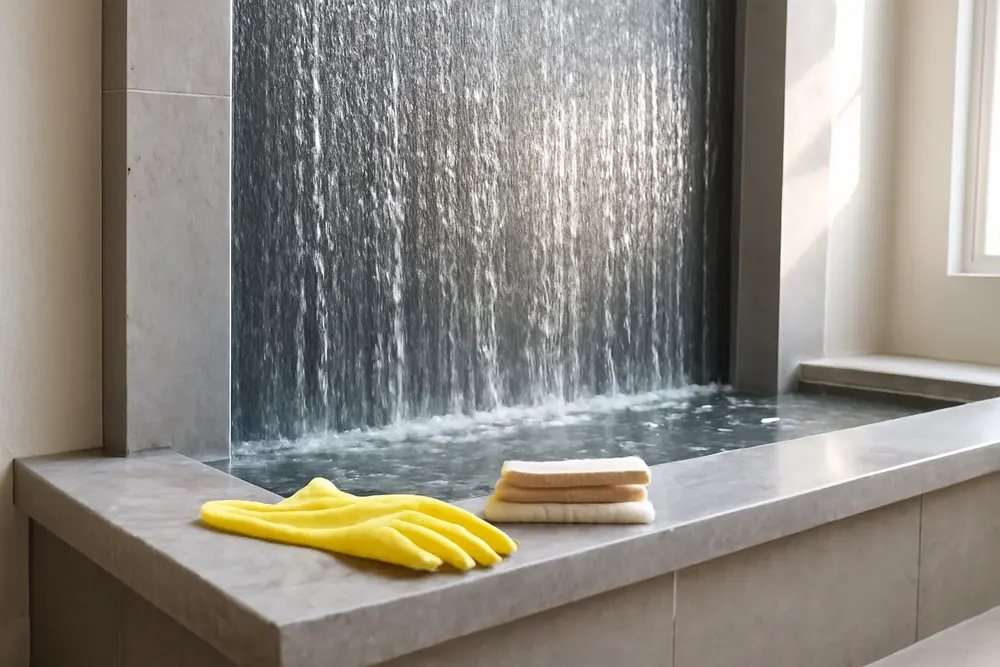
Indoor fountains and water walls look classy, sound soothing, and secretly audition as mold’s favorite Airbnb. If yours keeps slipping from spa-lobby chic to swamp-thing grim, you’re not alone. Wet zones breed biofilm and mold fast, especially when water sits, air is still, and pH drifts off course. As a mold inspector who’s seen fountains hiding more life than a petri dish, I’ll show you how to keep the water crystal, the walls gleaming, and your air healthy. We’ll talk water treatment that actually works, airflow that prevents condensation, and a maintenance game plan you’ll actually follow.
Why Water Features Breed Mold
Water features create the exact mix mold and biofilm love: constant moisture, warm indoor air, and cooler surfaces that collect condensation. In rooms with decorative water, vapor migrates to nearby surfaces like grout, drywall, wood, or window frames and condenses when temperatures dip. That moisture, especially on porous finishes, is the starter kit for fungal growth. This is the same wet-zone physics that make indoor pools and saunas mold magnets, as explained in Howard Environmental’s notes on moisture control in wet areas. You can see how they connect humidity, temperature, and surface wetting to mold-friendly conditions here: Indoor Pool & Sauna Mold Control.
Inside the fountain or water wall, you’ve got a second ecosystem trying to throw a party. The CDC’s guidance on decorative fountains lists sediment, biofilm, stagnant water, and tepid temperatures as growth triggers you don’t want. They even outline disinfection practices aimed at keeping bacteria like Legionella from getting comfy. Their module is worth a skim: CDC Decorative Fountain Guidance.
Here’s where crud loves to hide in water features: underneath pump housings where slime builds out of sight, inside tubing and spray nozzles that never get flushed, and behind the splash zones of water walls where grout lines stay damp. If your wall uses absorbent backer materials, expect perpetual dampness unless airflow and temperature are dialed in. The result is a quiet biofilm factory that keeps reseeding the water.
Water Treatment That Actually Works
Water that looks clear can still host plenty of microbial drama. The fix is steady, boring, predictable water care. That means testing, correcting pH, maintaining sanitizer, and occasionally going nuclear when things get funky.
Start with testing. Use simple test strips or a drop kit to measure pH and free chlorine. Keep pH between roughly 7.2 and 7.8 so your sanitizer actually works and metals or stone aren’t chewed up. Pacific Fountain Supply explains how neutral pH supports sanitizer performance and reduces scaling: Understanding Water Quality In Water Features.
For disinfection, the CDC recommends maintaining disinfectant and avoiding stagnation in decorative fountains. For very small units under about 5 gallons, they cite 3 to 5 ppm free chlorine for at least an hour daily as a guideline. If you’re running a larger fountain or a water wall reservoir, maintain a measurable free chlorine residual appropriate to your equipment and materials, and verify it daily with a reliable test kit. You’ll find the CDC’s module here: CDC Decorative Fountain Module.
You can also use enzyme cleaners weekly to break down organic gunk that feeds biofilm. Enzymes don’t replace sanitizers, but they make your sanitizer’s job easier by digesting the food source. This overview gives you a sense of where enzymes fit in a safe-care approach: Safe Chemicals For Fountain Water. If algae shows up, a fountain-safe algaecide can help, though copper-based products may stain some stones or grout. Always follow label instructions and check compatibility with metals, pump seals, and coatings.
Shock treatments are your reset button. If water turns cloudy, smells off, or you see obvious slime, drain and scrub or shock-disinfect. The CDC explicitly recommends shocking when biofilm or clouding appears. For features with sensitive finishes, many owners do a full drain-and-clean first, then refill with balanced, treated water rather than pouring strong chemicals into a dirty system.
One quick caution on chemistry: never mix chlorine bleach with vinegar or ammonia. If you use bleach for disinfection, use it in clean water only and rinse thoroughly before using anything acidic like vinegar to tackle mineral scale. Keep the different cleaners on different days, with fresh water between them.
Airflow, Humidity, And Placement
Indoor fountains and water walls are mini humidity machines. If you run them in enclosed rooms with poor ventilation, moisture will wander to cooler surfaces and condense. That damp ring around the baseboards or that weirdly wet window sill is your early warning siren. Howard Environmental’s condensation guide pegs healthy indoor relative humidity around 30 to 50 percent. Surfaces should dry within 24 to 48 hours or fungi will start colonizing. Their practical overview is here: Control Condensation On Window Sills.
Give the room a fighting chance with air exchange. Use a quiet fan aimed across the water surface to break up stagnant air. If your space trends humid, run a dehumidifier set to keep RH under 50 percent. In mild weather, crack a window while the feature runs. If your water wall lives on an exterior wall, make sure that wall’s interior surface stays warm enough that it does not become the cold condenser for airborne moisture. A small increase in room temperature during operation can prevent surface wetting on those colder areas.
A cheap digital hygrometer is your best friend. Park one near the feature, another on a nearby cool surface, and check morning and evening. If you consistently see RH above 55 to 60 percent when the feature runs, tweak airflow, reduce run time, or increase dehumidification until surfaces stay dry.
The Maintenance Routine
Indoor fountain maintenance and water wall cleaning should be simple enough that you actually do it. Short, consistent routines beat occasional heroics. Here is a schedule that works for most homes and small commercial spaces.
| Frequency | What To Do | Why It Matters |
|---|---|---|
| Daily or Every 2 Days | Skim dust and debris, check water level, run the pump at least once daily if you usually keep it off. | Organic debris and stagnation fuel biofilm. Low water can burn pumps and reduce flow that keeps surfaces rinsed. |
| Weekly | Test pH and sanitizer, adjust as needed; wipe splash zones and the basin waterline; clean the pump intake screen. | Balanced water keeps disinfectant effective. Wiping breaks young biofilm before it matures. |
| Monthly | Drain, rinse, and scrub basins, walls, and nozzles; flush tubing; replace or clean filters; inspect for slime in hidden spots. | Deep cleaning resets the system. Tubing and hidden chambers are common mold reservoirs. |
| Seasonally | Inspect grout, seals, and nearby walls for dampness, discoloration, or a musty smell; service the pump; recalibrate test kits. | Building materials around the feature often show early warning signs of hidden moisture issues. |
For monthly cleanings, non-abrasive pads and soft nylon brushes are your best tools. For mineral scale, a white vinegar soak on removable parts works well, or use a manufacturer-approved scale remover if your stone is sensitive. Tackle biofilm with a fountain-safe cleaner or a diluted peroxide solution on hard, non-porous parts, then rinse. If you smell a swamp despite cleaning, do a shock treatment per the product label or fully drain, scrub every surface, and start fresh with balanced water.
If you need more step-by-step visuals for indoor water fixtures, Midwest Tropical has straightforward maintenance tips: Maintaining Indoor Water Fixtures. For scrubbing techniques on hard surfaces, this cleaning overview is also helpful: Keep Fountain Water Clean.
Materials And Cleaners That Help
Some materials are naturally more mold-resistant. Sealed stone, glazed ceramic, and quality stainless components clean easier and harbor less growth than raw porous masonry. If you’re building a new water wall, seal porous stone thoroughly and re-seal on a manufacturer-approved schedule. Around the feature, a hard, cleanable finish is your friend. Treated wood can look great, but keep it out of the continuous splash zone and inspect it often. If you have drywall nearby, consider upgrading that area to a moisture-resistant finish or a wipeable coating.
Be cautious with harsh chemicals in closed rooms. Bleach disinfects quickly on hard, non-porous surfaces but can attack pump seals, corrode metals, and leave residue that irritates eyes and lungs if you do not rinse well. Many fountain-care pros like white vinegar for mineral buildup and enzyme formulas for organic debris. Always verify that your cleaner is compatible with your basin material, pump parts, and any decorative metals. Never combine cleaners unless the label explicitly says it is safe.
Slimy Film, Cloudy Water, Musty Smell?
If your fountain water looks like it wants its own ecosystem, use a simple triage. First, stop the pump, remove the power source, and go hunting for the source of slime. Pull the pump, check the impeller housing, and inspect tubing. If the tubing walls look opaque or stained, replace them. If nozzles spit unevenly, soak and scrub them to remove growth and mineral grit. Next, drain the basin, scrub every surface, flush the plumbing, and rinse thoroughly. Refill with fresh water, balance pH, then bring the sanitizer up to target. Run the pump and re-test after 30 to 60 minutes.
Still smells off the next day? Shock-disinfect per label instructions or do a second drain-and-clean, then add an enzyme product weekly for a month as backup while your sanitizer keeps residual control. If algae keeps returning, try a fountain-safe algaecide and re-check your light exposure. Direct sun can heat water and speed growth, so adjust run time or shading if possible.
If the room smells musty even when the water looks fine, the issue may be outside the reservoir. Check the backside of water walls, the floor under the basin, and the wall or floor transitions for dampness. If surfaces are wet to the touch or show staining and paint bubbling, you have a building-material moisture problem, not just a water chemistry problem.
When To Call A Pro
There are times when DIY scrubbing isn’t enough, and you need a mold inspection. If mold covers more than about 10 square feet, if it comes back a week after every cleaning, or if nearby materials like wood trim, grout, or drywall are deteriorating, bring in a professional. Persistent health symptoms like sneezing, coughing, or asthma flare-ups near the feature are another clue the problem is airborne and not just cosmetic. A trained inspector can check behind the scenes, sample air and surfaces, and map moisture so you treat the actual source rather than just the symptom. You can learn what a thorough investigation covers here: Howard Environmental.
If you keep cleaning the same spot and it always returns, you likely have a hidden moisture pathway. This guide explains why “repeat offenders” keep coming back and what to change so they stop: Mold Keeps Coming Back In The Same Spot.
FAQ: Fountains And Water Walls
Can I Use Essential Oils In My Fountain?
Skip it. Oils can gum up pumps, form films that block oxygen transfer, and neutralize some sanitizers. If you want scent, use a diffuser away from the water feature so your chemistry stays stable and your pump does not become a perfumed paperweight.
Is A UV Sterilizer Worth It?
UV can help reduce microbes that pass through the chamber, but it is a supplement, not a replacement for sanitizer and cleaning. UV does nothing to the slime clinging to tubing walls or the grunge under your pump. If you add UV, keep testing, maintain a sanitizer residual, and clean surfaces on schedule.
How Often Should I Change The Water?
For small fountains, many owners drain and refill weekly or bi-weekly, especially if there is heavy dust or pet hair in the room. For larger features with filtration, test disinfectant and pH at least weekly and do a monthly partial or full drain depending on debris load. If water clouds or smells, drain and reset right away.
Can I Use Distilled Or RO Water?
Yes, and it can reduce mineral scale and white crust on stones and glass. You still need sanitizer, pH checks, and cleaning. Distilled water is not a get-out-of-biofilm-free card.
Are Enzyme Treatments Safe Around Pets?
Many enzyme products are marketed as non-toxic, but pets should not drink fountain water that contains any treatment chemicals. Check the product label and block pet access to basins. When in doubt, pick pet-safe products and keep your sanitizer at the low end of the effective range with consistent testing.
Does Running The Pump All Day Help?
Circulation discourages stagnation and helps your sanitizer reach more surfaces. The CDC emphasizes avoiding stagnant water in decorative fountains for a reason. If humidity control is good, running longer is helpful. If humidity spikes, reduce run time, improve airflow, or add dehumidification so nearby surfaces do not stay damp.
Practical Tips That Keep Features Fresh
Place felt or rubber isolation pads under pumps so you can easily lift and inspect beneath them. Label your tubing with the install date and replace it every 6 to 12 months if it clouds or stiffens. Keep a small kit next to the feature with test strips, a soft brush, microfiber cloths, white vinegar, an enzyme product, and spare filters. If you operate the feature only for guests, still run the pump daily for a few minutes to prevent stagnant zones. Keep towels handy to dry splash areas immediately and prevent the 48-hour moisture window mold needs to get established, as outlined in this condensation guide: Control Condensation.
Finally, treat your water wall like an appliance, not art you never touch. You would not leave a fridge door cracked open for the sound of cold air. Treat humidity, pH, and sanitizer with the same respect, and your feature will reward you with perfect white noise instead of a slime opera.