
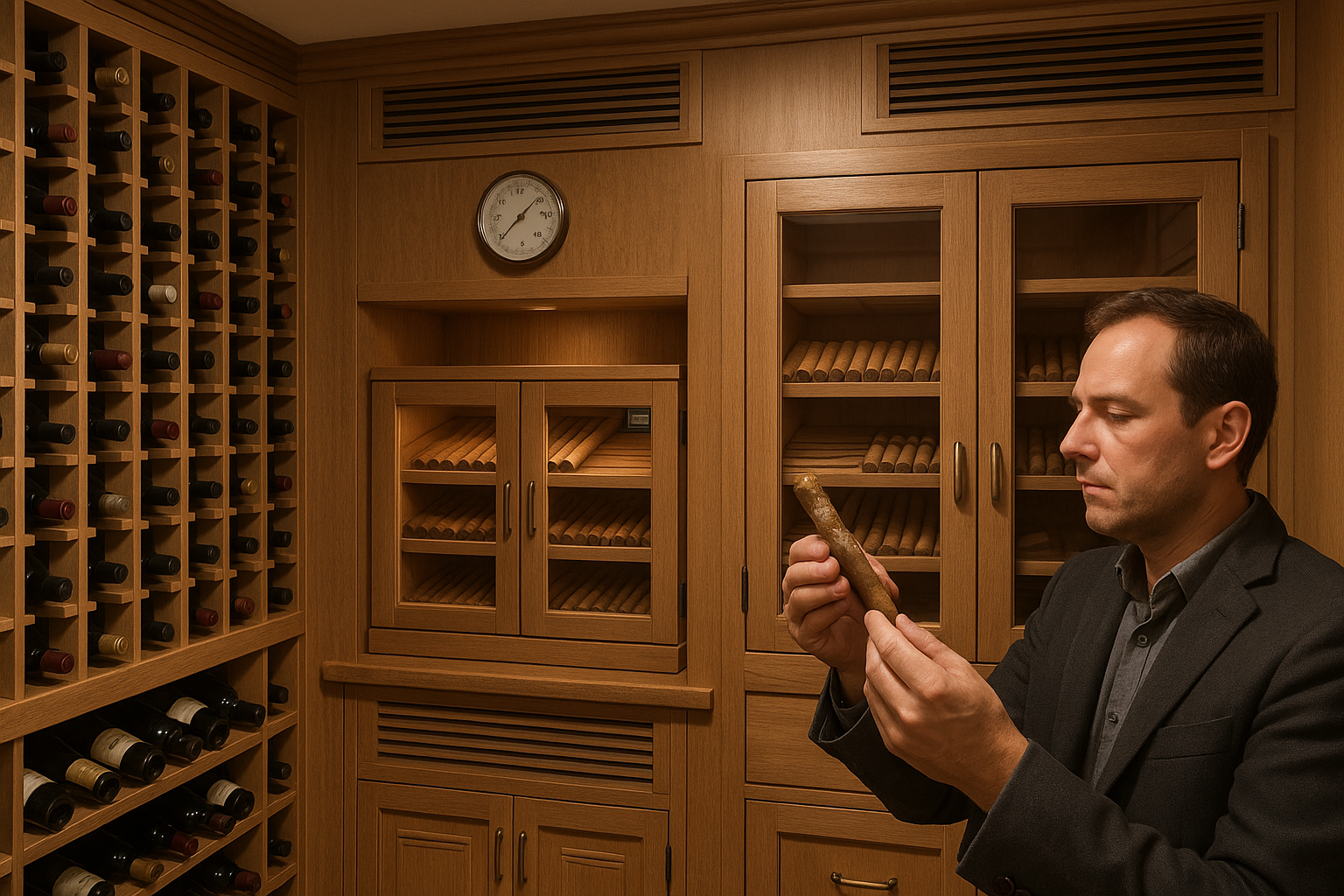
You love a buttery Chardonnay that has been lounging at 55 degrees just as much as you love a well aged torpedo with perfect draw. Your cellar and your cigar room are supposed to be happy places. Then mold shows up like an uninvited cousin who heard there was free cabernet. The trick is humidity that keeps corks elastic and cigars supple without creating a petri dish. I run a mold inspection and remediation company. I see what goes wrong after humidity gets treated like a vibe instead of a controlled variable. In this guide I will show you how to keep wine and cigars in their comfort zones without feeding mold. You will get real targets, ventilation that actually helps, leak and condensation fixes, finishes that push back on spores, quick tests for plume versus mold on cigars, plus a maintenance plan that will not eat your weekends.
The sweet spot for humidity and temperature
Wine wants one thing. Cigars want another. Mold wants whatever you forget to control. Hit the right ranges and keep them steady. Wild swings are what chew up labels, swell wrappers, dry out corks, and invite a fuzzy surprise behind the racks.
| Space | Relative Humidity | Temperature | Notes |
|---|---|---|---|
| Wine cellar | 50 to 70 percent, aim near 60 | 50 to 60°F, 55°F is common | Stable beats perfect. Prolonged humidity above the upper sixties pushes risk |
| Cigar room or humidor | 65 to 72 percent, 69 is the crowd pleaser | About 65 to 70°F. Stay below low seventies to limit mold | Use distilled water for refillable devices |
For wine cellars, the industry sweet spot sits near 60 percent relative humidity with a temperature near 55°F. You will find that range cited by wine storage pros such as the humidity overview from Maximum. You get corks that stay plump without drips on the foil or moss on the stone. Let the space drift toward the upper sixties for weeks and the risk curve bends upward fast. Hit the mid seventies and mold starts a house party.
For cigars, the usual target lives between 65 and 72 percent relative humidity with 69 percent as the common setting endorsed by many manufacturers. The logic is simple. Tobacco oils stay happy, burn stays even, and wrappers do not split. Warmer air speeds up growth, so keep the room near the upper sixties. Boveda shares practical cigar storage settings plus a good rule to avoid mixing different RH products in one box. Follow that and your humidor stops acting like an eighth grade science experiment.
The Environmental Protection Agency advises that general living areas stay below 60 percent and ideally between 30 and 50 percent to slow mold growth. Your cellar and humidor are controlled exceptions. They can run higher as long as the envelope is tight, surfaces are not wet, and no hidden water source is feeding spores. Dry any wet material within 24 to 48 hours. Fail that window and mold gets a head start. The EPA brief on mold and moisture has that guidance in plain language.
Why stability matters more than chasing a single number
Wine does not like a roller coaster. Cigars hate it even more. High swings swell and shrink corks and wrappers. That pumps air in and out, pulls in odors, and leaves condensation on cold surfaces. Sensors that bounce around often mean air leaks or poorly sized equipment rather than actual humidity chaos. Calibrate your hygrometers so you are not arguing with a gadget that is three points off. A reliable digital thermometer and hygrometer pair in each space is a tiny investment that saves big trouble later.
Targets that drift by season
If your home climate swings from wet summers to dry winters, you might nudge set points a bit. Slightly lower humidity in peak summer can help limit surface condensation on cool cellar walls. Slightly higher humidity in dry winter can keep cigar wrappers from cracking. Keep changes small. Large seasonal swings invite mold in one season and dried out corks in the next.
Ventilation without feeding mold
Fresh air sounds lovely until it wrecks your humidity control. Rarely does a wine cellar need a constant gulp of outside air. You want circulating, filtered air in a tight envelope with minimal uncontrolled exchange. Building Science Corporation has a great note on wine cellars that stresses low ventilation rates with recirculation. A balanced setup that encourages gentle air movement is your friend. High outside air intake in a humid climate is a mold slip and slide.
Wine cellar airflow that behaves
Think of the cellar as a thermos. You want the drink to stay cold, not constantly swapped with the kitchen. If you use a cooling unit, follow the manufacturer ducting and venting guidance so the hot side of the unit does not bake a nearby utility closet or pull humid air through wall leaks. The aim is balanced return and supply within the cellar with enough circulation to avoid dead corners. A tiny fan that moves air along the back wall can stop micro climates where condensation forms.
Charcoal or activated carbon filters can help with odors. They do not fix moisture problems. Exhaust from condensers should go to a space that can handle the heat load without raising humidity around the unit. If you cut a random pass through to the garage you will get new smells and a brand new condensation problem when summer arrives.
Cigar room airflow that does not trash flavor
Inside a sealed humidor you want no outside air exchange. You want controlled humidity, predictable temperature, and clean interior surfaces. For larger cigar rooms, design HVAC with humidity control and limited outside air. If you bring in outside air for odor control, use a timed method and filtration. Place returns so smoke gets captured without blasting your head with a vent. Do not locate intakes next to kitchens or garages unless you want eau de garlic clove with your Churchill.
Use gentle circulation. A small fan on a timer that mixes the air is usually enough. Strong direct blasts dry out wrappers. Weak corners invite mold colonies. The goal is even conditions inside the room and inside cabinets.
Do not confuse ventilation with dehumidification
Opening the door to air the place out feels satisfying. It almost never dries the space unless the outdoor air is cooler and drier than the cellar air. In warm humid weather you are just importing moisture. A properly sized dehumidifier or a cooling system that controls dew point is the tool that actually removes water from air. If you are seeing foggy bottles or sweating stone, you need moisture removal rather than extra venting.
Moisture sources and leak control
The fastest way to win the mold game is to stop water from getting where it does not belong. In cellars, hidden leaks are the usual culprit. In cigar rooms and humidors, overfilled devices and sloppy refills cause tiny wet zones that grow into a problem. My company sees it every week. Stop the water and you stop the mold.
Howard Environmental has a guide on common causes of indoor mold that covers hidden leaks, high indoor humidity, and poor drainage. Start there if you want a quick checklist. Fix roof and gutter issues. Grade soil away from the foundation. Seal wall and ceiling penetrations. Clear HVAC drip pans and drains. Every time. Dry any wet material within 24 to 48 hours to cut off growth. That timeline comes straight from the EPA brief on mold and moisture.
Wine cellar envelope must haves
Vapor barrier belongs on the warm side of the insulation. If you get that backwards you can trap moisture inside the wall. Seal cracks in concrete. Weatherstrip the door. Use an insulated, tight door assembly. A leaky door will flood your cellar with humid air every hour which turns your cooling unit into an expensive dehumidifier. Porous finishes such as raw wood and unsealed stone soak up moisture and release it later. That creates damp pockets perfect for mold. If you love the look of wood or stone, seal it correctly, use controlled humidification, and avoid wet cleaning methods that leave surfaces damp for long periods.
Cigar room and humidor moisture gotchas
Most humidor mold comes from water on surfaces rather than air that is a couple points high. Overfilling sponges or foam elements drips onto Spanish cedar and starts growth in a corner. Use distilled water when the device requires water. Never mix two different RH products in the same sealed box because they fight each other. Keep trays and dividers clean and dry. For a walk in cigar room, double check that any sink, ice maker, or bar equipment is on the other side of a sealed partition or you will send constant moisture into the space without noticing.
Sizing matters for dehumidifiers and cooling
Undersized equipment runs constantly and never reaches set point. Oversized equipment short cycles which leaves moisture in the air. Use manufacturers sizing guides for wine cellar cooling units and for dehumidifiers. CellarCool and CellarPro publish useful charts. AlorAir has a learning page on controlling humidity in wine cellars that explains when to pair a dehumidifier with a cooling system. Get the sizing right and your cellar controls humidity without brute force. If that sentence sounds like your last fight with a treadmill, you are not alone.
Finishes and materials that resist growth
You cannot paint your way out of an active moisture problem. You can pick surfaces that slow growth once leaks and condensation are handled. That is the right time for mold resistant coatings and smart material choices.
Surfaces that play nice in higher humidity
Tile, sealed concrete, metal racking, and sealed or stained hardwoods handle moderate humidity far better than raw drywall or raw softwoods. Raw drywall in a cellar is a dare. If you have porous masonry or wood that you want to keep, use a coating that resists moisture and is rated for higher humidity. HGTV has a clear overview of mold resistant paints with a reminder that these products do not fix a moisture source. They are the last step, not the first.
In cigar storage, Spanish cedar is standard because it buffers moisture gently, it smells amazing, and it helps tobacco age. Cedar does not prevent mold if you let the RH climb or if you introduce liquid water in a corner. Keep surfaces clean. Avoid flavored cleaners that leave residues. Use a dry wipe or a slightly damp cloth with distilled water for routine cleaning, then dry fully with the lid open before you reload cigars.
Label and cork protection for wine
Persistent high humidity leaves labels stained and smeared. It also attracts dust that glues itself to glass and foil. Aim near 60 percent and use circulation to keep air moving along the rack faces. If you want to seal labels on collectible bottles, use removable wrap made for that purpose rather than packing tape. Better yet, keep humidity in the target range so you do not need to wrap every bottle like it is entering a rain forest.
Plume versus mold on cigars
This one sparks heated debates in lounges everywhere. Plume also called bloom is a fine crystalline look that can develop on well aged cigars when oils migrate to the surface and crystallize. It is harmless. Mold is not. You do not need a microscope. Use your eyes, your fingers, and your nose.
Color and texture tells the story
Plume is white or light gray and looks like a dusting of very fine powder. It appears fairly evenly across the wrapper. It sits flat on the leaf. Mold is often fuzzy or velvety. It can be white but is frequently green or blue or even black. It tends to appear in patches, especially near the head or the foot or where two cigars touch.
Brush and smell checks
Plume brushes off cleanly and leaves no stain. Mold smears, leaves a mark, or clings in clumps. Plume smells like tobacco. Mold smells musty or sour. If you cannot tell after a gentle brush and a sniff, isolate the suspect cigars in a separate container and watch for growth. Cigar Aficionado has a glossary entry that explains plume in simple terms. Holts and Famous Smoke both publish quick guides with photos and have the same advice. If you confirm mold, discard those cigars and clean the humidor thoroughly.
How to clean a humidor after mold
Remove all cigars. Vacuum with a clean brush attachment to lift spores without grinding them into the wood. Wipe interior surfaces with a cloth lightly dampened with distilled water. Do not soak the cedar. Dry with the lid open until the wood is fully dry. If mold persists or if you see growth deep in the wood grain, retire the box or consult a cigar storage specialist. Do not use scented cleaners inside a humidor. The smell will never leave and your next cigar will taste like a department store.
Humidity control gear that works
There is no trophy for fighting humidity with DIY hacks. Use gear that was designed for this job. Match the device to the room size and your climate. Simple is usually better.
Wine cellar equipment
Small cellars do fine with a dedicated cooling unit that manages temperature and humidity. If your climate runs humid, add a dehumidifier with a condensate pump to drain to a safe location. For larger rooms, use a professionally sized system that covers both heat removal and humidity control. Follow manufacturer ducting details so you do not dump heat or moisture where it will boomerang back. AlorAir has a helpful primer on controlling humidity in wine cellars. The Building Science note on cellars stresses limited outside air and good recirculation. Those two resources are worth bookmarking.
Cigar room and humidor equipment
For small desktop boxes and cabinet humidors, Boveda packs at 65 or 69 or 72 percent are easy and consistent. Use one RH level per box. Do not mix products. For larger cabinets and walk ins, electronic humidifiers with a reservoir and a calibrated digital hygrometer work well. Top off with distilled water. Keep reservoirs clean. If you have a room with HVAC, use a dehumidifier during wet months and an active humidifier during the dry season rather than riding the thermostat up and down.
Spot checks you can do in under ten minutes
Catch small problems before they become a removal project. A short list of quick checks avoids a lot of heartburn. None of this requires a PhD in humidity, only eyes and a thermometer.
- Open the cellar slowly and feel for cool clammy air in your face. That often signals high RH or recent infiltration.
- Run fingers along the lowest racks and along exterior walls. Any clammy or slick surface means you have condensation risk.
- Look at bottle labels near the floor for ripple or stain. That pattern points to a cold corner with poor airflow.
- Check the humidor lid seal with a dollar bill test. If it slides out with zero resistance, the seal might be weak.
- Rotate cigars once a month. Use that moment to look for plume or fuzzy patches. Wipe off plume with a clean cloth if you like the look of a polished wrapper.
- Peek at HVAC drip pans and drains. Slime or standing water means service time.
- Compare two digital hygrometers placed side by side. If they disagree by more than two points, calibrate or retire the flaky one.
Wine cellar ventilation mold control tips
Yes, I used the full phrase because folks Google it. The recipe is simple. Limit uncontrolled air exchange. Move air gently inside the space. Control dew point rather than trusting vibes. If you must bring in outside air, temper it and dry it first. A small mixing fan can erase dead pockets behind racks where cold surfaces meet still air. Small changes deliver outsized results. That is the entire playbook for wine cellar ventilation mold control.
Curious about general indoor humidity targets for the rest of your home so the cellar is not fighting the entire house. We have a local guide that pairs with EPA advice. Read Ideal Indoor Humidity Levels on the Howard Environmental site for numbers that work in real houses in our area. If your house is a steam bath, your cellar loses before the season starts.
Cigar room humidity balance done right
Cigar room humidity balance is not a guessing game. Pick your set point. Use a device that can actually hold it. Stop water from touching wood. Keep air moving without blasting wrappers. Inspect monthly. That is it. If your cigars feel spongy or the burn is uneven, nudge one or two points lower. If they crack or burn hot, nudge up a point or two. Human feedback is as useful as any gadget. Your palate will tell you when the room is dialed.
Odor control without wrecking humidity
Use charcoal filtration and recirculation. If you need an exhaust cycle, run it on a timer and let humidity control recover before the next smoking session. Do not perfume the room. Odors bond to tobacco. Your Davidoff will taste like pine trees for weeks.
Maintenance that keeps mold bored
You can keep mold bored out of its mind with a simple schedule. No bleach cloud, no respirator, no frantic text to your wine group. Ten minutes per week plus one deeper look each season is plenty for most spaces.
Weekly quick pass
Glance at the hygrometer and write the number down. A tiny log on your phone works. Scan for condensation on walls, pipes, or the inside of glass doors. Touch a few bottles near the floor. Listen for a gurgling drain. That is the soundtrack of a clog. In the cigar room, open the humidor and sniff. You want cedar and tobacco, not basement or vinegar. If something smells off, stop smoking in that space until you find the source.
Monthly mini audit
Rotate cigars. Brush off plume if you spot it. If mold, isolate, discard the affected sticks, then clean the box as outlined earlier. In the wine cellar, pick three bottles at random across different shelves. Check labels and cork ends for dark spots or fuzz. Lightly wipe dust so you notice anything new. Empty and clean any dehumidifier reservoirs. Check that condensate pumps actually pump. Replace HVAC filters on schedule. The EPA mold course section on HVAC maintenance is a surprisingly clear resource for this.
Seasonal checks
Look at the cellar door seal. If you see light around the frame, adjust the strike plate or replace weatherstripping. Inspect the vapor barrier termination points if you have access. Look for paint blisters on exterior walls that can signal moisture in the substrate. Test all hygrometers with a salt test or follow the manufacturer calibration process. If your numbers lie, all other work is wasted.
When to call a pro
If you see visible mold on racks, walls, or cigars, or you smell persistent musty odors that do not go away after drying and cleaning, bring in a professional. Hidden water intrusion, poor vapor control, or misbehaving HVAC can fool even seasoned collectors. Our team at Howard Environmental performs detailed mold inspections, moisture mapping, and testing. We work in real buildings every day. If you are in the Austin area, book a visit through our Mold Inspection page. If you already know you have a problem, go straight to Schedule an Inspection. We also have a Causes of Mold page that you can use to chase down contributing factors before you renovate.
Book a mold inspection with Howard Environmental
Read causes of mold and hidden moisture tips
Ideal indoor humidity levels for homes
Schedule an inspection now
Helpful sources worth your bookmark
If you like receipts for the advice above, these are the straight shooters.
- EPA brief guide to mold and moisture for general humidity limits and the 24 to 48 hour drying window
- Wine cellar humidity targets near 60 percent with temperature guidance around 55°F
- Building Science advice for wine cellars on low outside air and recirculation
- Cigar RH guidance from Boveda with the reminder not to mix pack levels
- Plume versus mold definitions from Cigar Aficionado for a quick sanity check
- AlorAir on humidity control in wine cellars for equipment pairing
- EPA mold course on HVAC maintenance for drip pans and drain lines
- Overview of mold resistant paint so you apply coatings for the right reason
FAQ for quick wins
Is 70 percent RH safe for wine storage
Short periods near 70 percent rarely cause trouble if surfaces stay dry and the temperature sits near 55°F. Long periods above the upper sixties increase risk of label damage and mold on porous finishes. Target roughly 60 percent and keep it stable for the best balance. The Maximum guide on wine cellar humidity reflects that range.
What humidity should my humidor be set at
Most cigars sit happily between 65 and 72 percent. If you do not know where to start, set 69 percent. Adjust a point or two after you smoke a few and judge burn and mouthfeel. Boveda has a simple chart and product line matched to those exact targets. Use distilled water if your device requires refills. Do not mix different RH products in one sealed container.
How can I tell plume from mold on cigars
Plume looks like fine white or gray powder that wipes away clean with no stain and no smell beyond tobacco. Mold often looks fuzzy, shows up in patches, and can be green, blue, or dark. It smears or stains when wiped and smells musty. If in doubt, isolate the cigars and watch for growth. Cigar Aficionado and Holts both have visual guides that help.
Do wine cellars need outside air
Rarely. Most cellars perform best with low outside air, controlled recirculation, and filtration. Building Science Corporation advises designs that limit outside air which keeps temperature and humidity stable. Introduce outside air only if it is tempered and dried before it reaches the cellar.
What if my cellar keeps sweating on the walls
That usually means warm humid air is meeting cold surfaces. Check the door seal. Look for gaps at ceiling or wall penetrations. Evaluate whether the cooling unit is dropping surface temperatures too fast for the room. Add gentle circulation to reduce cold stagnant corners. If problems persist, schedule a moisture inspection to locate air leaks and hidden sources.
Can mold resistant paint fix mold
No. Coatings can slow recolonization after moisture problems are fixed. They do not remove contamination and do not cure a leak or high humidity. Remediate growth, control moisture, then apply coatings as the last step. HGTV has a straightforward overview on what these paints can and cannot do.
How fast do I need to dry wet materials
Within 24 to 48 hours. Past that window, mold can establish and spores can spread. That is EPA guidance and it holds true in cellars and cigar rooms. Use towels, fans, and dehumidifiers to speed the process. Then find the source so it does not happen again.
A quick path to a calm cellar and a happy humidor
Pick your RH target. Wine near 60 percent at around 55°F. Cigars between 65 and 72 percent with 69 percent a steady favorite. Keep air moving gently. Limit outside air. Fix leaks, condensation, and drainage before you paint a single wall. Seal porous finishes or select materials that do not sponge up moisture. Use reliable gear rather than air fresheners and hope. Learn the plume checks so you do not toss perfectly fine cigars. Log readings so you spot drift. If mold shows up, do not panic. Dry, clean, correct the source. If you suspect a hidden issue, call a pro.
I am always happy to help assess a cellar or cigar room that has gone squishy. You can request a mold inspection, read through our causes of mold guide, or schedule an inspection if you already see growth. May your corks stay confident and your wrappers stay smooth.