
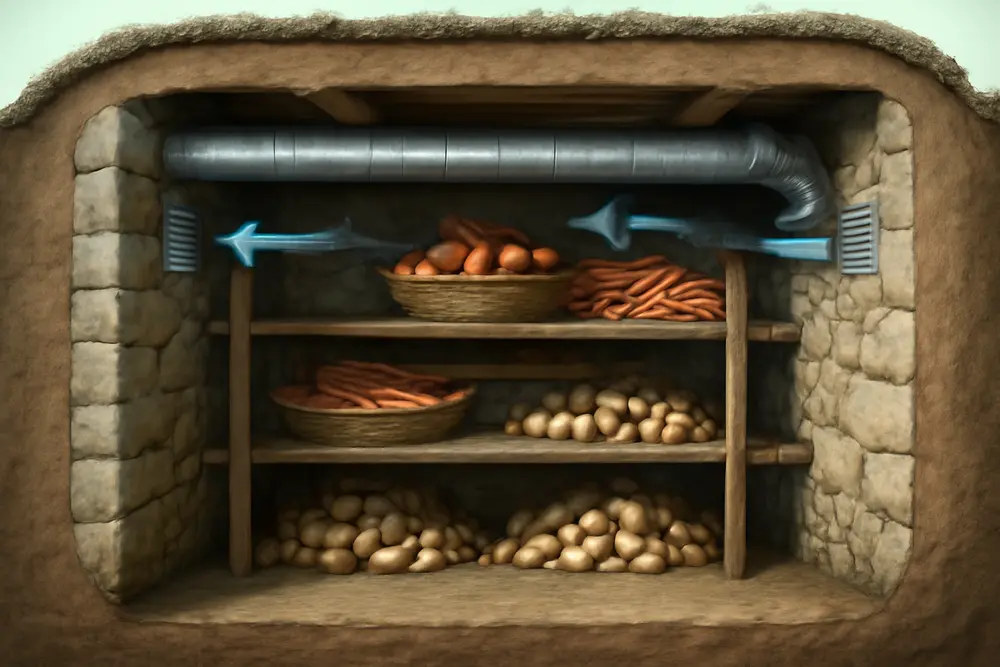
If your root cellar currently smells like a forgotten gym sock and your potatoes are auditioning for a biology textbook, I’ve got good news. Mold hates moving air, clean bins, and a smart plan. Root cellar ventilation and produce storage rotation work like a tag team: one keeps humidity and gases in check, the other keeps the troublemakers from spreading their funk. With the right airflow, crop-specific zones, moisture buffering, and washable storage, you can keep potatoes, apples, and squash happy for months without giving mold a free buffet.
Why Mold Loves Root Cellars
Mold is an opportunist. It lives for still air, wet surfaces, and a little snack on the side. In a root cellar, every vegetable breathes and sweats a bit. That moisture condenses on cool walls and ceilings, then sits there if the air is stagnant. Add in ethylene gas from ripening fruit and carbon dioxide from produce respiration, and you’ve basically built a low-oxygen spa for decay. Root cellar ventilation is the pressure relief valve. It moves humid air out, brings fresh air in, and keeps surfaces drier so mold spores don’t get cozy.
Here’s the key: even a well-built cellar needs steady airflow that you can adjust as outside conditions shift. And because not all crops like the same climate, zoning your space is just as important as designing the vents. Potatoes and apples want it cold and moist. Winter squash prefers it warmer and a bit drier. Get the air moving, then put each crop where it thrives, and you’ll cut mold before it starts.
Temperature And Humidity By Crop
You can’t set one perfect temperature and humidity number for everything unless you enjoy compost. Different crops evolved to handle different winters, which is why apples stay crisp near freezing while squash sulks if it gets that cold. Use a couple of cheap digital thermometers with hygrometers to map your cellar. You’ll find warm and cool pockets, and you can use that to your advantage.
| Crop | Target Temperature | Target Relative Humidity | Notes |
|---|---|---|---|
| Potatoes | 38 to 40 F | 80 to 90% | Helps prevent sprouting and decay. Keep dark. |
| Apples | 30 to 32 F | 90 to 95% | Some varieties do better a bit warmer, around 36 to 40 F. |
| Winter Squash | 50 to 60 F | 60 to 70% | Only after curing. Cooler temps can cause chilling injury. |
These ranges are straight out of university and food-storage guides. For example, UC Master Gardeners and USU Extension detail the colder, wetter needs of potatoes and apples, and the warmer, drier needs of cured squash. Apples tolerate near-freezing quite well, but some chilling-sensitive types hold better a few degrees warmer. If you only have one room, use the coldest, most humid corner for apples and potatoes, then use higher shelves or the side furthest from vents for squash where it will be slightly warmer and drier.
Watch for signs you’re off target. Sweaty walls and lids mean humidity or temperature swings are too high. Shriveling produce means air is too dry or airflow is too direct. Frosty walls aren’t a brag. They signal condensation and refreezing cycles that fuel mold once temperatures swing back up.
Root Cellar Vent Design That Works
Traditional root cellar ventilation relies on natural convection. Cool air goes in low, warm humid air leaves high. You do that with two vents, not one. Place an intake low to the floor, ideally on the shadiest side of the structure, and the exhaust up high on the opposite wall or ceiling. Keep them far enough apart that fresh air has to travel through the cellar instead of short-circuiting from intake straight to exhaust.
A few practical tips you’ll thank me for in January:
Use round pipe for both vents. For small cellars, 4 to 6 inch diameter is common. Add screens to keep rodents out and a way to adjust airflow, like manual dampers or caps. Angle exterior openings downward and add hoods so rain and snow stay out. Extend the exhaust above grade enough to catch a little breeze. Keep the intake near the floor but not so low it gets buried or floods. If your cellar is carved into a hill, the intake pipe can run slightly downhill from the outside to the inside so any condensation drains outward, not onto your potatoes.
Inside, do not park bins right in front of either vent. You want a slow, cellar-wide current, not a cold blast on one unlucky crate. When temperatures outside get brutally cold, partially close the intake to protect near-freezing crops, then reopen as the day warms. The goal is steady, gentle exchange. If you ever see moisture condensing on ceilings or you catch a strong musty odor, open the vents more until that clears. Ethylene and carbon dioxide from produce respiration should not hang around, and ventilation is how you clear them.
Got a modern setup or a cellar that just won’t draft? A small, efficient fan on the exhaust side can help. Use a low-speed inline fan on a timer or humidity controller, and do not point a fan directly at produce. You want the room to exhale, not sandblast your squash.
Airflow Inside The Room
Even with good vents, airflow dies fast when you build a fortress of boxes. Give air a path around and under everything. Use open shelving and ventilated crates with slats or holes. Leave a few inches behind shelves and between stacks. Keep aisles a crate-width wide so you can actually inspect things without a spelunking permit.
Stacking is for clean, dry bins. For anything that perspires or holds moisture, like freshly harvested root crops, give them space. Put the wettest or densest produce lower, so any cool intake air meets that first, and keep the more delicate squash higher and further from drafts. Apples can sit on open shelves or in ventilated bins, but never smother them in plastic or tightly wrapped liners. That traps moisture and turns your fruit into a fog machine.
Airflow also matters under the floor. If your cellar floor is concrete, keep wooden pallets or plastic dunnage under crates so cool, possibly damp floors do not wick into boxes. Dirt floors are classic, but they need airflow too. Rake them smooth, keep them clean, and if they get too damp, increase ventilation before you start bringing in diatomaceous earth or similar. Your best dehumidifier in a passive cellar is simply moving air.
Moisture Buffering That Actually Helps
You control moisture three ways: vent it, buffer it, and keep it off surfaces where it feeds mold. Old-school tools still shine.
Limewash is the white armor of cellars. It creates a smooth, slightly alkaline surface that is less friendly to mold and easier to scrub. Mix hydrated lime with clean water to a paint-like consistency following the product label, then brush on two thin coats. Wear gloves and eye protection because lime is caustic. Recoat annually or whenever you see worn spots or stains. Limewash does not seal water out like a plastic paint, but it helps even out moisture swings and makes cleaning way easier.
Sand and sawdust are the secret to keeping roots snug without making them soggy. Pack carrots, beets, parsnips, and potatoes in clean, slightly damp sand or sawdust in food-safe bins. The medium buffers humidity around each item and reduces bruising from contact. That same buffer helps prevent condensation from forming on produce surfaces when the room temperature bumps up after a cold snap.
As for storage surfaces, pick smooth, washable materials. Food-grade HDPE bins, stainless shelves, and sealed wood are all your friends. Avoid unsealed plywood, raw studs, and cardboard. Those materials are mold magnets in a humid cellar and they hold spores even after you think you’ve cleaned them. If you must use wood, seal it and limewash over it. Label everything so you do not have to touch every single bin to learn what’s inside. The less rummaging, the fewer spread opportunities for spores.
Smart Rotation And Crop Compatibility
Produce storage rotation is how you stop one bad apple from taking down the platoon. It is also how you avoid sending a month’s worth of potatoes to sprout city thanks to apples parked next door. Apples are ethylene superstars. Potatoes are sensitive to ethylene and respond by sprouting early, which sets off a chain reaction of moisture loss and decay. Keep apples separate from potatoes. If you can, give apples their own bay or even their own mini-room or cabinet within the cellar. Keep squash apart too, not because of ethylene alone, but because squash prefers a drier, warmer pocket and can pick up off-odors when packed near onions or strong-smelling crops.
Rotation is a routine, not a once-a-month panic:
Check weekly. Lift the lid, sniff, and look for early signs of trouble like damp patches, visible fuzz, or soft spots. Move older stock to the front. Cook the slightly scuffed or smaller produce first. Anything bruised or nicked goes to the kitchen, not back in the bin. Any fruit or veg that shows spreading mold or deep rot goes to the compost, and then you sanitize that spot.
When you restock from the garden, do not bury the older batch under the fresh one. That is how you grow a fossil layer you forget about until March. Keep a cellared ledger on the wall with dates and quantities. You are not running a warehouse, but your future self will thank you when you are not guessing which crate is from September and which is from Thanksgiving.
Cleaning And Odor Control That Sticks
Mold spores are stubborn. Drying them out is not the same thing as killing them, and they can wait patiently for your next humidity spike. We talk about this all the time in homes and crawlspaces, and the same principle applies in cellars. If you are curious about why mold seems immortal, we break it down here: Does Mold Die When It Dries Out?
Here is a sane, repeatable cellar routine:
Before harvest season, empty the space. Sweep, vacuum, and remove all old plant debris. Limewash walls if needed. Wash shelves and bins with a degreasing detergent, rinse well, then sanitize with 3 percent hydrogen peroxide or white vinegar. Do not mix chemicals. Let everything dry, then restock. Mid-season, spot clean after any spill or rot event. When you remove a spoiled item, clean the contact area and the neighboring surfaces you touched. If you see recurring mold in the same area, you likely have a moisture or airflow problem, not just a cleaning issue. We talk through how to fix stubborn repeat mold spots here: What To Do If Mold Keeps Coming Back In The Same Spot.
As for odors, do not try to perfume the problem away. Musty means water or stagnant air. Open the vents, run the exhaust fan if you have one, and remove the source. Small trays of clean, dry sand or charcoal can help buffer humidity swings, but they are not a substitute for ventilation. Strong onion or turnip smells spread by airflow too, so store those separately if you can. Your apples will stay cleaner for it.
Quick Setup Checklist
Think of this as your root cellar cheat sheet. Adjust to your space, then stick it on the wall with painter’s tape so you actually see it mid-winter.
- Two vents minimum: intake low, exhaust high, both adjustable.
- Map zones with a thermometer and hygrometer, then place crops by their needs.
- Limewash walls for a washable, mold-resistant surface.
- Use ventilated crates, leave space behind shelves, never block vents.
- Pack roots in clean, slightly damp sand or sawdust when needed.
- Separate apples from potatoes, keep squash warmer and drier.
- Inspect weekly, pull problem items fast, sanitize contact spots.
Extra Tips For Mixed Cellars
You can keep different crops happy in one space if you play it smart. Put a curtain or hinged panel near the intake to reduce drafts on sensitive produce while still allowing airflow under and around it. Park apples in the absolute coldest corner near the floor if your cellar dips below 40 F in winter, but keep them away from the intake’s direct line so they do not freeze on a windy night. Move squash to the top shelves, away from cold sinks and closer to the ceiling where it will naturally be warmer. For big harvests, use smaller bins instead of giant tubs. That makes rotation easier and limits cross-contamination if one bin has an issue.
Humidity can be nudged without gadgets. To raise it a bit, wet down the sand you pack roots in and keep a few shallow trays of water near the intake. To lower it, open the exhaust more on drier days and remove any standing water immediately. Cardboard is not a humidity tool. It absorbs moisture and then feeds mold. If you need to soften the climate for a few days, adjust vents rather than playing whack-a-mole with towels and boxes.
Why Ventilation Beats Most Gadgets
It is tempting to plug in a dehumidifier and call it a day. In a cold cellar, most dehumidifiers struggle because coils freeze or they never get condensation to form. A simple, well-placed intake and exhaust often outperforms electricity in this space. Ventilation also clears ethylene and excess carbon dioxide, which dehumidifiers do not touch. That gas control directly slows ripening and sprouting. If you want a powered assist, use a small fan on a timer or humidity controller for the exhaust only. Keep it gentle and steady instead of on-and-off gusts.
Common Pairings To Avoid
Do not keep onions next to potatoes. Onions want drier air and they will share their perfume with anything nearby. Do not keep apples with potatoes because the apples push potatoes to sprout. Do not jail squash beside apples, since squash wants warmer and drier air and will pick up off-odors. Garlic likes it dry and airy, so give it a separate rack if you are storing it long term. If you are short on space, create micro-zones on shelves with perforated dividers, then be extra consistent with rotation.
How Often Should You Inspect?
Weekly is the sweet spot for most homes. In the first month after harvest, go twice a week while produce is still off-gassing and settling into storage. After that, once a week is usually enough. Use your senses. If you smell sweetness or sharpness near a bin that is normally neutral, check it. If you see condensation on lids or walls, increase ventilation and break up dense stacks so air can pass through. Do not wait for fuzzy spots. By the time you see them, spores have already spread.
FAQs
Do I Need A Fan If I Already Have Two Vents?
Not always. Many cellars draft well with a low intake and high exhaust. If air gets stale or you see condensation lingering, add a small, low-speed exhaust fan on a timer or humidity controller. Keep the airflow gentle so you do not overdry produce.
How Far Apart Should My Vents Be?
Across the room from each other is best, with the intake low and the exhaust high. Opposite corners or opposite walls create a slow room-wide current. Avoid placing them right beside each other, or you will short-circuit airflow.
Why Are My Ceilings Dripping?
Warm, humid air is condensing on a cooler surface. Open the exhaust more, allow a bit more intake, and break up stacks so air can move. Limewashed ceilings clean up easier and resist mold better than raw wood or dusty concrete.
Can I Store Carrots Loose, Or Should I Pack Them?
Packing in slightly damp sand or sawdust evens out humidity, reduces shriveling, and keeps carrots from touching each other so rot does not leapfrog. Loose storage can work for short periods, but the buffer pays off for longer holds.
Are Bleach Solutions OK For Cleaning A Root Cellar?
You can use them carefully on non-porous surfaces, but many people prefer hydrogen peroxide or white vinegar because they are effective on typical cellar surfaces and less harsh on the nose. Never mix bleach with vinegar or ammonia. Wash with detergent first, rinse, then sanitize.
Is Limewash Food-Safe Around Stored Produce?
Once cured, limewash is commonly used in food-adjacent spaces because it creates a hard, mineral surface that is easy to clean. Do not get loose powder on produce. Apply it, let it cure fully, then stock your cellar.
Why Do My Potatoes Sprout Even In The Dark?
Usually ethylene exposure or temperatures creeping above 40 F. Keep potatoes away from apples and check that the cellar stays near 38 to 40 F for potatoes, with good airflow to flush gases.
References If You Want To Geek Out
If you like receipts, here are a few solid sources that line up with the numbers and strategies above. Storage ranges for potatoes, apples, and squash are consistent with guidance from UC Master Gardeners and USU Extension. Ventilation and airflow benefits are covered widely in postharvest guides from the FAO, and traditional root cellar layout basics are summarized in the standard references on root cellars.
- UC Master Gardeners on storing your harvest
- Utah State University Extension on harvest and storage
- FAO postharvest ventilation and storage basics
- Root cellar design overview
Build the airflow, set the zones, buffer the moisture, wash the bins, and run a ruthless rotation. That is how you keep the cellar smelling like clean earth instead of a science experiment, and it is how your potatoes, apples, and squash make it to spring without starring in a mold documentary.