
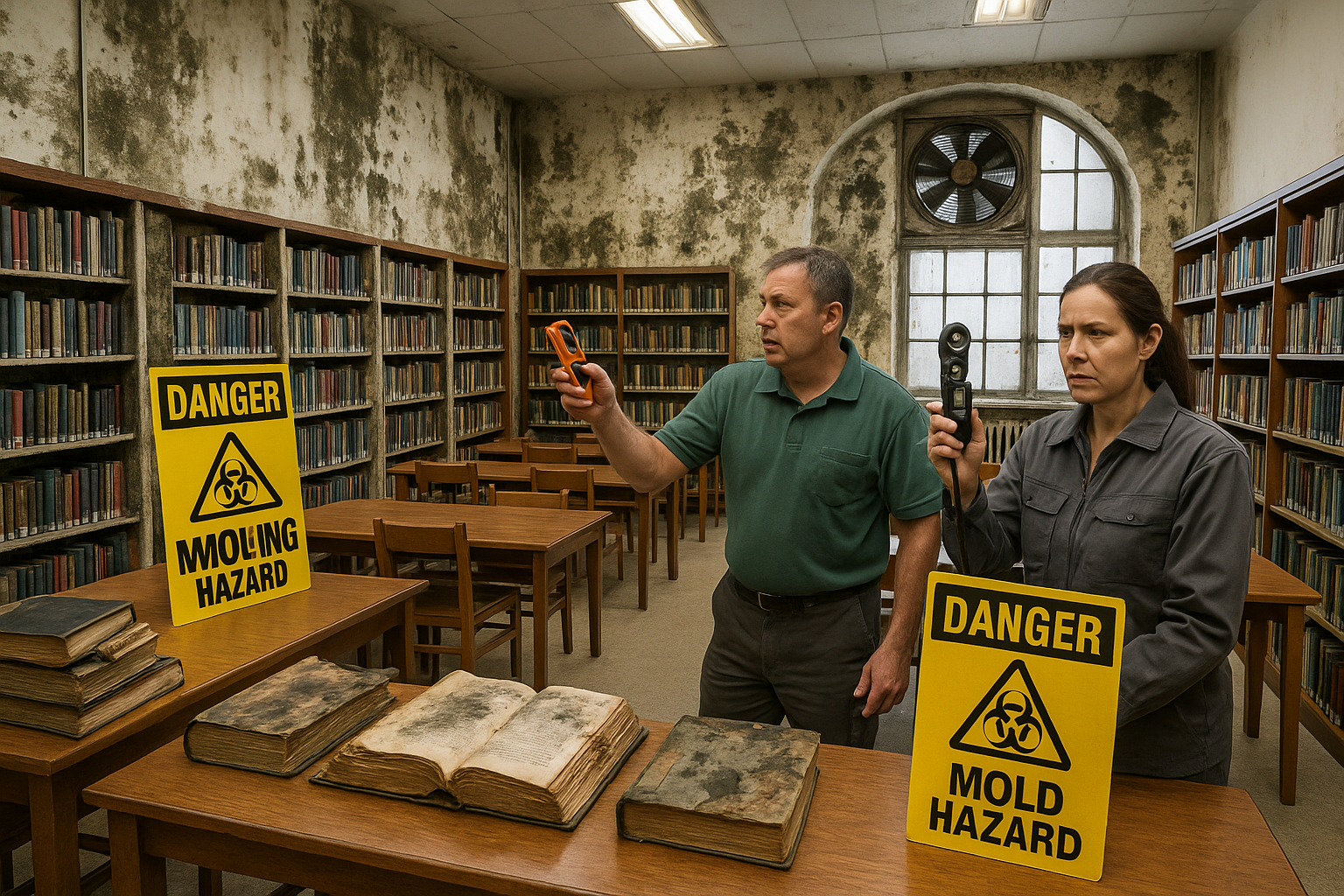
If you think mold only haunts forgotten basement corners and horror movie soundtracks, think again. That fuzzy menace has big ambitions. Libraries and community centers are prime targets, packed with delicious paper goods, constant foot traffic, and just enough historic plumbing to keep things interesting. Mold doesn’t care about your favorite reading nook or precious archive, it just wants to move in, unpack its spores, and throw a party for your sinuses. Today we’re stripping the mystery off library mold prevention and community center mold risks with practical tips that pack more punch than a two-day allergy attack. Let’s air out the facts, sprinkle in some tough love, and arm everyone from librarians to the occasional bingo champion with knowledge sharp enough to knock out even the most stubborn spore.
The Mold Menace Haunting Shared Spaces
Mold doesn’t discriminate. It will crash any party, but libraries and community centers feel the burn more than most. Picture it: historic buildings that have seen a few too many leaky roofs, HVAC units designed when disco was king, rows of paperbacks, musty documents, and generations of community memories. Every spine-tingling humidity spike or unnoticed drip is an invitation to this microbial gatecrasher.
Why does this matter? Public spaces don’t just guard your tax dollars. They protect treasured collections. They provide safe environments for everyone from toddlers at story hour to seniors playing chess. One neglected leak and mold invades, silently chewing through first editions, stirring up coughs, and threatening to shrink a library’s shelf life (pun intended). These are the frontlines for library mold prevention and community center mold risks alike.
When Mold Strikes: Health Hazards for All
Mold has a reputation for being a silent threat. Out of sight, not out of mind. Those fuzzy patches can unleash a non-stop symphony of sneezing, itchy eyes, headaches, and skin rashes. Individuals with asthma or allergies know that a little mold can create a lot of misery. Immunocompromised patrons face even more severe problems. In rare but sobering cases, certain mold strains trigger lung infections and serious respiratory distress. That’s why these spores have no place in our stacks or community rec rooms (source).
Mold doesn’t keep its sabotage personal either. It stirs up musty odors that cling to books, furniture, and even the walls themselves. That persistent whiff isn’t just “old building chic”, it’s a warning sign painted with invisible spores. Regular users quickly notice, but sometimes the slow creep of symptoms makes association tricky. A healthy community starts with habitually mold-free environments.
Your Book Collection’s Natural Enemy
If you ever wondered what mold actually wants, the answer is simple: snacks. Libraries and community centers provide a feast. Paper, book cloth, and leather have all the right nutrients. Active mold, once comfortable in its microclimate, breaks down organic material, leaving behind stains, weak pages, and sometimes total destruction. Even dead or dormant mold spores can spring back to life, waiting for their next moment of moisture and warmth. Collections that took decades to build can be gutted in a single damp season (source).
Think that rare genealogical map or first edition is safe perched up high? Mold loves any nook with a little humidity and minimal airflow. In extreme cases, staff face tough choices: triage, freeze-drying, or disposal. Litigation and insurance headaches just sweeten the misery. For every damaged volume, an institution’s reputation for care and stewardship takes a hit.
How Mold Sneaks In and Stays
Mold needs three things: organic material to snack on, comfortable temperatures, and moisture. Luckily (or not), many public buildings tick all those boxes. Leaky roofs spell obvious trouble, but hidden plumbing failures, dripping HVAC lines, or that ancient coffee stain in the carpet can contribute as well. It starts small. By the time it gets big enough for nose or eyes, the problem already runs deep (source).
Poor ventilation acts as mold’s best friend. Storage rooms packed with donations or basement meeting spaces often have limited airflow. Warm internal temperatures combined with high humidity turn a minor inconvenience into a thriving colony. Every wet umbrella, spilled juice box, or humid spell outside increases risk inside. While staff work miracles with tight budgets and aging facilities, mold always finds the path of least resistance.
Why Older Buildings Get Picked On
Libraries and community centers are often housed in grand historic structures. While beautiful, these buildings usually come bundled with unique problems. Old bricks absorb moisture. Gaps in windows and doors let in damp air. Ancient gutters barely handle springtime rain, let alone a climate going off-script. “Character” becomes another word for “mold risk factor.” These buildings carry stories, but without attention, they start collecting something far less inspiring: spores, rot, and costly structural headaches.
Upgrades cost money, and public dollars do not grow on trees. Still, prevention beats restoration every time. Simply keeping up with repairs, maintaining ceilings, and giving old HVAC systems some modern love can keep trouble at bay. Mold doesn’t respect nostalgia. It thrives on inaction.
Humidity: Your Worst Hidden Enemy
If you picture humidity as just a sticky summer inconvenience, think again. Humidity is the ultimate enabler for mold. Once relative humidity inside passes about 60 percent, trouble brews. Books and walls absorb excess moisture like a sponge. Corners become clammy. Windows sweat. All it takes is one broken dehumidifier or an air conditioning hiccup to provide conditions ripe for an outbreak.
Monitoring devices like hygrometers provide early warnings. Dehumidifiers set to keep rooms between 30 and 50 percent humidity act as the building’s bodyguard. Dry areas create hostile territory for mold, which prefers clammy jungle vibes. Small tweaks pay off big time in the long run. Mold hates efficient moisture control.
Sneaky Leaks and Sloppy Ventilation
Leaks may be the biggest open secret in community mold infestations. Dripping pipes behind walls. Faulty seals around windows. Clogged or sagging gutters. Left unchecked, these issues create moisture patches that keep feeding mold for months. Water stains on ceilings or corners should sound alarms. Every repair delayed is a step closer to infestation and asset damage.
Air flow is just as important. Hidden rooms, storage closets, and basement offices love holding still air. While these pockets are great for forgotten trophies, they also nurture undetected mold colonies. Exhaust fans in bathrooms, kitchens, and laundry areas keep air moving and deter fungal freeloaders. High-traffic areas need even more attention, as the daily churn of bodies tracks in extra moisture and dirt. Whole-building ventilation systems, while an investment, pay off with cleaner spaces and fewer health complaints.
Prevention Techniques for Outwitting Mold
Mold may have thousands of years of evolutionary stubbornness. Don’t let that intimidate you. Facility managers wield powerful weapons. Start by controlling indoor humidity. Invest in dehumidifiers for chronic areas. Monitor both temperature and moisture levels regularly to catch shifts before they explode into infestations (source).
Repair leaks promptly. Don’t let that slightly dripping faucet become a raging spore nursery. Gutter maintenance turns out to be more exciting than you thought, at least when you realize it keeps ceilings free of stains and collections mold-free. Inspections need to be thorough. Check window seals, pipes, and anywhere moisture could be lurking.
Next, address air flow issues. Never place bookshelves or furniture flush against outside walls. Space helps circulation and keeps mold at bay. Use ceiling fans. Open doors between rooms when possible. Even simple tricks make a huge difference. In areas prone to moisture, consider rotating materials or using desiccants in storage cabinets.
Daily Habits That Stop Mold in Its Tracks
Everyday habits count. Regular cleaning routines go further than most realize. Vacuum with HEPA-equipped machines to capture even the smallest spores. Dust often. Wipe up spills immediately, even if it looks harmless. Garbage cans, kitchenettes, and lost-and-found bins all attract enough mess to support mold’s social life.
Keep storage areas tidy. Messy stacks of books or supplies block air and trap moisture. Purge unused items. Implement a rotation schedule for less frequently used collections or materials. Use silica gel packs or other desiccants in closed display cases. Routine checks help spot new trouble before it takes hold. Boring? Maybe. Effective? Absolutely.
Why Feeding the Mold Is a Bad Idea
Mold doesn’t bring its own lunch. It depends on what humans provide. Food and drink in non-designated areas fuel growth. That latte forgotten under a chair for a day becomes an incubator for the nastiest species. Remind staff and visitors alike to keep snacks contained. Even better, establish clear consumption zones away from sensitive collections or areas with spotty ventilation.
Personal belongings deserve the same scrutiny. Wet umbrellas, coats, and bags should dry outside main rooms. Encourage users to report spills, leaks, or suspicious stains immediately, not after their allergies start acting up. Staff can’t be everywhere, but a culture of awareness sets limits on mold’s progress.
Engaging the Community in Mold Prevention
Protecting these spaces is a team effort. Staff can only battle so many leaks. Regular users are often first to notice that funky odor or suspicious spot in a corner. Patrons should know how and where to report problems. Quick feedback loops empower fast response. Visible signage, incentivizing cleanliness (host a “spot the spill” contest), and engaging volunteers all get more eyes on potential triggers.
Training helps, too. Arm staff and volunteers with the basics of mold prevention. Make inspection checklists part of opening or closing routines. The faster an issue is flagged, the less likely it spirals out of control. Share stories of successful saves to keep everyone invested. Mold hates organized, motivated communities.
When to Call in the Pros
Sometimes the threat grows beyond in-house control. Stubborn or recurring infestations warrant professional assessment and remediation. Certified mold inspectors use specialized equipment. They can identify hidden colonies, assess air quality, and outline actionable steps. Failure to act prolongs health risks and damages assets, leading to even more expensive claims later (source).
Mold remediation teams focus on fast, thorough removal, no magic wands, just airtight protocols and deep cleaning. They also recommend improvements to prevent mold’s return. While the urge to DIY can be strong, skipping the pros creates long-term headaches. Well-executed restoration means less downtime, happier patrons, and stronger trust in facility safety.
The Long Game: Mold Prevention is Continuous
Mold is persistent. Facility managers should create a habit of preventative maintenance rather than a cycle of patchwork emergencies. Establish annual inspection calendars, cleaning schedules, and humidity monitoring. Partner with local experts if needed. Maintain equipment, keep gutters clear, and replace outdated dehumidifiers before they turn into expensive paperweights.
Budget for repairs and upgrades, especially on aging structures. Educate both staff and users continuously. When everyone pitches in, mold struggles to gain a foothold. No space is completely immune, but consistent attention keeps shared resources healthy and available for generations.
Winning the War Against Mold
Public libraries and community centers are the beating heart of neighborhoods. Losing them to hidden mold is more tragic than a missing Harry Potter book. The secret to library mold prevention and reducing community center mold risks comes down to moisture control, regular vigilance, and empowering every user to spot trouble early. Keep spaces dry, keep air moving, and never underestimate the power of a well-informed team. Mold hates closed doors and bright lights. So swing every door wide, tell the spores to take a hike, and reclaim your space with confidence.