
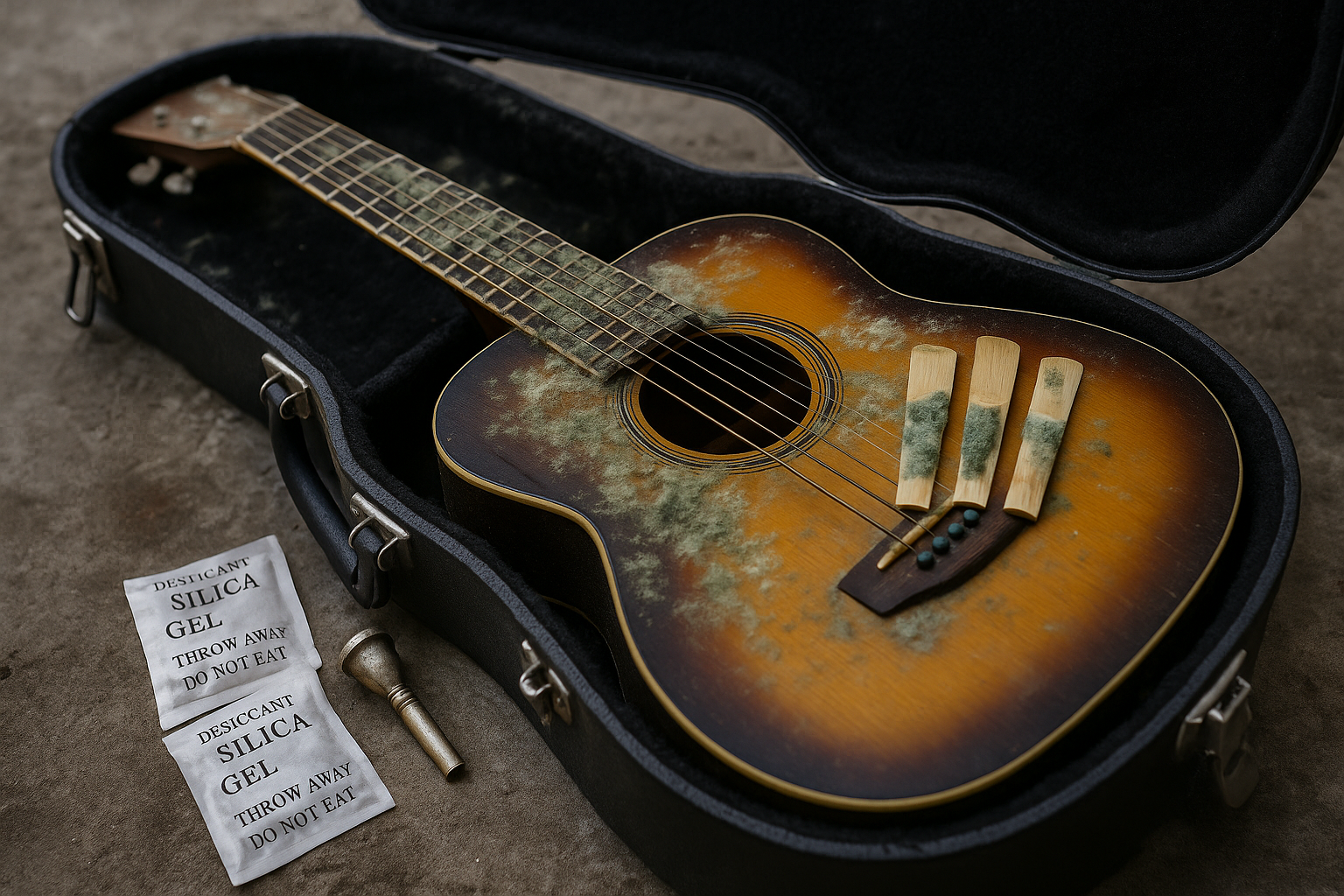
Musical instruments breathe for a living. Then we cram them into dark boxes and hand them sweat and spit after every jam. If your guitar case smells like a locker room or your clarinet pads look like a science fair project, this one is for you. I run a mold inspection and remediation company, and I also love when instruments do not rot. Below I lay out how to prevent mold in a guitar case, what safe woodwind pad mold cleaning looks like, the humidity numbers that keep both mold and cracks away, and which desiccants and two way humidity packs actually help. Expect straight answers with a little attitude and zero mold drama.
Why mold grows in cases
Mold is a simple beast. Give it moisture, a little food, and time, and it throws a party. Instrument cases are perfect little apartments for spores. You breathe moist air through a mouthpiece, pads soak it up, felt and case lining hold it, and then you close the lid. High room humidity makes it worse. That is why high humidity is a primary cause of indoor mold. For a quick primer on humidity and growth, see our overview of what causes house mold and humidity guidance.
Cases, closets, basements, and practice rooms that sit above about 60 percent relative humidity for long stretches are spore heaven. Keep the moisture limited and mold problems drop fast.
Humidity targets that actually work
Let us get the numbers straight so you do not trade a mold problem for a cracked top or warped pads.
For your home or practice room, aim to keep relative humidity in the 30 to 50 percent range most of the time. That range is friendly for health and tough on mold. We explain why in our guide to ideal indoor humidity levels.
For wooden instruments in their cases, many instrument care pros recommend about 40 to 60 percent inside the case. A practical sweet spot for many climates is about 40 to 50 percent. That level is low enough to discourage mold yet still protective for wood glue joints and finishes. Two way humidity packs are perfect for this because they add or remove moisture to hold that range. See Boveda’s official guidance on Boveda humidity packs and instrument humidity.
| Where | Target RH | Helpful tools |
|---|---|---|
| Practice room or storage room | 30 to 50 percent | Room dehumidifier, exhaust fans, hygrometer |
| Guitar or other wood instrument case | About 40 to 50 percent | Two way humidity packs, small case hygrometer |
| Brass or plastic case in damp area | Under 50 percent | Silica gel pouches, closet dehumidifier |
If you use a room humidifier to protect a wooden instrument during cold seasons, keep it clean and watch the room humidity. Dirty or overworked humidifiers can raise spore counts and wet case linings. We cover maintenance and over humidification risks in humidifier maintenance and risks.
Quick post practice routine
Most mold prevention happens in the five minutes after you are done playing. Here is the routine that saves pads and case linings from swamp vibes.
Swab or wipe the inside right away. For woodwinds, use a pull through swab sized for your horn. Yamaha’s microfiber swab is a classic example and shows you the idea. See swabs and pad savers from Yamaha. For brass, run a cleaning snake or flexible brush and wipe the leadpipe and slides. For guitars, lightly wipe strings and fretboard with a dry cloth to remove sweat and condensation.
Remove reeds from the mouthpiece every single time. Blot them dry, rotate them, then store them in a ventilated case. Moldy reeds are a hard no for your lungs and your tone. Good storage options include ventilated reed cases and products that hold reeds while they dry, such as the systems featured by reed storage tools. Clarinetists can also review these reed storage tips.
Crack the case when you get home if the space is safe and dry. Let that moisture escape before you tuck the instrument away. Do not leave a damp cleaning cloth inside the case. Use pad papers on woodwinds to blot sticky pads so moisture does not sit on the leather. For a simple pad routine, see this sax and woodwind pad maintenance guide.
Safe cleaning when you see spots
Found fuzz on your felt lining or specks on case hardware. You can clean small areas safely with the right approach. Protect yourself first, then protect the instrument.
The CDC recommends gloves, at minimum an N95 respirator, and good ventilation for small cleanups. People with severe allergies, asthma, or who are immunocompromised should skip DIY cleanup and call a professional. Review the CDC mold cleanup guidance.
Always test a small, hidden area before you touch visible surfaces on a valued instrument. Never mix cleaners. If you use a bleach solution on a non porous case surface, do not use vinegar or peroxide at the same time. Here is how to approach common materials.
Hard surfaces
Think plastic hard shell case interiors, metal latches, buckles, or a molded pedalboard case. Wipe with soap and water first. For non porous spots, diluted white vinegar or hydrogen peroxide can help. The CDC also allows a diluted bleach solution for non porous surfaces. Wipe, rinse with clean water, and let it dry completely. Keep liquids away from wood, unfinished leather, or any area with glue joints.
Case lining and felt
Remove the instrument and accessories. Take the case outside. Vacuum the felt lightly with a HEPA vacuum to pull up loose growth without blasting spores through your living room. Then test a small area with a 50 50 mix of white vinegar and water on a microfiber cloth. Lightly wipe and let it dry with the case open in a dry space. If odor or staining persists or the felt looks colonized, replacing the lining is often the smarter choice. These are porous materials that hold growth, which the CDC notes often need removal. For specialty instruments or vintage cases, pros sometimes replace the entire lining. Here is a professional perspective on instrument safe cleaning from professional instrument mold remediation.
Woodwind pads
Pads are surprisingly fragile. Do not use alcohol or other solvents on woodwind pads. That can dissolve pad glue and ruin the seating. Professional technicians and repair guides repeat this warning for a reason. See the note on woodwind pad care do not use solvents on pads. For light spots or stickiness, close the key on a clean pad paper and gently blot. If the pad is stained through, smells musty, or looks furry, schedule a repad. Trying to soak or scrub a pad often makes the damage worse and spreads spores into the tonehole chimney.
Guitar bodies and fretboards
Guitars do not love strong cleaners, and some finishes react badly to water or alcohol. If you see a light spot on a lacquered surface, start with a barely damp microfiber cloth and dry it right away. Keep fluid out of the soundhole and away from fret ends. For unfinished fretboards, clean lightly, then re oil with a product made for that wood. Never let cleaners pool near binding or on the bridge plate. If your acoustic smells musty inside, that often means the case is the source, not the wood itself. Fix the case and the room humidity first, then reassess.
What to repair or replace
Heavily molded porous items go. That includes reeds, case straps that have stayed damp, foam inserts, and felt or fabric linings with deep growth. Hard materials like metal fittings and non porous plastics clean up well. Pads that have visible mold growth inside the leather or that smell after blotting should be replaced by a tech. Our article on how to clean and stop recurring mold explains why surface cleaning alone does not fix contamination inside porous materials.
Desiccants and humidity packs
Inside a case, you want moisture control that matches the instrument. For wooden instruments, two way humidity packs are the gold standard because they buffer up and down to hold a safe band. Boveda explains how to use them for guitars and other wooden cases here Boveda instrument humidity guidance, and how many to use here how many humidity packs for guitars. Seasoning a dry wooden case first helps the packs last longer.
For brass or plastic bodied instruments that do not need moisture added, silica gel packets are cheap and effective. Swap or recharge them when the indicator changes color. For small sealed spaces like closets or cabinets where you keep multiple cases, our boat and RV article has practical ideas on using desiccants and dehumidifiers in sealed spaces.
Add a small digital hygrometer inside the case to get real numbers. A battery powered sensor lets you check trends over days and weeks. If you see the case riding above 55 percent most of the time, boost your moisture control before fuzzy stuff starts.
Guitar care details
Acoustic guitars are sensitive to swings. Too dry and you can get fret sprout, cracks, or brace issues. Too wet and you can get musty cases, swollen tops, and a new relationship with your local luthier. Target about 40 to 50 percent RH inside the case. Place two way packs in the soundhole pouch and near the headstock if your system offers both. Keep the case clean, vacuum felt gently, and store the case upright off concrete floors.
If you live in a humid climate, consider a closet dehumidifier for your guitar storage area. Concrete basements often run wet and cool, which is mold paradise. Monitor the room and the case separately. If the room sits near 60 percent, your packs will work overtime and your case lining may stay damp. That is how you get that sweet locker funk. If you must humidify in winter, keep equipment clean and stable as explained in our humidifier maintenance and risks post.
Electric guitars ride easier since the bodies are often sealed. Still, leather straps, case foam, and fabric liners can grow mold. Wipe sweat, open the case briefly at home, and use a small desiccant pouch if you notice a musty odor.
Woodwind pad and key care
This is where mold often hits first. Pads are leather over felt with glue seams and they love moisture. The game plan is simple. Get the water out, do not feed the pads with solvents, and keep the case dry.
After playing, run a swab through the bore until it comes out clean. For sax, use a body swab and a neck swab to dry both. For clarinet and flute, a pull through microfiber works well. Blot sticky pads with pad papers by closing the key and gently pressing. Do not pull or drag aggressively. Pad savers can help, but never leave them in if they are damp. And again, avoid alcohol or solvent on pads. That can degrade pad glue and create a new air leak you will hear on your first interval jump. See this repair note on woodwind pad care.
If you already see spots on the pads, blot what you can and book a bench check with a tech. A quick repad is cheaper than chasing cyclical mold and mystery leaks for months. Keep the case interior dry with silica gel or a balanced pack system if the horn sits long term.
Brass care and case funk
Brass instruments shed moisture too, it just looks less dramatic than a dripping clarinet swab. Mold in brass cases shows up on fabric linings, straps, and foam. After playing, open the water keys, pull slides, and wipe valves and slides before putting the horn away. Swab the leadpipe. Let the case air a bit at home. If you find specks on the lining, use the felt method above to clean. For stubborn odors in foam or fabric that keep coming back, replacement is usually the answer. Porous foam holds spores like a sponge. The CDC’s general stance on porous materials applies here as well, see CDC mold cleanup.
Reed care and storage
Reeds are bio material. Store them wet in a dark case and you get a fungal petting zoo. The fix is simple. Rotate reeds. Blot them dry after playing. Store them in a ventilated reed case that keeps them flat while they dry. Some systems add a mild antimicrobial environment yet still allow drying. See these options for how to store reeds. If a reed smells off or shows spots, toss it. Your lungs and your tone do not need the experiment.
Humidifiers and room control
Room control makes or breaks your case strategy. If your music room sits at 60 to 65 percent RH for weeks, even the best case plan struggles. Keep the room in that 30 to 50 percent band most of the time. Use a dehumidifier with a drain hose in basements. Run bath fans and kitchen hoods during cooking and showers. Our primer on ideal indoor humidity levels explains why that band works well.
Be careful with room humidifiers used for acoustic protection in winter. They need regular cleaning and monitoring so they do not become spore sprayers. See our guide on humidifier maintenance and risks. If you need targeted moisture for a single guitar, two way packs inside the case often give better control with less mess.
Hidden mold in music rooms
You cleaned the case and still smell funk. Time to look around. Closets with exterior walls, low corners behind gear racks, or areas near a window unit can hide growth. A musty instrument closet often turns out to be a room humidity or leak issue. Fix the room and the case issues finally stop coming back.
When to replace and when to clean
Here is a quick decision guide to keep you sane. Hard surfaces like plastic shells and metal hardware can be cleaned and dried. Light mold on case felt may clean up if it is early and only on the surface. Heavy growth in felt or foam means replace the lining or the case. Reeds get tossed at the first sign of spots. Pads with surface stickiness can be blotted, but pads with growth inside the leather or musty odor belong on a tech’s bench. Leather straps that stayed damp and smell should be replaced.
If you have cleaned and the growth returns, address humidity and consider that unseen spores in porous materials are reseeding the surface. Our guide to how to clean and stop recurring mold explains why some items need replacement to end the cycle.
When to call a professional
If mold keeps showing up in multiple cases, if your practice room smells musty, or if someone in the home is reacting with coughing or allergy symptoms, it is time for a professional inspection. We can check the room, test humidity and air, and look for hidden moisture sources that keep feeding the problem. You can schedule an inspection or review mold testing costs here. For rare or valuable instruments that already have significant contamination, consider a repair tech or a restoration pro who understands adhesives and finishes, such as those who share methods here professional instrument mold remediation.
FAQ
How do I prevent mold in my guitar case?
Dry the guitar after playing, keep the case in a room that stays around 30 to 50 percent RH, and use two way humidity packs sized for your case so the inside stays about 40 to 50 percent. Open the case briefly after you get home to let moisture escape. Do not store damp cloths inside. For instrument humidity guidance, see Boveda humidity packs and our notes on ideal indoor humidity levels.
Can I clean mold off woodwind pads?
You can gently blot light surface issues with pad papers. Do not use alcohol or solvents on pads. That can soften pad glue and ruin sealing. If pads are stained through, smell musty, or show visible growth, see a tech for repadding. See woodwind pad care for the no solvent rule.
What humidity should my instrument case be?
For general mold control, home spaces should sit around 30 to 50 percent. For wooden instruments inside cases, about 40 to 50 percent is a practical target since it discourages mold yet protects wood. See our ideal indoor humidity levels guide and Boveda instrument humidity guidance.
Which desiccant or humidity pack should I use in my case?
For wooden instruments, two way humidity packs are designed to hold that safe band and protect wood and glue joints. For brass or plastic cases where you only want to cut moisture, silica gel pouches are fine. If you store gear in a sealed closet, a small dehumidifier or larger desiccant bucket can help as we cover here using desiccants and dehumidifiers in sealed spaces.
Can I use bleach to clean my guitar case?
Bleach can be used on non porous surfaces only and must be used safely. Many case fabrics and instrument finishes do not play well with bleach. Start with soap and water on non porous surfaces and only use a CDC recommended dilution if needed on plastic or metal. Never mix bleach with other cleaners. For fabrics and felt, vinegar solutions are less likely to damage the material, but many heavily molded linings are better replaced. Review CDC mold cleanup guidance before you start.
Why does mold keep coming back in my case?
Either the room humidity is too high or porous materials are still contaminated. Clean the room air with a dehumidifier, get the case humidity under control, and replace porous items that took a hit. Our guide on how to clean and stop recurring mold covers the cycle and how to break it.
Final notes so your gear stays clean
Prevent mold in a guitar case and woodwind pad mold cleaning both come down to three habits. Keep humidity in the sweet spot, remove moisture right after playing, and use the right tools inside the case. Two way packs buffer wooden instruments while silica gel helps in plastic or brass cases. Swabs and pad papers are your best friends. Reeds dry outside the mouthpiece every time. If you see spots, clean safely with CDC guidance, test before you wipe, and replace porous materials that will never really come back. When a room or closet smells musty or the problem returns, that is a house level issue. We are happy to help you stop the cycle. Schedule an inspection or see mold testing costs, and play without the fungus backup band.