
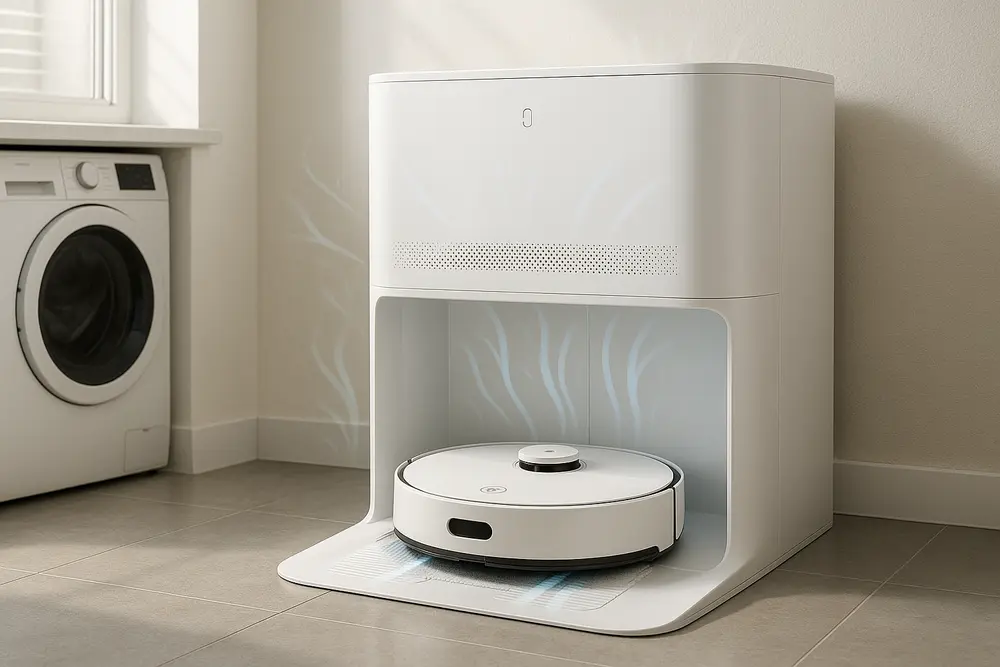
Your robot mop may wash its own pads, empty debris, refill itself, and send you cheerful app notifications. That doesn’t mean the dock is maintenance-free. Good robot mop dock hygiene starts with controlling what automation leaves behind: stagnant wastewater, damp fabric, floor residue, and wet components tucked inside a warm station.
The word “mold-proof” deserves a little skepticism. No wet appliance can be guaranteed never to develop mold, odors, or microbial film. You can, however, make the dock far less inviting by emptying dirty water, removing residue, and allowing washable parts to dry. That’s more useful than trying to sterilize every piece of plastic with whatever cleaner happens to be under the sink.
Why Robot Mop Docks Get Musty
Mold spores are common in indoor and outdoor air. They generally need moisture, a suitable temperature, nutrients, and enough time on a damp surface to grow. A self-washing mop station can provide that combination surprisingly well.
The moisture comes from the dirty-water tank, clean-water tank, mop pads, wash tray, drain channels, and internal plumbing. The nutrients come from whatever was on your floor, including dust, food residue, hair, skin cells, oils, and soil. The time component arrives when the machine finishes its run and sits untouched until next Tuesday.
Plastic isn’t mold food by itself, but dirty plastic is another story. Growth can use the organic film coating a tank, gasket, or tray. As the U.S. Environmental Protection Agency explains, ordinary dirt and dust can supply nutrients, while moisture is usually the condition people can control most effectively.
This is why mold prevention is less about making the dock sterile and more about denying mold the prolonged moisture and residue it needs. A gallon of perfume won’t fix stagnant water. It just gives you stagnant water wearing cologne.
Stagnant Wastewater
The recovery tank isn’t holding ordinary tap water. It’s collecting water mixed with material removed from the floor. When that mixture sits in a closed tank, residue can settle into corners, coat the lid, cling to the float assembly, and develop unpleasant odors or microbial film.
Don’t wait for a tank-full alert if the wastewater will otherwise remain stagnant overnight or for several days. Emptying the tank after the final mopping session of the day is a sensible baseline. Homes with pets, frequent food spills, or heavily soiled floors may need even more frequent attention.
Damp Mop Pads
Mop pads hold water and floor residue inside dense fibers. A pad compressed against the robot or parked inside an enclosed dock may dry slowly, especially in a humid laundry room, basement, or utility closet.
A heated drying feature can help, but it isn’t a magic force field. Confirm that the cycle finished and check whether the pads actually feel dry. A failed drying cycle, blocked vent, power interruption, or overly damp pad can leave the fabric wet long after the app claims the job is done.
Hidden Tray and Drain Residue
A dock that washes mop pads doesn’t necessarily wash every part of itself. Hair and sludge can collect under removable tray inserts, inside drain screens, around scrapers, and in corners that don’t receive much water flow. Debris may also block drainage, leaving small pools hidden beneath the robot.
Automatic cleaning is convenient. It isn’t proof that the machine cleaned its own gasket grooves, float assembly, filter, brush, or drain channel. Your dock isn’t lazy, exactly. It’s simply very literal about its job description.
After-Each-Run Robot Dock Hygiene
A short routine after the day’s final mopping run prevents more trouble than an aggressive cleaning session performed after the tank starts smelling like a neglected pond. Check your exact model’s manual first, since tank designs, drying systems, and removable parts vary.
- Empty the dirty-water tank. Pour out wastewater promptly rather than repeatedly letting it sit until the tank-full alert appears.
- Rinse away visible residue. Use clean water and pay attention to corners, seams, the lid, and accessible float components.
- Look at the wash tray. Remove visible hair or debris and confirm that water is draining instead of pooling.
- Check the mop pads. Let the drying cycle finish, or remove pads that remain damp and air-dry them as the manual permits.
- Wipe up stray water. Water beneath or behind the station can damage flooring and create a separate moisture problem.
- Let removable parts breathe. Leave tanks or lids open to air-dry when practical and permitted by the manufacturer.
Rotating between two or more sets of mop pads can make this easier. One set can dry fully while another is in use. Wash the pads according to the manufacturer’s directions, and replace pads that remain musty after washing or have deteriorated fibers that keep trapping debris.
Don’t automatically use a clothes dryer, chlorine bleach, fabric softener, or high heat. Those methods may damage fibers, adhesives, backing material, or the pad’s ability to clean your floor. The care label and model instructions get the deciding vote.
Weekly Dock Maintenance
Weekly self-cleaning robot dock maintenance reaches the places an automatic pad-washing cycle may miss. This interval is a reasonable starting point, not a sacred rule. If you mop daily, own several shedding pets, or regularly clean kitchen spills, inspect the dock more often.
Remove the user-serviceable wash tray and clean away sludge, hair, and detergent residue. Check accessible drain screens, filters, scrapers, cleaning brushes, and squeegees. A soft cloth or soft-bristled brush is usually safer than an abrasive scrubber, but follow the manual’s cleaning directions.
Inspect the dirty-water tank lid, gasket, float, strainer, and narrow seams. Simply swishing water around the center of the tank won’t remove residue hiding under a lid gasket. After cleaning, rinse approved washable parts and let them dry before reassembly whenever the operating instructions allow it.
Wipe the station’s non-electrical surfaces without flooding them. If the manufacturer directs you to unplug the dock before manual maintenance, do so. Apply an approved cleaning product to a cloth rather than spraying motors, charging contacts, sensors, vents, or electrical openings.
Weekly cleaning should also include the area around the dock. Look beneath the station and inspect nearby flooring, baseboards, and walls. A slow leak may remain unnoticed because the dock hides the first stain.
Don’t Forget the Clean-Water Tank
A label that says “clean water” describes what should go into the tank, not its permanent sanitary status. Water can sit for long periods, while detergent residue or contamination from hands, funnels, and refill containers accumulates inside.
Avoid endlessly topping up old water. Periodically empty the tank, rinse it according to the manual, and refill it with fresh water. Before a vacation or long storage period, drain and dry the clean-water tank instead of leaving water or cleaning solution inside indefinitely.
Use only the water type and temperature approved for your model. Distilled water isn’t a universal answer because some machines may rely on water conductivity or use sensing systems with model-specific requirements. Likewise, only use an approved cleaner in the specified location and concentration. More detergent doesn’t mean more clean. Sometimes it means foam, residue, blocked plumbing, or an expensive support ticket.
What Not to Put in the Dock
Household mold-cleaning advice doesn’t automatically transfer to an appliance containing pumps, tubing, seals, sensors, and electrical parts. Unless your exact model’s instructions specifically approve a substance for a particular tank or component, don’t put bleach, vinegar, ammonia, hydrogen peroxide, essential oils, dishwashing liquid, laundry detergent, general-purpose floor cleaner, or concentrated disinfectant into the dock.
Improvised products can corrode components, damage seals, create excess foam, interfere with sensors, clog internal plumbing, or affect warranty coverage. Essential oils can also degrade certain plastics and elastomers. A cleaner being “natural” doesn’t make it compatible with a robot.
Never mix cleaning products. In particular, bleach must never be mixed with ammonia, vinegar, acids, or other household cleaners because dangerous gases can result. If the manual doesn’t clearly authorize a product, treat that silence as a no rather than an invitation to conduct countertop chemistry.
Manufacturer instructions can change between models from the same brand. Search using the brand, complete model number, and dock name. Support resources from Roborock, iRobot, ECOVACS, and Dreame can help locate model-specific manuals.
Cleaning a Dock That Already Smells
A musty or sour odor doesn’t prove that mold is present. Stagnant wastewater, damp pads, floor residue, microbial film, and dirty filters can all smell unpleasant. Still, odor is a useful signal that something wet or dirty needs attention.
Follow the manufacturer’s shutdown or unplugging procedure. Empty both tanks, remove the pads, and take out only the components identified as user-serviceable. Clean the dirty-water tank, including its lid, gasket, accessible float, strainer, seams, and corners. Clean the removable tray, screen, brush, scraper, and drain area as permitted.
Use a soft brush to loosen residue from narrow grooves. Rinse washable parts carefully and let them dry. Wash the pads according to their care instructions, or replace them if odor persists after proper washing and drying.
Don’t dismantle pumps, sealed tubing, or electrical assemblies beyond the steps shown in the manual. If the smell appears to come from inaccessible internal plumbing, contact the manufacturer or an authorized service provider. Repeatedly pouring stronger chemicals into the machine can turn a serviceable odor problem into a damaged-plumbing problem.
For a small amount of suspected growth on a removable tank or tray, gloves and careful cleaning may be appropriate, subject to the manual. People with asthma, mold allergies, immune suppression, or other health concerns should avoid direct exposure and seek individual medical advice when needed. The Centers for Disease Control and Prevention notes that damp and moldy environments affect people differently, with some experiencing nasal symptoms, coughing, wheezing, eye irritation, skin irritation, or worsened asthma.
Is It Mold, Film, or Mineral Scale?
Not every black speck is “toxic black mold,” and appearance alone usually can’t identify a microorganism. Residue from floors, pad fibers, rubber wear, mineral deposits, and microbial film can all create suspicious marks. Use terms such as “visible growth,” “film,” or “suspected mold” unless identification has been established.
| What You Notice | Possible Explanation |
|---|---|
| Fuzzy, spotty, or spreading discoloration | Possible mold growth |
| Slimy coating in the recovery tank | Microbial film or accumulated floor residue |
| Sour, earthy, or musty odor | Stagnant water, a damp pad, residue, or microbial growth |
| White, chalky crust | Mineral scale associated with hard water |
| Loose black particles | Floor debris, pad fibers, rubber wear, or possible growth |
| Pink or orange film | Microbial growth or residue that can’t be identified by color alone |
If you’re mainly seeing white scale, consult the manual for an approved descaling procedure. Don’t assume vinegar is safe. Acids can affect seals, metals, coatings, and sensors, even when they’re perfectly useful elsewhere in the house.
Why Odors Keep Coming Back
If the station smells again soon after cleaning, the first cleanup probably missed either residue or moisture. Recheck the dirty-water tank lid and gasket, the float chamber, damp mop pads, the underside of the wash tray, the drain screen, and any user-serviceable brush or filter.
Also check for excess cleaning solution. Overconcentrated detergent can leave residue that captures dirt and contributes to odor. If you’re eyeballing the dose rather than following the required concentration, your nose may be reporting the results.
Move the dock and inspect underneath it. Water may be trapped below the base because of a leaking clean-water connection, overflowing tray, damaged seal, clogged drain, or station that isn’t sitting level. Clean and dry the surrounding floor before returning the dock.
A fragrance spray isn’t a repair. If odor keeps returning from inaccessible tubing after all user-serviceable parts have been cleaned, the internal water path may need manufacturer service.
A Practical Maintenance Schedule
Maintenance frequency depends on use, indoor humidity, floor soil, pets, and the dock’s design. The following schedule offers a practical baseline, but your model’s instructions take priority.
| When | What to Check |
|---|---|
| After the final mopping run | Empty and rinse the dirty-water tank, check pad drying, inspect tray drainage, and wipe up water around the dock. |
| Every few days | Inspect tank lids, gaskets, floats, pads, screens, and clean water for film, cloudiness, trapped debris, or odor. |
| Weekly | Clean the removable tray and approved filters, strainers, brushes, scrapers, seams, and non-electrical dock surfaces. |
| Monthly | Inspect accessible seals, drains, hoses, and connections. Check for leaks, mineral buildup, worn pads, and app maintenance alerts. |
| Before long storage | Empty, wash, and dry both tanks. Remove and dry the pads, clean the tray, and follow the approved shutdown procedure. |
The most effective robot mop dock hygiene routine isn’t complicated: don’t store dirty water, don’t store wet pads, and don’t let floor residue remain in tanks or trays. Consistent self-cleaning robot dock maintenance is far more useful than waiting for an odor and then attacking the appliance with unapproved chemicals.
Robot Mop Dock FAQs
Can Mold Grow in a Dirty-Water Tank?
Yes. A dirty-water tank can stay moist while holding organic material collected from the floor, creating conditions that may support mold or other microbial growth. Emptying, cleaning, and drying the tank reduces that risk.
Should I Empty the Tank After Every Use?
Emptying it after the day’s final mopping session is a sensible baseline, especially if the water would otherwise sit overnight or longer. You should still follow the maintenance directions for your specific model.
Does Hot-Air Drying Prevent All Mold?
No. Drying the pads can reduce retained moisture, but it doesn’t remove residue from the dirty-water tank, lid, tray, filter, gasket, or drain. It also won’t fix a leak or clogged drainage path.
Why Does the Dock Smell After Cleaning?
Residue may remain in a gasket, float, filter, screen, drain channel, pad, or inaccessible tube. The station may also be leaking beneath its base. Clean user-serviceable components, dry them thoroughly, and contact the manufacturer if the odor seems to come from sealed plumbing.
Can I Put Bleach or Vinegar in the Tank?
Only if the manufacturer specifically approves that product for your exact model and the intended location. Household cleaning products can damage pumps, seals, tubing, coatings, and sensors. Bleach must never be mixed with vinegar, ammonia, or other cleaners.
What Should I Do If Growth Returns?
Check for stagnant wastewater, damp pads, blocked drainage, unclean gaskets, hidden tray sludge, leaks, and internal contamination. If growth or odor returns from inaccessible parts, contact the manufacturer rather than dismantling sealed systems.
When the Problem Isn’t Just the Dock
Sometimes the dock is the messenger rather than the whole problem. Repeated water beneath the unit, swollen flooring, soft baseboards, wall discoloration, persistent condensation, or a musty odor that remains after the dock is removed can point to a broader moisture issue.
According to the EPA’s mold and moisture guidance, cleaning growth without correcting the moisture source can allow the problem to return. That principle applies beyond the appliance. Porous flooring, drywall, baseboards, and wall cavities can’t be handled like a removable plastic tank.
If suspected mold or moisture extends into surrounding building materials, stop treating it as a robot-maintenance issue. Howard Environmental can help evaluate mold and moisture concerns affecting the indoor environment, particularly when staining, softness, recurring dampness, or persistent odor suggests that water has traveled beneath the floor or into a wall.