
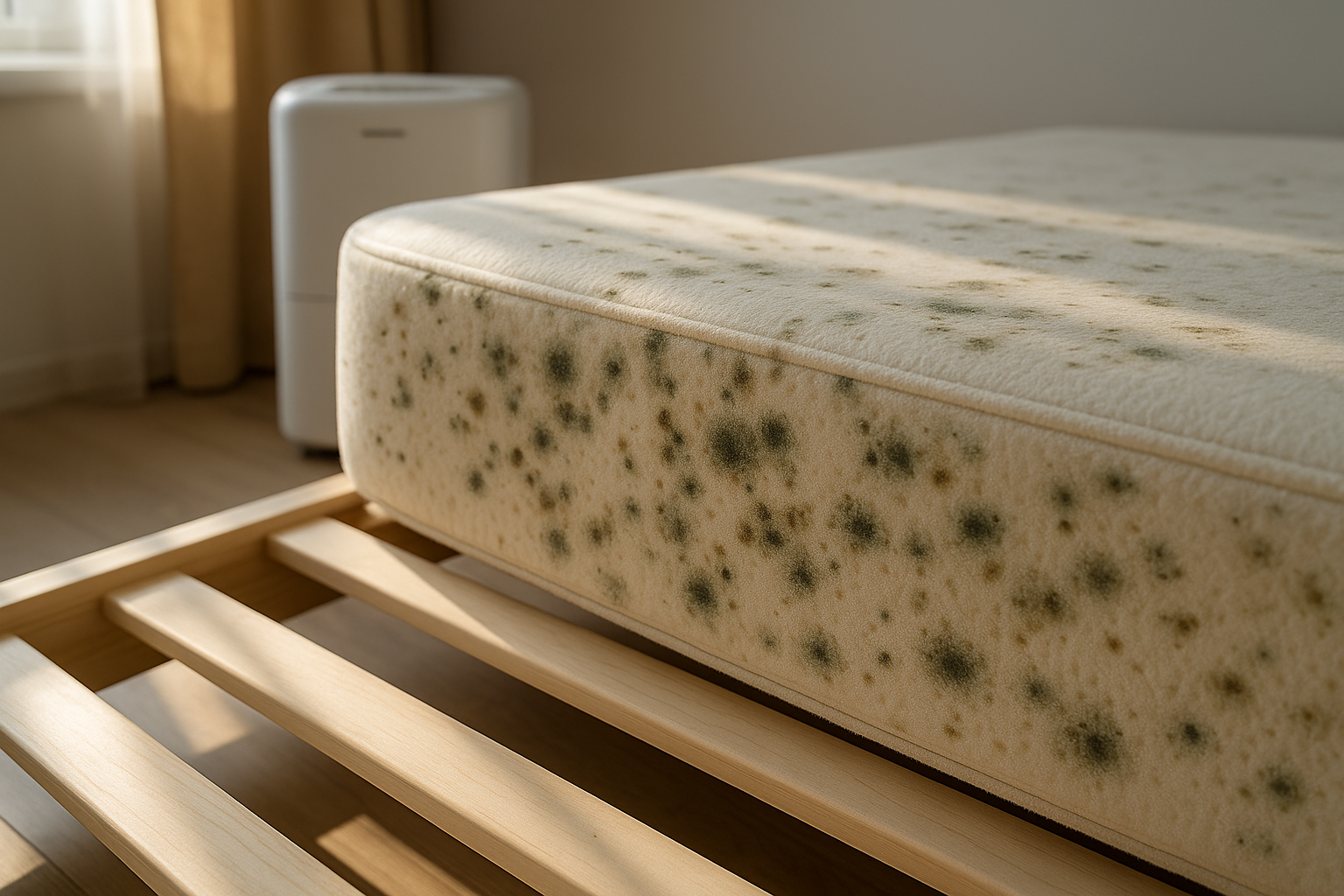
Mold in a mattress is the sleep tax no one signed up for. One day your bed is a soft cloud, the next it smells like a damp basement and is trying to colonize your lungs. The good news is that most mattress mold is preventable with a few simple changes. The better news is that if you catch it early there are safe ways to clean the surface and stop a bigger problem. And when the mattress is a lost cause, I will tell you straight so you do not waste time or money. This guide breaks down what causes mold under and inside mattresses, how to stop it, when cleaning is safe, and when replacement saves your health and sanity.
Why mattress mold happens
Mattress mold is predictable once you understand moisture and airflow. Your body releases moisture each night through perspiration and breathing. Add a spill or a humid bedroom and the materials in your mattress can act like a sponge. Mold spores are everywhere in normal background amounts, so the real trigger is moisture paired with low airflow. When the underside of a mattress cannot dry, spores take the hint and grow.
Humidity is the first driver. Indoor air that stays above the healthy range gives mold the green light. Keeping relative humidity in the sweet spot of roughly 30 to 50 percent reduces risk because the air can pull moisture out of surfaces instead of feeding them. We go deeper on this on our page about ideal humidity levels.
Bed bases matter more than most people think. Solid platforms, bunkie boards, and mattresses placed directly on the floor trap damp air. That pocket of stale, moist air is where you often find mold under the mattress. Slatted bed frames encourage airflow so the underside can dry between sleep cycles, which is why they are a favorite for mattress mold prevention.
Material type also changes the risk. Memory foam and other dense foams hold moisture longer than a simple cotton pad. Once mold reaches beneath the outer fabric and into the foam, removal becomes tricky. Early surface spotting on the ticking or seam is one thing. Deep penetration into foam is another story, often ending with replacement. For context on why mold forms in different parts of a home, check our page on the causes of mold.
How to prevent mold under mattress
Start with airflow. If your mattress sits on the floor, raise it. If your base is a solid board, consider switching to a slatted frame with gaps for air movement. Even a simple upgrade to a base that lets air circulate will make a big difference.
Pick a breathable protector. Waterproof encasements that do not breathe can trap moisture against the mattress. Look for a breathable mattress protector that blocks spills from soaking in while still letting moisture diffuse out. If you must use an encasement for allergy control, choose products rated as breathable, and let the mattress air out during the day by pulling back the comforter and exposing the surface.
Manage humidity. Bedrooms benefit from a small dehumidifier if your climate runs muggy. Aim for that 30 to 50 percent indoor range. A cheap hygrometer gives you a constant readout, and your HVAC fan or a box fan can help move air after a steamy shower or laundry day. Again, our ideal humidity levels guide explains why this range is effective for mold prevention.
Use sun and fresh air. Sunshine and moving air are the free tools too many people ignore. Now and then, strip the bed and let the mattress sunbathe near a window or on a safe outdoor porch. UV light and dry air help reduce surface spores and dry residual moisture. If direct sun is not possible, give the mattress time uncovered and run a fan across the surface to help it dry.
Watch wall placement. Mattresses jammed tight against an exterior wall can end up cool on the outside and warm on the inside during temperature swings. That can condense moisture and feed mold. Leave a small gap between the bed and the wall. Rotate or flip your mattress on the routine your manufacturer recommends, and during that rotation, lift it to allow the underside to breathe for a few hours. Simple, low cost, and effective.
Spotting early warning signs
Trust your nose first. A musty odor that seems to come from the mattress, the base, or the adjacent carpet is often the first flag. If you smell mold but cannot immediately see it, pull back the bed and check the underside of the mattress and the base. If you consistently smell it but cannot track it down, you might want our guide on what to do if you cannot see mold but smell it.
Look for discoloration. Black, green, or brown specks on seams, the underside fabric, or inside a box spring are not lint. If the spotting returns after a basic wipe down, that points to ongoing moisture or deeper growth.
Watch for patterns. Mold under mattress areas often maps to cold corners, the frame rails, or the center where body heat meets low airflow. If you see repeating growth in a particular area, that is not a random accident. It is a moisture pattern that needs fixing. If the same spot keeps turning, our short guide on what to do when mold keeps returning will help you find the underlying cause.
Clean or replace
The million dollar question with mold on a mattress is whether you can safely salvage it. The answer depends on size, depth, odor, health factors, and whether you can remove the moisture source.
Cleaning is reasonable when the growth is small and on the surface, when the mattress was not soaked for a long time, when odor is minimal, and when you have already corrected the humidity or airflow that fed the spots. The United States Environmental Protection Agency notes that many homeowners can handle small areas that are around ten square feet or less, with the right precautions. For very small areas on a mattress surface, you are really trying to remove spores on the ticking and stitch line, then dry the area completely. See the EPA guidance for general cleanup steps.
Replacement is the safer move if mold has penetrated into the foam or batting, if the mattress smells strongly musty even after a day of airing out, if the staining is widespread, if the mattress was wet for a long period, or if anyone in the home has asthma, significant allergies, or immunosuppression. The EPA is clear that absorbent and porous materials, including padding, often cannot be fully decontaminated once mold has penetrated. In those cases the long term answer is to discard and replace. If you tried to clean and the growth returns, focus on fixing moisture and replacing the mattress. Recurring growth is a red flag that cleaning did not reach the source. We cover this pattern in our piece on mold that keeps coming back.
If you are weighing whether to attempt DIY work or bring in a pro, our guide to DIY vs professional mold remediation breaks down when a phone call beats a scrub brush. A few small spots that do not return after you correct humidity is a good DIY candidate. A mattress with widespread growth, or mold appearing in multiple rooms, or a crawlspace or HVAC moisture problem, is worth a professional inspection.
| Condition you see | What we recommend |
|---|---|
| Light surface spotting on seams or ticking, no strong odor, first time you have seen it | Spot clean and dry completely, improve airflow and humidity, monitor for return |
| Staining on the underside and along foam edges, musty smell that lingers | Replacement is safest, also correct humidity and base airflow |
| Mold returns in the same area after cleaning | Fix the moisture source and replace the mattress, consider professional inspection |
| Small child, elderly adult, asthma, or immune issues in the home | Skip DIY cleaning, use a pro for inspection and recommendations |
| Mattress sat on a wet floor or in a damp room for days | Replace and address room moisture before the new mattress arrives |
Safe DIY cleaning steps
If your situation meets the small and early criteria, work methodically and avoid turning a small cleanup into a bigger contamination. Read this entire section before you start so you can set up your space.
Gear up. Wear gloves, eye protection, and a well fitting N95 respirator. People with asthma, severe allergies, chronic lung disease, or who are immunocompromised should not perform mold cleanup. The CDC explains what to wear and who should avoid cleanup on its mold cleanup guidance page.
Set the room for airflow. Open windows if weather allows, and run a fan that blows air out of the room rather than back at your face. Place a dehumidifier nearby so drying starts immediately after cleaning.
Strip the bed. Carefully remove sheets, mattress protector, and any toppers. Bag them for transport to the laundry so you do not sprinkle spores on the way. Wash in hot water if the label allows. The EPA notes that speed and drying are key steps during cleanup, and textiles respond well to proper laundering. You can find their practical advice in the EPA mold cleanup in your home page.
Dry vacuum with HEPA. A HEPA vacuum helps pull loose surface spores from the ticking and stitching. Work slowly with the upholstery tool, and empty the vacuum outdoors afterward. This reduces what gets pushed into the room during cleaning. The Indoor Environmental Resources group discusses this approach in its mattress cleaning tips, which line up with industry practice.
Spot clean the surface. The goal is to lightly wet the fabric where you see spots without soaking the foam below. A mild detergent in warm water, white vinegar solution, or hydrogen peroxide at three percent are common household options. Test an inconspicuous area first for colorfastness and fabric reaction. Apply with a clean cloth, dab rather than scrub, and work from the outside of the spot toward the center. You are trying to remove the colony on the surface and disrupt the biofilm, not saturate the mattress. The EPA basics page covers cleaning on hard surfaces and cautions about porous materials. For light surface spotting on fabric, careful dabbing is the best you can do before you cross into over wetting.
Optional disinfection on the surface. After cleaning, some people wipe the area with isopropyl alcohol to reduce residual microbes. If you try this, use a light touch and test a small spot first. Keep in mind that any liquid is a risk on foam, so use restraint.
Dry completely. Sunlight is your friend. If possible, place the mattress where sun hits the cleaned area and keep air moving across it. If you cannot use the sun, aim a fan at the spot and run a dehumidifier until the area is bone dry. Do not place bedding back on until the fabric is dry through and through. Lingering moisture is a fast track to new growth. The EPA cleanup page stresses quick and thorough drying, which is the single biggest factor in whether mold returns.
Recheck and sniff test. After a day, look closely and use your nose. If odor remains or the spots come back within a week, call it. That mattress is telling you there is growth beyond the surface. At that point replacement will save you time, and you should correct the room humidity or bed base so the next mattress does not inherit the problem.
Safety and PPE
Do not clean mold without basic protection. An N95 respirator, nitrile or rubber gloves, and eye protection are the minimum. Keep kids and pets out of the room during cleaning and drying. Sensitive individuals should not be the ones doing the work. The CDC covers personal protective equipment and risk groups on its cleanup and PPE page. If you feel dizzy, short of breath, or symptomatic during cleanup, stop and get fresh air. Then reassess whether this is a job for a professional.
Disposal and replacement tips
When you throw away a moldy mattress, do it in a way that does not blast spores through your home. Wrap it in heavy plastic sheeting or a mattress bag before moving it. Tape the seams so air is contained, then carry it straight outdoors. Do not drag it through hallways or down the stairs bare. If your local waste service requires scheduling for bulky items, keep the wrapped mattress in a sheltered spot so the plastic does not tear while you wait.
Before you bring in a new mattress, fix the conditions that caused the first one to mold. That means proper airflow under the bed, a breathable protector on top, and humidity in the 30 to 50 percent range. Use a hygrometer so you know the numbers, not just a guess. Once your new mattress arrives, keep a habit of airing it out weekly by pulling back the covers for a few hours. If your old base was solid, upgrade to slatted for better airflow. If your bedroom shares a wall with a bathroom or exterior cold wall, leave a little space and watch for signs of condensation. Good habits now mean you do not have to read this article again in six months.
When to call a pro
Call a professional when the growth covers a large area, when it keeps returning, when you suspect a hidden moisture problem from HVAC, crawlspace, or a slow leak, or when anyone in the home has health concerns that make mold exposure a higher risk. We are happy to look under the hood, test if needed, and give you a plan that solves the source rather than just treating the symptom. For help deciding whether to tackle a job yourself or bring in a crew, our page on DIY vs professional mold remediation will give you clear guardrails.
If you want eyes on your specific situation, you can schedule a mold inspection with our team. We are thorough, we are straight talkers, and we do not waste time or money.
Real world prevention examples
Austin summer, small bedroom, mattress on a foundation board, and the AC set high overnight to save a few bucks. This cocktail creates a cool surface, warm humid air, and condensation under the mattress. Solution is to raise the mattress on a slatted base, crack the door at night, run a small dehumidifier, and expose the mattress to air each morning by folding the quilt to the foot of the bed. Within a week, the musty hint fades. Within a month, the underside looks clean.
New memory foam mattress on a low profile frame that sits close to the floor. The room is above a crawlspace that has no vapor barrier. Moisture creeps up from below and the mattress base never really dries out. The musty odor starts at the corners and spreads. Solution includes a new frame with more clearance and slats, crawlspace moisture control, and a dehumidifier. In this case, the old mattress had to go because foam deep in the core was affected. The new mattress plus corrected moisture sources solved the issue for good.
College apartment with a mattress on the floor and regular window condensation in winter. Mold shows up on the bottom within two months. The quick fix is to raise the mattress immediately and dry the room out. The long term fix is a slatted frame, a breathable protector, and daily morning air out. Cheap changes, big payoff.
Mattress mold prevention checklist
Keep indoor humidity between 30 and 50 percent. Use a hygrometer. Run a dehumidifier if you live in a humid climate or your AC does not keep up.
Use a slatted frame or any base that allows air to move under the mattress. Avoid placing the mattress directly on the floor if at all possible.
Pick a breathable mattress protector. The goal is to stop spills from soaking in while allowing moisture to leave.
Air the bed daily. Pull back heavy bedding so the mattress surface can dry while you are at work or school.
Let sunshine and fans do their thing. Periodic exposure to sun and moving air helps keep surfaces dry and less hospitable to growth.
Keep a gap from exterior walls and address condensation spots. If you see moisture on the wall, you will likely see it in the mattress next.
Clean up spills fast and dry the area thoroughly. Moisture that lingers becomes a problem fast inside thick foam.
FAQ
Can I clean mold off a mattress?
Yes, if the growth is small and limited to the surface fabric you can often remove it with careful spot cleaning and thorough drying. Use PPE, light moisture, and a dehumidifier for drying. If the mattress smells strongly musty or the spots come back, replacement is the smarter move. The EPA basics and our page on mold that keeps returning explain where to draw the line.
How long before mold ruins a mattress?
There is no single clock, but once moisture sits in foam for days, mold can penetrate and make long term odor and staining likely. If a mattress was soaked or sat on a damp surface for a week, there is a good chance it will not recover. Early action matters. Dry it fully and check for smell within a day or two.
Will sunlight kill mattress mold?
Sunlight helps, but it is not a full solution on its own. UV light and warm dry air make surfaces less friendly to mold and help dry residual moisture. For early surface spots this can tip the scale in your favor. For deep growth inside foam, sunlight cannot reach the interior, so replacement may still be needed.
What bed frame prevents mold best?
A slatted frame that lifts the mattress off the floor and allows steady airflow under the bed is ideal. More airflow means faster drying. Pair that with a breathable protector and you have a solid mattress mold prevention setup.
What should I wear when cleaning mold?
Wear gloves, eye protection, and an N95 respirator. People with asthma, severe allergies, or weakened immune systems should skip DIY cleaning. The CDC covers this on its cleanup and PPE page.
Are foam mattresses more likely to get mold?
They can be, since dense foam holds moisture longer. That does not make foam a bad choice, it just means airflow and humidity control matter even more. A slatted base, breathable protector, and daily air out go a long way toward prevention.
Do I need a new mattress if I see a few dots?
Not always. Try careful spot cleaning, then dry thoroughly and correct humidity. If the dots return, or if odor remains, that is your sign to replace. A mattress that keeps growing new colonies is not worth the gamble.
How do I stop mold under mattress for good?
Fix moisture and airflow together. Keep indoor humidity in the healthy range, use a slatted base, leave the mattress uncovered for a few hours daily, and avoid placing it against a cold exterior wall. If you still notice musty odor or recurring growth, schedule a mold inspection so we can track down hidden moisture sources.
Sources and useful links
Our guides for deeper reading:
DIY vs professional mold remediation
What to do when mold keeps returning
Authoritative references on cleaning and safety:
CDC what to wear and who should avoid cleanup
Need backup
If you are staring at mold under mattress fabric right now, you do not have to guess your way through it. If the growth is small and new, use the safe steps above. Fix humidity and upgrade airflow so it does not return. If the mattress is a repeat offender or the odor makes your eyes water, it is time for a new one and possibly professional help to fix the source. We are happy to check your space, find hidden moisture, and map out the fastest route back to clean air and solid sleep. You can schedule a mold inspection with us any time. Until then, keep the bed slatted, the protector breathable, the room at 30 to 50 percent humidity, and the sun working for you.