
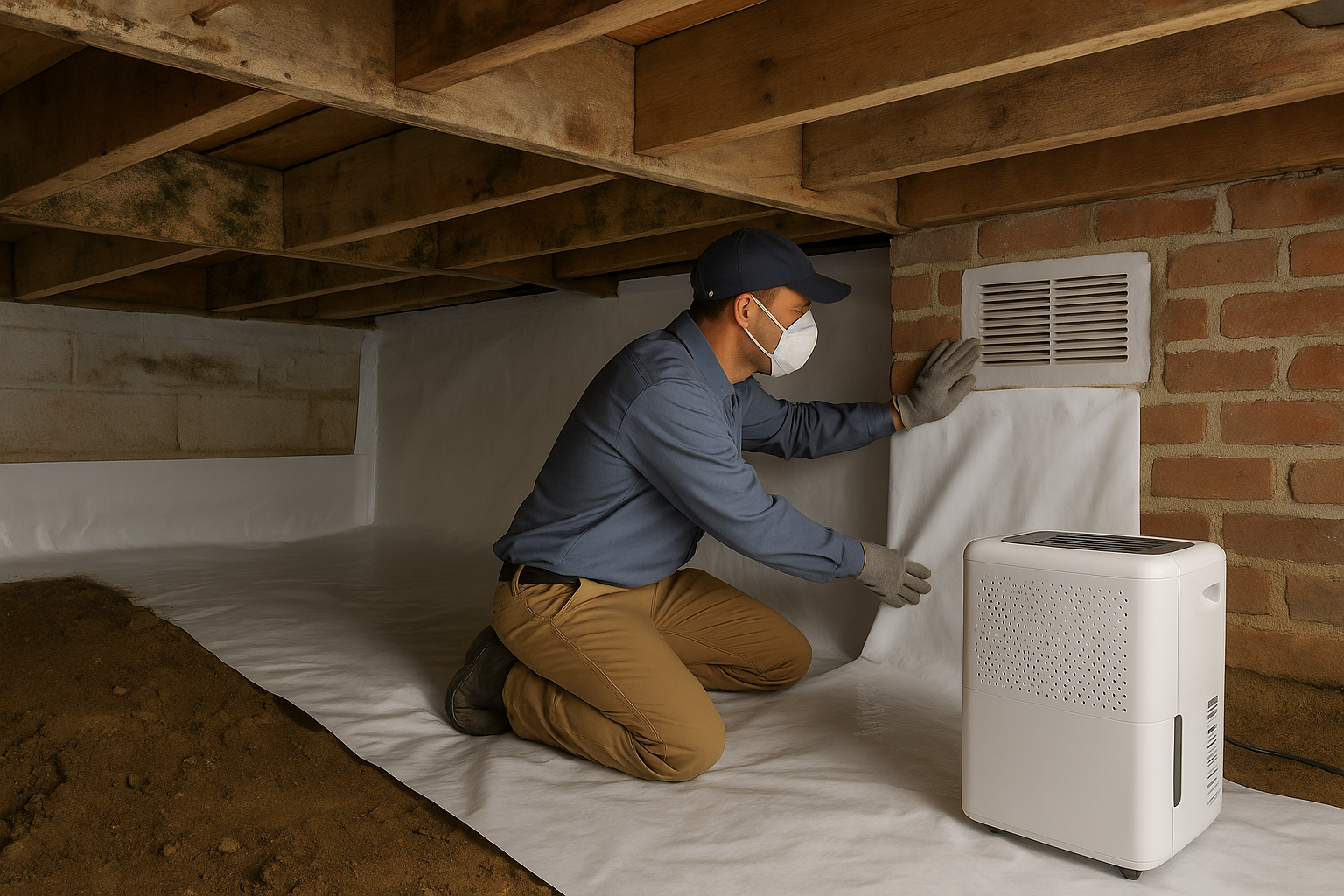
Let’s talk about the elephant under your house. That musty crawl space that smells like a gym sock married a swamp. If mold could pick a dream condo, it would be your damp crawl space. The fix is not a mystery. Moisture feeds mold. Airflow from below pulls those spores into your living room through the stack effect. Encapsulation stops that circus by separating your home from wet soil and outside air while controlling humidity for good. I am the person who lives with knee pads and a headlamp, so I will give you the straight story with a little grit. By the time you reach the last line, you will know what causes crawl space mold, why encapsulation works, what to include in the scope, and how to keep the whole house drier and healthier.
Why crawl spaces mold up
Every mold job we tackle starts with moisture. You do not get mold without excess moisture. That is not opinion. That is building science and public health guidance. If you are the type who likes receipts, see the EPA moisture control guidance which underlines moisture as the root driver of indoor mold growth. Water intrusion, high humidity, or condensation will kick off growth in short order in the right conditions. Crawl spaces offer wood, dust, and paper facing on insulation. Add wet soil vapor or a seasonal leak, then you have the perfect buffet. If you want a plain language primer on causes and prevention basics, skim our page on the causes of mold after this.
The second piece is airflow. Warm air in your home rises. Cooler air gets pulled from low areas to make up the difference. That is the stack effect in homes. It moves crawl space air into the living space, which is why you smell that sweet eau de basement upstairs. Encapsulation seals off that air pathway so your nose can retire from detective work. For a solid explainer of the physics, see this primer on the stack effect in homes.
Health concerns come next. Families with asthma or allergies do not need extra spore exposure or musty compounds climbing through the floor. Lowering crawl space humidity helps the whole home. If you want a quick review of symptoms and risk groups, we have a page on mold and health that keeps the jargon light.
So the problem is not just a dirty crawl space. It is a moisture machine paired with an air highway into the house. Stop the moisture, block the highway, then keep the space dry. That is the game.
Moisture, soil vapor, stack effect
Most crawl spaces sit over damp soil. That soil breathes vapor every day, even when you do not see standing water. After a downpour, all bets are off. Perimeter grading can tilt toward the foundation and dump water right against the wall. Downspouts without extensions pour roof runoff straight into the trench by the footing. That liquid becomes vapor that rises into your crawl space. No big mystery why the joists feel clammy in July.
Now combine soil vapor with outside air. Traditional crawl spaces often have vents punched through the wall. The idea came from a different era. The logic went like this. Let outside air blow through and the crawl space will dry out. In humid seasons, that air is already loaded with moisture. It travels through, cools against the crawl space surfaces, then condenses on metal, insulation facing, and sometimes on the rim joist. Mold loves that. The stack effect pulls a portion of that air upward, so your living area gets a share of the crawl space cocktail. Encapsulation flips this script by sealing the floor and walls, closing vent openings, then keeping the air dry with a dehumidifier. Less vapor into the space. Less outside air drawn in. Less spore transport into the home.
If the crawl space has plumbing or HVAC lines, those can sweat when moist air hits them. That sweat drips onto the liner or soil. Same story for a leaky pipe or a failed bath drain. Water makes the rules. This is why a good plan fixes drainage, seals the enclosure, and sets humidity control. You need all three legs of the stool to sit firmly.
The EPA guidance on building moisture control backs this approach. Manage bulk water first. Control vapor pathways. Keep indoor humidity under control. If you want to geek out on policy level language, scan the EPA guide on moisture control right here.
Drainage and grading that work
Think of grading as the first line of defense. Dirt needs to slope away from the foundation so water does not hang out where your house meets the ground. The Building America Solution Center recommends a positive slope away from the foundation for the final grade. That means a steady fall over the first several feet. For technical guidance and drawings, see their page on final grading sloping away from the foundation.
Downspouts help or hurt depending on length. Short ones deliver roof water into the worst spot. Extensions direct water well away from the wall. Gutters need to be clean because waterfall mode trenches the soil by the foundation. In areas with persistent surface water, a shallow swale or a surface drain can redirect flow before it reaches the house. Subsurface water calls for perimeter drains and in some homes an interior drain with a sump. The goal is simple. Get liquid water away before it becomes crawl space humidity. Solve the big wet problem outside. Then the vapor barrier and dehumidifier can do their job without fighting a river.
When my crew gets called to a crawl space that smells like a pond, we start outdoors. If the soil grade sends water toward the wall, I could set ten dehumidifiers and still lose. Fix the grade. Fix the gutters. Fix the discharge paths. Only then does an encapsulation become a home run rather than a bandage.
Vapor barrier vs encapsulation
People often ask for a basic vapor barrier because it sounds simple and cheap. A vapor barrier is usually a sheet laid on the ground with minimal sealing. It cuts down soil vapor, which helps, but it does not seal the walls or the vents. It also does not control the air exchange that makes the stack effect a problem. In short, some improvement, short shelf life. Several sources agree on this difference. See the comparison between a floor only barrier and full encapsulation from GL Hunt on their guide. Bluegrass Repair shares the same conclusion in their overview of options on this page.
Encapsulation is the full suit of armor. Thick liner on the floor with sealed seams. Liner sealed up the foundation walls and around piers. Vents closed. Penetrations sealed. A dehumidifier set to keep the space under control. Often we add insulation at the rim and sometimes on the wall depending on climate, energy goals, or code. The result looks clean. It also changes the physics. Soil vapor cannot rise into the space. Outside air through vents does not wash through. The crawl space becomes a dry buffer instead of a musty wind tunnel. That is why the phrase crawl space encapsulation benefits gets tossed around by people who have lived with one for a while. Cleaner air. Fewer odors. Less rot risk. Lower dust. In some houses even better comfort upstairs because the floor does not sweat.
I will never say vapor barriers are useless. In a truly dry site with great drainage and no vents, a new barrier might be enough. Reality rarely gives that perfect setup. Most homes get recurring humidity, seasonal standing water, or duct sweating that ruins a flimsy sheet. Encapsulation lasts. The extra work pays you back in fewer headaches later.
Seal vents to stop air pull
Vent openings are an express lane for humid air. In summer those vents pull sticky air into the crawl space that cools and dumps moisture. In winter those vents deliver cold air that chills ducts and floors. The stack effect then tugs a portion of that crawl space air into the living area. Sealing vents interrupts that cycle. This is not my personal crusade. Building scientists have been writing about it for years. If you want a clear diagram, check the stack effect explainer again.
Some local codes allow conditioned crawl designs. Others want passive vents unless you add specific measures like mechanical drying or supply air. Good encapsulation systems already include drying and monitoring. We seal the vents, air seal penetrations, then manage humidity with a dehumidifier that drains continuously. That gives you control. It also protects wood framing and insulation from condensation events.
If you ever stuck your head into a vented crawl space in August, you have seen the story. Insulation hanging like wet laundry. Rust on metal. Spiderwebs with beaded water drops like thrift store jewelry. Sealing and drying turns that chaos into a space that stays clean. Your nose will tell you in a few days.
Dehumidifier sizing that makes sense
Set the space up correctly and a crawl space rated dehumidifier becomes the steady quarterback. It removes moisture that sneaks in from wood, soil, or minor air leaks. Size matters though. Undersized units run constantly and still lose ground. Oversized units short cycle and leave pockets damp. Crawl space dehumidifiers are typically rated in pints per day. For many homes a unit in the 70 to 90 pint class is the sweet spot. Crawl Space Ninja gives a practical overview of selection that matches what we see in the field, including a reminder to look at AHAM ratings for real world performance. Their guidance lives on this page. ATMOX also outlines what a true crawl space unit offers, like ducting options and continuous drain. See their overview here.
Below is a quick table to help you ballpark sizing. Every house is different. Tight encapsulations and great grading can drop the needed capacity. Chopped up layouts or very long runs can require more than one unit. Treat this as a conversation starter, not a final spec.
| Crawl space size | Conditions | Suggested capacity | Notes |
|---|---|---|---|
| Up to 1200 sq ft | Encapsulated, simple layout | 70 to 80 pints per day | Single unit with continuous drain |
| 1200 to 2000 sq ft | Encapsulated, some partitions | 80 to 100 pints per day | Consider ducting to reach far bays |
| Over 2000 sq ft | Encapsulated, chopped layout | Two units or one high capacity unit | Place units to split the load |
Placement matters. Put the unit where air can circulate freely. Do not cram it in a corner behind a pier. Use duct kits to serve distant pockets if the crawl space is chopped. Always set up a continuous drain or a condensate pump. Emptying buckets in a crawl space is a hobby for no one. Aim for a steady relative humidity under 50 percent. That target lines up with good indoor cleanliness and comfort. If you want a quick set of humidity targets for the whole home, see our guide on how to get rid of mold indoors.
One more thing. Air sealing and drainage come first. A dehumidifier is not a mop for a chronic leak. Fix bulk water issues. Seal the space. Then let the unit sip moisture rather than pounding gallons all day.
Protect the wood you paid for
Mold removal helps today. Wood protection helps tomorrow. If your joists are sound but at risk, borate treatments can help guard against decay fungi and wood destroying insects. The active compound in many treatments is disodium octaborate tetrahydrate. It diffuses into wood and stays there as long as the wood is not constantly saturated. U.S. Borax has product and application information for wood protection biocides on this page. Contractors often use Bora Care or similar products in crawl spaces. Pacific Coast Termite gives a homeowner friendly summary of how borate solutions work on their Bora Care overview.
There is a catch. If wood stays wet, borates can leach out over time. That is why moisture control comes first. Treat clean wood after remediation. Replace anything that is soft, cracked, or structurally suspect. No chemical can unrot a joist. When the crawl space is dry and sealed, a borate treatment becomes a smart belt and suspenders move for long term peace of mind.
Inspection, testing, remediation
You can guess at problems or you can measure them. We prefer meters over guesswork. A proper crawl space survey includes moisture readings at wood, relative humidity checks, and a look at grading and drainage features outdoors. If you suspect growth, we can take samples for the lab. That is not always needed, but it helps answer tough questions during real estate sales, health concern cases, or when insurance asks. If you want to start with a visit, book a mold inspection with our team. Need samples for documentation. We can arrange mold testing as part of the visit.
When the crawl space is already fuzzy, proper containment and removal methods protect the rest of the home. Air scrubbers, negative pressure, and safe removal keep particles from riding into bedrooms. We cut out what cannot be cleaned. We clean what can. Then we dry and protect the space so it does not come back. If you want to get on the calendar, use our scheduler to schedule a crawl space mold inspection. We are happy to climb where you would rather not.
Keep it dry for the long haul
Encapsulation is not a set it and forget it gadget. It is a system you can maintain with simple habits. Keep gutters clean before heavy rain seasons. Confirm downspout extensions are still in place. Take a quick look inside the crawl space every season or two. If the liner seam looks lifted at a pier, call us and we will re tape it before it grows into a bigger problem. Listen for your sump if you have one. A quick test once in a while saves headaches during a storm.
Drop a hygrometer in the crawl space so you can check relative humidity without a crawl. Many dehumidifiers ship with remote sensors or app options. A quick glance tells you if settings need a tweak. Target under 50 percent most of the year. A short spike during a heat wave is not a crisis. Long stretches over 60 percent mean the system needs attention.
Life happens. A pipe pinhole can undo a good setup. If a musty odor creeps back or you see new spotting, start with a visit. We will check slope, measure moisture, and test if needed. Getting help sooner saves money because small fixes stay small when you pounce on them.
Putting it all together
Crawl space mold prevention is not magic. It is a system. Move liquid water away from the foundation so the soil stops feeding your crawl space. Seal the ground with a reinforced liner. Seal the walls and the vent openings. Size and install a true crawl space dehumidifier with a permanent drain. Set a target humidity under 50 percent. Treat sound wood with borates if the risk profile warrants it. Replace wood that has lost strength. Watch humidity with a simple sensor so small changes do not sneak up on you. That is the plan that makes crawl space encapsulation benefits real rather than brochure talk.
If you want help turning this plan into a quote you can use, book a mold inspection or jump straight to our schedule page. We will bring the headlamps, the meters, and the bad jokes. You will get a crawl space that stops acting like a mold spa. Your nose will thank you. Your floors will feel better. Your home will breathe easier, literally.