
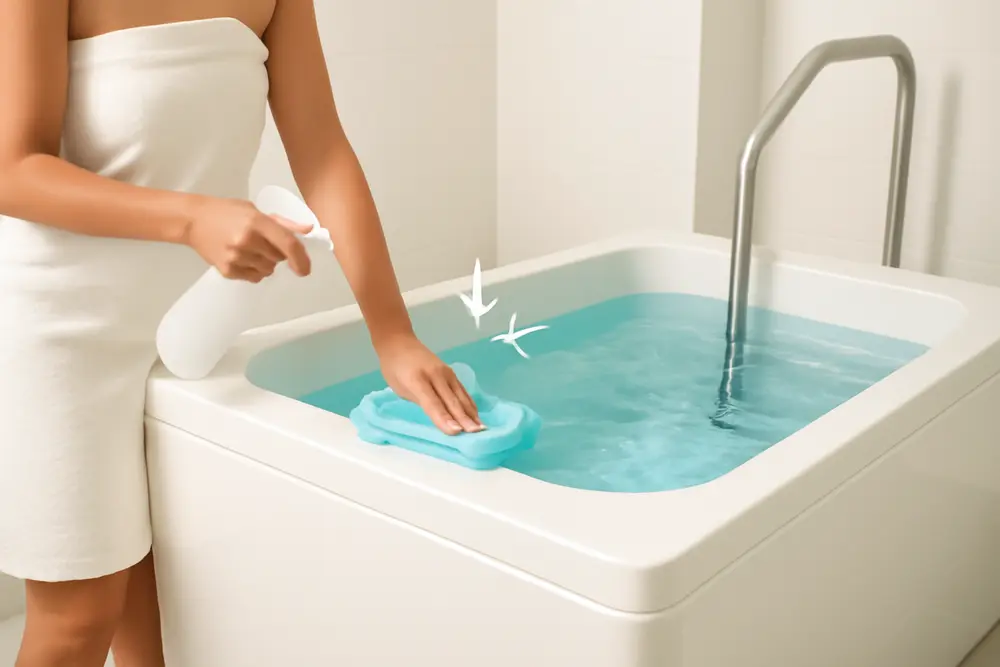
If your cold plunge smells like a gym sock smoothie, you don’t need a hazmat suit. You need a plan. Cold water doesn’t magically freeze gunk in place. Sweat, skin oils, and random backyard biology still party in that tub. The good news: with smart cold plunge sanitation and low-chemical ice bath maintenance, you can keep the water clear, the room un-musty, and your gear mold-free without turning your home spa into a chemistry lab. Here’s the practical playbook we give clients who ask, “How do I stop slime, mold, and mystery funk from taking over my plunge?”
Why Clean Cold Plunges Matter
Cold water slows microbial growth, but it doesn’t stop it. Biofilm is the real villain here. It’s the invisible slime that sticks to walls, plumbing lines, filter housings, and gaskets. Once biofilm sets up shop, it shields bacteria and eats sanitizers for breakfast. Left alone, it also turns into the mold-and-mildew welcome wagon around your cover and splash zone. Clean water protects your skin, keeps odors down, and extends the life of pumps, seals, and filters. If you keep the water happy, your plunge rewards you with chill without the “swamp in a cooler” vibe.
Low-Chemical Water Care
You don’t need to nuke your plunge to keep it clean. You do need a steady sanitizer residual, a stable pH, and a routine. That combo keeps biofilm from gaining ground and keeps your nose from detecting “eau de locker room.”
Sanitizer options:
Chlorine works well in cold water when you maintain a small, steady residual. Target 1 to 3 ppm free chlorine. Bromine is also effective and slightly more stable across a range of pH. Target 2 to 4 ppm. If you prefer hydrogen peroxide, understand it’s an oxidizer, not a reliable stand-alone sanitizer. It’s useful paired with UV or ozone, but you’ll need tighter cleaning discipline and more frequent water changes. Whatever you choose, test and maintain a consistent level.
Keep pH between 7.2 and 7.6 so sanitizers actually sanitize and the water feels comfortable on skin. Total alkalinity between roughly 80 and 120 ppm keeps pH from bouncing around. If your plunge has stainless components, follow the manufacturer’s guidance on calcium hardness. For plastic or vinyl tubs, hardness is less critical, but avoid extremely soft, corrosive water.
| Target | Recommended Range | Notes |
|---|---|---|
| Free Chlorine | 1 to 3 ppm | Keep a steady residual at all times |
| Bromine | 2 to 4 ppm | Alternative to chlorine |
| pH | 7.2 to 7.6 | Helps sanitizers work properly |
| Total Alkalinity | 80 to 120 ppm | Buffers pH swings |
Top-ups vs shock: Add small sanitizer top-ups after each use or daily to hold the target range. Do a weekly shock treatment to oxidize sweat, body oils, and chloramines. You can use a chlorine-based shock or a non-chlorine oxidizer designed for pools and spas. Follow label directions and let levels drop back into the target range before use.
Testing: Use a reliable test strip or drop kit 3 to 5 times per week, daily if multiple people use the plunge. Test before your session. Adjust what needs adjusting. Consistency beats hero doses every time.
Filtration And Flow
Still water invites biofilm. Moving, filtered water makes life harder for slime. Run your filtration at least 4 to 6 hours per day. Many plunge owners run pumps continuously at a low speed since cold water is energy efficient to hold. The goal is to keep debris, skin cells, and organic bits from hanging out long enough to feed a biofilm city.
Use mechanical filtration that can actually catch the junk. Cartridges rated around 10 to 20 microns are a sweet spot for cold plunge systems. Clean or swap cartridges weekly, more often if your water gets cloudy or your pump pressure climbs. If the filter looks like a lint trap from a long-lost laundromat, it’s overdue.
Lines and housings are biofilm favorites. Every drain cycle, remove the filter and clean the housing. If your unit allows it, use a biofilm line cleaner before a full drain to loosen gunk that hides in pipes and jets, then rinse thoroughly. UV or ozone can help reduce organic load, but they’re secondary helpers. You still need a sanitizer residual, filtration, and scrubbing.
Drain And Dry Routines
How often should you change water? If you maintain filtration and a steady sanitizer residual, most home plunges do well with a full water change every 2 to 4 weeks. If you skip sanitizer or have no filtration, plan on changing water every few days. That may sound like overkill until you see what grows in cold, stagnant water after a busy weekend.
When you drain, don’t just dump and refill. Scrub walls, seats, floor, and any accessible plumbing surfaces with a soft brush or non-scratch pad. Use a mild, non-foaming cleaner designed for pools or a diluted white vinegar solution on non-metal surfaces. Rinse thoroughly so you don’t create weird chemical combos when you refill. Never mix vinegar with bleach. If you use a biofilm flush, follow with a full fresh-water rinse before sanitizing.
Let the shell and the cover fully air-dry with good ventilation before refilling. Dry time breaks the wet cycle mold needs. If you can position a fan to move air across the basin and cover, do it. Reassemble clean filters, refill, balance pH and alkalinity, then re-establish your sanitizer residual before the next cold session.
Liners And Covers
The underside of your insulated cover is prime real estate for mildew and mold. It’s dark, warm compared to the water, and loaded with condensation. Wipe the underside weekly with a mild cleaner or diluted white vinegar, paying attention to seams, zippers, and gaskets. Then leave it open to air-dry fully. If it still smells funky after cleaning, inspect the foam core or seams for water intrusion. Trapped moisture inside a cover is basically a mold nursery.
Liners matter too. Hard-surface basins like acrylic, fiberglass, or stainless are less porous than fabric or inflatable options. Less porosity means fewer places for biofilm to grab. If you run a soft liner, clean it more often and be gentle with scrubbing so you don’t create micro-scratches. Check and clean rubber gaskets and any quick-connect fittings. Micro-cracks and seams love to host biofilm. Replace worn seals that stay slimy no matter how much you clean them.
Pick a cover that sheds water instead of soaking it up. If the cover is heavy with water, it will slowly rain into your plunge and spike your organic load. That’s the type of surprise you smell before you see it.
Tame Indoor Condensation
Cold water in a warm room equals condensation. If your plunge is indoors, think like a mold inspector. Keep relative humidity under roughly 50 to 60 percent. Above that, mold growth speeds up on walls, ceilings, and anything porous nearby. Use a dehumidifier sized for the room and run an exhaust fan rated for continuous use. A window cracked for a 10 to 15 minute burst after sessions helps move out moisture. Don’t forget makeup air. A sealed room with a fan just pulls a vacuum and leaves moisture behind. A door undercut or a transfer grille lets dry air replace the damp air you’re exhausting.
Finish the room like a wet area. Tile, sealed concrete, or moisture-resistant paint on walls is your friend. Avoid carpet or unsealed wood next to the plunge. Put a tray, mat, or drainable floor area where you step out so drips don’t soak baseboards. Check for condensation on cold-water lines, the exterior of the tub, and around the cover. If you see frequent wetting, upgrade insulation or add a vapor barrier sleeve on any cold plumbing that sweats.
Nose test: if the room smells musty after a session and stays musty the next day, you’re overdue on ventilation or you’ve got a hidden wet spot. Look under and behind the unit for damp insulation, stained drywall paper, or soft baseboards. Those are early mold flags we find during inspections.
Ice Bath Maintenance For Simpler Setups
If your “system” is a big tub, a stack of ice bags, and grit, you can still keep it clean without a pump. Shower before you get in. No body oils, lotion, deodorant, or self-tanner on bath day. Keep the water off your face if you’ve got makeup or sunscreen on. Toss the water and wipe the basin after each session or at least within 24 hours. Scrub with a mild cleaner weekly. You’re trading fewer chemicals for more frequent drain-and-dry cycles. That’s a fair deal if you keep the routine tight.
Daily And Weekly Checklist
After each use, pull any debris and top up your sanitizer to the target level. Keep the cover clean and cracked open for a few minutes to vent steam and trapped odors before closing it again. Dry up obvious drips on the floor so you’re not feeding the room humidity.
Each week, test pH and alkalinity and adjust if needed. Clean or swap the filter cartridge. Wipe the cover underside and the top edge of the basin where oils collect. Shock the water. Air out the room with exhaust and, if possible, a short open-window burst. Give the pump strainers and skimmers a quick inspection and rinse. If you run high bather loads, shorten your water-change interval or add a mid-week biofilm disruption session with a soft brush.
Troubleshooting And Red Flags
Cloudy water often means your filter is overloaded or your sanitizer is low. Test the sanitizer, clean or replace the filter, and shock. Slippery walls or a rubbery feel equals early biofilm. Scrub, shock, and consider a line cleaner before your next drain. Strong chemical odor does not mean “extra clean.” It usually means chloramines or combined byproducts are building up. That calls for a proper shock and better routine top-ups. A musty smell around the tub or cover is more of a mold signal than a water chemistry issue. Clean and dry the cover, check for trapped moisture, and air out the room.
Any skin or eye irritation after a session means stop, test, and correct. Check pH first, then sanitizer. If readings look fine yet irritation continues, you may have biofilm or contaminated filters creating byproducts. Drain, scrub, flush lines, and start fresh.
Cold Plunge Sanitation With Minimal Chemicals
Want to keep chemistry light without inviting slime? Keep sanitizer at the low end of the target range, but keep it steady. Hold pH right in the 7.2 to 7.6 lane. Run filtration daily. Shock weekly. Shower first. Limit lotions and hair products. Air-dry the cover and basin regularly. Those small habits do more for ice bath maintenance than any miracle bottle on social media.
Smart Gear Choices
A pump and filter combo sized for your water volume saves hours of hassle. Look for easily serviceable filter housings and common cartridge sizes. Add quick-disconnects on plumbing so you can service lines and drain without a wrestling match. If your unit supports it, a UV add-on is a nice helper for organic load. Just don’t treat it as your only sanitizer. A humidity-sensing exhaust fan and a dehumidifier with a drain hose keep the room in the safe zone without you babysitting a bucket.
Safe Cleaning Habits
Never mix vinegar with bleach or any chlorine-containing cleaner. That combination releases toxic gas. Rinse surfaces thoroughly between different cleaners. Keep household cleaners out of the basin unless the label explicitly says they’re for pools or spas. Gloves are cheap. Use them when handling sanitizer and shock products, and store chemicals away from heat and metal corrosion risks. Add chemicals to water, not the other way around. Follow the manufacturer’s instructions for any ozone or UV system so you do not vent ozone into a tight room.
What Mold Pros Look For
When we inspect plunge rooms, we check corners, baseboards, the underside of window sills, and the backside of furniture or gym mats near the tub. Surface condensation on cooler materials like concrete, tile grout lines, or uninsulated metal can grow visible mold even if the room seems tidy. If you see repeating wet spots or smell musty odors that return after cleaning, you probably have a hidden moisture problem. Correct ventilation, fix any drips, and if you find visible mold larger than a few square feet, bring in a qualified remediator. Cleaning the water is step one. Keeping the room dry is the insurance policy.
FAQ
How cold is too cold for sanitizer to work?
Chlorine and bromine still work in cold water, but they act more slowly. That’s why a steady low residual is better than big spikes. Stick with 1 to 3 ppm free chlorine or 2 to 4 ppm bromine and keep pH in range so what you add actually works.
Can I skip chemicals if I change water often?
You can, but you’ll need to change water much more frequently and scrub more often. Without a sanitizer and filtration, drain and refill every few days, especially with multiple users. If that sounds annoying or wasteful, use a low-dose sanitizer and a filter.
Do I need UV or ozone?
You don’t need them, but they help reduce organic load. Treat UV and ozone as extras, not replacements for a sanitizer residual. Follow equipment safety guidance so you’re not venting ozone or light into the room improperly.
Why does the room smell musty even if the water tests fine?
That’s usually a building issue, not a water issue. High humidity, trapped condensation under the cover, or damp materials near the tub can grow mold. Dry the cover, run exhaust and dehumidification, and inspect for hidden damp spots.
What’s the best cleaner for the cover underside?
A mild, non-foaming cleaner or diluted white vinegar works well on many covers. Test a small spot first and rinse if your manufacturer recommends it. If the cover has absorbed moisture into the foam, cleaning the surface won’t fix the smell. You may need to replace the cover.
How often should I run the filter?
At least 4 to 6 hours daily. Continuous low-speed circulation is even better for preventing stagnation. Clean or replace cartridges weekly or anytime flow drops or water looks dull.
What signs mean I should drain now?
Persistent cloudiness, slippery walls, strong chemical odor that doesn’t settle after shock, or any unexpected skin irritation. If in doubt, drain, scrub, flush lines, and start fresh.
The Quick Start Game Plan
Shower before use. Keep sanitizer steady in the target range. Hold pH 7.2 to 7.6 and alkalinity 80 to 120 ppm. Run filtration daily. Shock weekly. Clean the filter weekly. Wipe the cover underside weekly and let it air-dry fully. Change water every 2 to 4 weeks with filtration and sanitizer. Keep room humidity under about 50 to 60 percent with exhaust and a dehumidifier. Fix drips and dry floors after use. If something smells off, it probably is. Act early and you’ll never meet the swamp monster.