
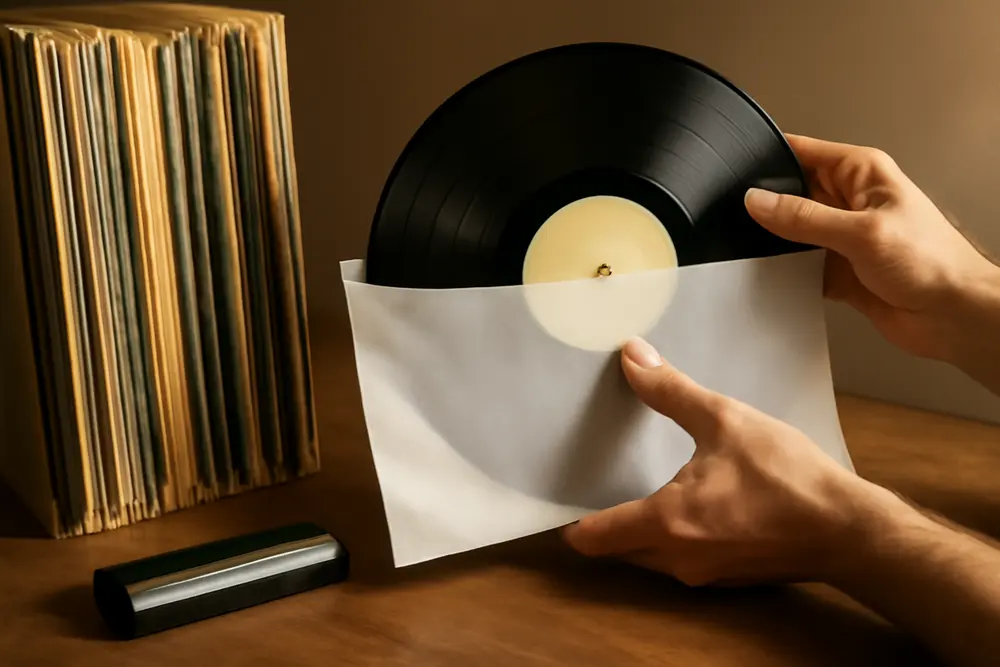
Vinyl is forever, until mold invites itself to the listening party and eats your album art for breakfast. I run a mold inspection and testing company. I’ve swabbed enough musty sleeves and funky jackets to know exactly where things go wrong. The short version: keep humidity steady, use the right sleeves, give your shelves some breathing room, and clean the funky stuff the right way. Do that, and your LPs will stay quiet where it counts and loud where they should be.
Hit The Right Humidity
Records and jackets are a mixed marriage of plastic and paper. Vinyl shrugs off a lot, but cardboard, inks, and glue are delicious to mold if moisture hangs around. Keep relative humidity around 40 to 50 percent. You can tolerate up to 55 percent if airflow is strong and temps are stable, but once you cruise past roughly 60 percent, spores start acting like they just found a buffet. Too low, below about 30 to 35 percent, and static builds while jackets get brittle and prone to edge splits. Temperature should sit near room levels, about 65 to 70 degrees Fahrenheit, with zero drama from big swings. Add gentle airflow and you’ll break the mold party before it starts.
Use a digital hygrometer on the shelf, not just across the room. Your shelf micro-climate can be a different world. In wet seasons, run a dehumidifier. In desert-dry winters, a humidifier will keep static in check. Howard Environmental’s guidance for sensitive materials mirrors this: breathable storage, RH under the low-to-mid 50s, steady temps, and airflow work wonders for anything made of paper and fabric.
Anti-Static Sleeves That Actually Help
Paper inners pretend to be classy until they sand your grooves and wick moisture. Swap them for polyethylene or rice paper anti-static sleeves. Good anti-static sleeves cut down charged dust, won’t shed, and don’t trap moisture against the record. Look for acid-free materials so you’re not slow-cooking your collection’s artwork and liners over time.
For the outside, use heavyweight polypropylene or polyethylene outer sleeves. The trick is protection without suffocation. Choose sleeves that are clear, sturdy, and just loose enough to let a jacket breathe. That tiny airflow gap keeps condensation from camping out on your cover art. If a jacket is already slightly musty, never trap it in a super-tight outer. Fix the odor first, then re-bag.
Shelving That Breathes
Store LPs upright, like books, not stacked. Stacking flattens records and pins any hidden humidity in a cozy sandwich of regret. Leave a finger’s width of space per row so sleeves don’t bow or lean. Use bookends or dividers to keep everything vertical. Metal or sealed-wood shelving beats bare, raw wood, which is porous and can harbor moisture. Keep your shelves a couple inches off exterior or cold walls to avoid condensation, and never store on basement floors where moisture loves to settle. Air should move around, under, and behind your records.
Quick Climate Targets
| What | Target | Why It Matters |
|---|---|---|
| Relative Humidity | 40 to 50 percent | Prevents mold on jackets and limits static on vinyl |
| Temperature | 65 to 70 F | Stable temps reduce warping and paper decay |
| Airflow | Gentle, steady | Stops condensation and dead-air mold pockets |
Record Jacket Cleaning That Works
Before you splash anything on a jacket, pretend it’s a rare first pressing. Dry clean first. Use a soft brush or microfiber cloth to lift dust and loose spores, ideally with a HEPA vacuum nearby to capture what you dislodge. Don’t smear spores into the fibers with water right out of the gate. When spots remain, test a hidden corner. For many printed jackets, a 1 to 1 white vinegar and distilled water mix makes a decent spot cleaner. Lightly dampen a cloth, dab the spot, then blot dry with a clean towel. Keep labels and raw edges as dry as possible. Air dry upright in a shaded, ventilated space so inks don’t fade. Skip bleach on porous paper unless you like ghostly tide marks and fuzzy paper fibers.
Safety is non-negotiable. Gloves and a good mask keep your lungs and skin out of trouble, especially if the jacket has active growth. Howard Environmental’s mold guidance for books and fabrics is the same playbook here: dry removal first, gentle spot treatments second, then thorough drying. If a jacket is deeply infested, retire it and save the record. Mold that colonizes cardboard doesn’t just leave because you asked nicely.
Clean The Records Safely
Before storage, brush your LPs with a carbon fiber anti-static brush to knock out loose dust and reduce static charge. If grooves look grimy, use a proper record cleaning solution or a dedicated machine. Avoid harsh household solvents that can haze vinyl or lift label inks. Keep labels dry and support the record so fluid doesn’t pool at the edge. Let it dry fully before re-sleeving. The combo of clean grooves and anti-static sleeves keeps dust from boomeranging right back into your stylus.
Smell Something Off?
Your nose is usually first responder. Musty odor means spores or moisture got a foothold. Isolate the suspect LPs and jackets in a breathable container while you assess. If you see fuzzy growth or dark bloom on the inside of the jacket, remove the record immediately and move to cleaning or replacement. Never seal a damp or musty item in a tote or an outer sleeve. That’s a terrarium with better album art.
Maintenance That Pays Off
Keep a cheap digital hygrometer on the shelf and check it weekly. If RH creeps up, power on the dehumidifier. If static gets wild when you pull a record, bump humidity a hair or recheck your anti-static sleeves. Wipe shelving dust periodically so you’re not feeding stray spores. Rotate any tight rows so jackets don’t form permanent leans, and replace torn or musty inners with new acid-free, anti-static sleeves. Little habits like these save you from big restoration projects later.
FAQ
Can I Store Records In Plastic Bins?
Short term while you move them, sure. Long term, it’s risky. Airtight bins trap moisture from normal day-to-day swings, and cardboard jackets will pick that up fast. If you must bin, use desiccant packs and open the bins regularly so air can exchange. Shelving with airflow is the better play.
Are Silica Gel Packs A Good Idea?
They help in small, enclosed spots, but they don’t replace room control. Use them as a buffer inside a cabinet, change them out or recharge as they saturate, and still watch RH with a hygrometer.
Which Anti-Static Sleeves Should I Buy?
Polyethylene or rice paper with anti-static lining is the sweet spot. They slide easily, don’t shed, and won’t hold moisture. Make sure they’re acid-free, and don’t reuse old dusty paper inners that already smell like your granddad’s attic.
What If My Turntable Room Gets Humid In Summer?
Run a dehumidifier and add gentle airflow around the shelves. Keep LPs off exterior walls, give a small gap behind the shelves, and monitor RH. If you’re hovering over 55 percent for days, your jackets are on borrowed time.
How Do I Clean A Heavily Moldy Jacket?
Work outside or in a well-ventilated area with gloves and a mask. Dry brush and vacuum with HEPA first, then very light spot cleaning. If the mold is embedded and the board feels soft or smells strong after drying, replace the jacket and keep the liner notes in a scan or sleeve. Deeply colonized cardboard is a mold hotel.
Pro Kit I Actually Use
You don’t need a lab to win against mold. Keep this kit nearby and you’ll outsmart 90 percent of issues before they start:
- Digital hygrometer for the shelf, not just the room
- Dehumidifier or humidifier, depending on season
- Carbon fiber anti-static brush and acid-free, anti-static sleeves
- Soft brush, microfiber cloths, gentle cleaner, and nitrile gloves
If you want deeper reading on moisture control and safe cleaning strategies for paper-based collections, check the Howard Environmental notes on breathable storage and keeping RH under control across soft goods and archives. The same rules that save rare books will save your first press of Kind of Blue.