
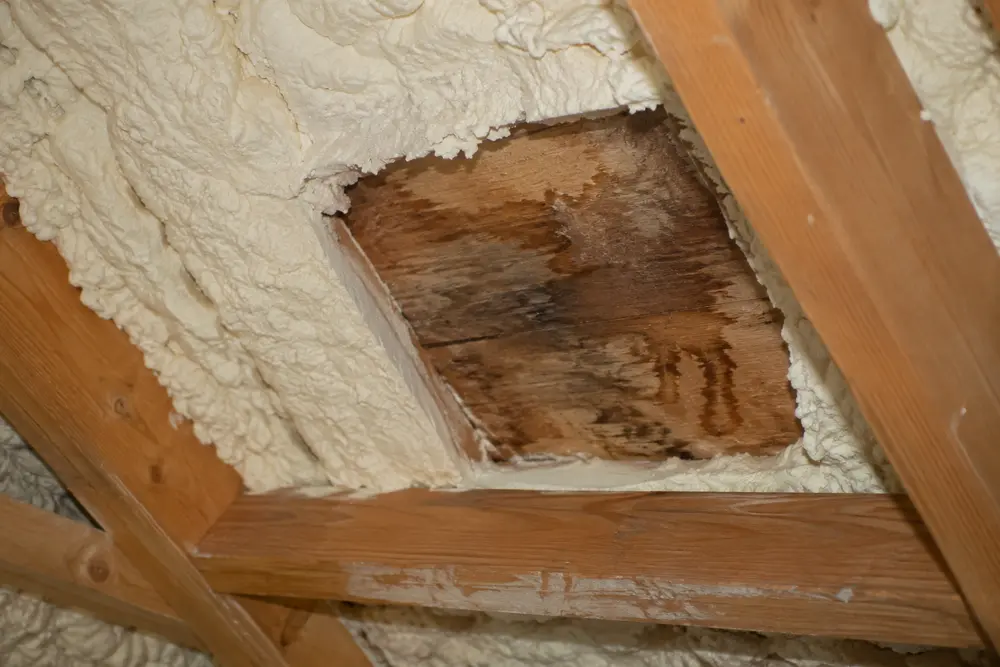
Getting this wrong can leave you paying to clean a visible patch while wet roof decking continues to deteriorate behind the insulation. The opposite mistake is expensive too: tearing out sound foam because a dark mark looked suspicious.
You can find mold on spray foam in an attic. In many cases, though, the growth is using dust or construction residue on the surface as food. The more serious condition may be concealed mold on roof decking or framing that has stayed damp.
Spray foam doesn’t cause roof leaks, and it isn’t roofing. Once it covers the underside of your roof deck, however, it can change how water moves through the assembly and how easily you can find that water.
A sealed-looking attic can therefore conceal a moisture problem from you. Foam may hide most of the wood from view while gaps around an eave or roof penetration still admit humid air or rainwater.
The useful question isn’t simply, “Can foam grow mold?” You need to know where the moisture entered and whether the affected material has a practical path to dry.
Is Mold Growing on the Foam?
Mold needs both moisture and a food source it can use. Cured spray polyurethane foam generally offers little organic material, but its exposed surface rarely stays perfectly clean. Dust and construction debris can settle on it, giving growth something to use when condensation or leakage supplies water. The EPA’s guidance on mold and moisture makes the broader point that household dust and many building materials can support mold when they remain damp.
You should give nearby wood closer attention than the foam alone. Roof sheathing and rafters are porous materials that can support fungal growth after prolonged wetting. Paper facings or adhesive residue beside the insulation may support it as well.
You can’t settle the question based on color alone. Brown streaks can come from wood extractives, and gray areas may be dirt or uneven foam application. Black spotting could be fungal growth or ordinary residue. A laboratory can identify material collected from a specific spot, but the result still won’t explain where the water originated or how far hidden damage extends.
Does Spray Foam Trap Moisture?
Depending on the product and application, spray foam can reduce air and vapor movement. Those properties can prevent humid air from reaching a surface cold enough for condensation. That is one reason you’ll find foam used in unvented attic designs.
The same resistance can reduce drying when your roof sheathing gets wet from above. If rain passes through failed flashing, the water may reach the sheathing and remain at the foam-to-wood interface. Foam doesn’t make worn shingles or faulty roof penetrations watertight.
Your roof sheathing may have been damp before the foam was installed. Applying foam against damp sheathing can cover the evidence and restrict inward drying. The attic can look finished while the wood remains the material at risk.
What this means for your attic depends on the complete assembly: foam can help control moisture movement in a properly designed system, but it can limit drying after water gets in. Building America guidance for unvented attics explains why insulation has to work with the roof’s moisture controls. Foam alone can’t carry that whole job.
Open-Cell and Closed-Cell Foam
Open-cell and closed-cell spray foam don’t handle vapor or liquid water the same way. You still shouldn’t identify either one by color alone. Product specifications and installation details affect performance, so installer records or manufacturer data are more useful than an internet color chart.
Open-Cell Spray Foam
Because open-cell foam is generally more vapor-open, it can absorb more liquid water than closed-cell foam. A leak may travel through it or produce visible discoloration, which sometimes makes a problem easier for you to notice. Sometimes is doing real work in that sentence.
Visible dampness doesn’t guarantee that you have located the roof defect. Water can travel along sheathing or framing before emerging. Open-cell foam doesn’t guarantee that wet roof sheathing will dry before mold growth or wood damage develops.
Closed-Cell Spray Foam
Compared with open-cell products, closed-cell foam generally resists vapor diffusion more strongly and takes up less liquid water. When it is bonded directly to roof sheathing, it may restrict inward drying and leave damp wood hidden behind a surface that looks unchanged.
A tighter foam surface can make leak tracing harder for you. Building Science Corporation’s discussion of interior spray foam and drying shows why the position of the foam within the roof assembly matters. Closed-cell foam can be appropriate, but “closed-cell” isn’t shorthand for “nothing behind it can get wet.”
How Roof Leaks Hide Behind Foam
When foam is applied directly against your roof decking, much of that decking disappears from view. An inspector can examine exposed rafters and transitions, but a clean foam surface doesn’t prove that the covered sheathing is dry.
The visible stain may be some distance from the entry point. Rain entering near flashing can follow the deck or foam interface before appearing lower in your attic. Treating the area directly above a stain as the guaranteed source is a good way to repair the wrong section of roof.
Storm damage isn’t the only possibility. A condensate line can leak near the attic equipment, or cool ductwork can collect condensation under humid conditions. Roof repairs won’t fix either cause, which is why the investigation needs to follow the water path before anyone starts selling you a remedy.
Austin Attics Face Cooling-Season Moisture
If you live in Austin, your home spends long periods under air conditioning while outdoor air carries substantial moisture. Humid air entering through a missed transition can reach cool ductwork or other surfaces and condense. This is one common form of spray foam attic moisture that has nothing to do with rain.
Your partially sealed attic can be especially troublesome because small openings still admit air. Localized condensation can occur near the flaw even though someone casually describes the attic as “sealed.”
Mechanical equipment introduces another variable you need to consider in a foam attic. An attic isolated from your home’s conditioned space may experience humidity that the cooling system doesn’t manage well. Condensate drainage problems or an exhaust duct ending in the attic can add water directly.
You won’t find one vapor-control recipe that fits every Austin roof. Roofing material and foam type matter, as does the HVAC arrangement. For current requirements, you should check the City of Austin’s adopted building codes and amendments instead of relying on an old code summary or a foam sales brochure.
A Sealed Attic Can Still Be Wet
When someone calls your attic “sealed,” that usually describes air control, not the condition of every shingle and flashing joint above it. The label doesn’t prove that the deck was dry during installation, either. Those are separate questions that need separate evidence.
Don’t let the sealed label hide imperfect installation work. Foam may pull away from a framing member, or a difficult roof-wall transition may receive uneven coverage. Small missed areas can concentrate air leakage and create wet spots while the rest of the attic remains dry.
Diagnosing Spray Foam Attic Moisture
Evaluating spray foam attic moisture takes more than a flashlight and one meter reading. Every tool has limits, particularly when the material you care about is buried between roofing and insulation.
Visual Inspection
A visual inspection can help you find staining or foam separation. It may reveal corroded fasteners or damp framing. It generally cannot establish the condition of sheathing completely covered by foam.
Moisture Readings
A moisture reading from the foam’s exposed face doesn’t prove that the wood behind it is dry. Meter response changes with the material being tested, and hidden metal can distort some readings. Direct contact with accessible wood is more useful, while a dry reading today still can’t rule out wetting after a previous storm.
Infrared Imaging
An infrared camera detects surface-temperature differences, but it doesn’t see water or mold. Air leakage and uneven insulation can produce an anomaly, as can solar heating, so you need to check suspicious patterns with material readings or direct access where feasible.
Air and Surface Samples
A negative air sample can’t clear your inaccessible roof decking, and a positive sample can’t locate a hidden leak. The EPA’s mold sampling guidance notes that visible mold often doesn’t require sampling and that no federal airborne mold limits establish whether a building meets a health standard. Surface sampling can help classify a questionable mark, but it doesn’t map concealed damage.
A Better Investigation Follows the Water
Your investigation should begin by identifying the roof assembly. Installer paperwork may show the foam product and where it was intended to be applied. You need to establish whether the attic was designed as vented or unvented because a half-converted design can produce conditions nobody intended.
When leakage is suspected, the investigation should move to your roof exterior. Flashing and penetrations deserve attention, along with the roof covering near any mapped interior evidence. Looking only above the attic stain can miss a leak that traveled sideways.
Indoor moisture sources need their own check during your investigation. Condensate drainage and cool mechanical surfaces can create attic moisture even when the roof performs correctly. Exhaust ducts should discharge outdoors, not release humid air into a foam enclosure.
You can learn more from a pattern than from an isolated spot. Mapping visible and odor evidence can show whether the condition follows a roof slope or an air-leakage path. Temperature and humidity monitoring over time may expose intermittent conditions that aren’t present during a short appointment.
When you schedule a mold inspection in Austin with Howard Environmental, expect us to approach it as a moisture investigation first. We use visible evidence and appropriate readings to form a working explanation, then identify where direct access or another specialist may be needed. Guessing from foam color isn’t an inspection method.
Targeted mold testing can answer a defined question about a suspicious surface in your attic. It shouldn’t become a substitute for checking the roof and moisture sources. Testing everything in sight usually creates a larger report without creating a better repair plan.
When Direct Access Becomes Necessary
Fully covered roof decking may require limited access when exterior evidence and moisture mapping point toward a concealed problem. A carefully chosen borescope opening or test cut can expose the wood interface. Inspection during roof replacement may provide the clearest view from above.
Blindly cutting into foam can create more problems. Wiring or plumbing may be concealed within the assembly, and roof fasteners can extend below the deck. Access locations should be selected using the evidence already gathered and opened by someone prepared to restore the affected air-control layer.
If your inspector finds concealed deterioration, you may need input from a roofer or building-envelope specialist. Structural concerns belong with a qualified structural professional. Cleaning the visible foam face has little value if wet sheathing remains covered behind it.
Common Questions About Spray Foam Mold
Does Mold on Spray Foam Mean It Is Rotting?
Mold on the surface doesn’t mean your foam is rotting. Foam doesn’t rot like wood, and surface growth may be feeding on deposited material. The mark still deserves investigation because the same moisture could be affecting wood behind or beside the foam.
Can You Paint Over Stained Spray Foam?
Painting over a stain can conceal evidence without correcting your moisture source. A coating may change the assembly’s vapor behavior or conflict with the foam manufacturer’s requirements, so don’t treat ordinary paint as a mold remedy.
Should a Roofer or Mold Inspector Come First?
If you have an active leak, it calls for prompt roofing attention. When the source is uncertain or the concern involves concealed growth, an inspection can help map the evidence before openings are made. The two roles often need to coordinate because fixing water entry and evaluating affected materials are different tasks.
Can Spray Foam Affect a Roof Warranty?
Because warranty terms vary among roofing and foam manufacturers, you should review the actual documents before installation or major repair. Pay attention to inspection access and approved roof assemblies. A contractor’s verbal assurance isn’t a replacement for written terms.
Will an Air Test Find Mold Behind Spray Foam?
You can’t rely on an air test to find mold behind spray foam. Concealed growth may release little detectable material into the sampled air, especially during a short test. Direct investigation of moisture pathways and hidden wood provides more useful evidence about the covered roof assembly.
References
- A Brief Guide to Mold, Moisture and Your Home (epa.gov)
- Unvented Attic Insulation (basc.pnnl.gov)
- BSI-116: Interior Spray Foam (buildingscience.com)
- Building Technical Codes (austintexas.gov)
- Mold Testing or Sampling (epa.gov)