
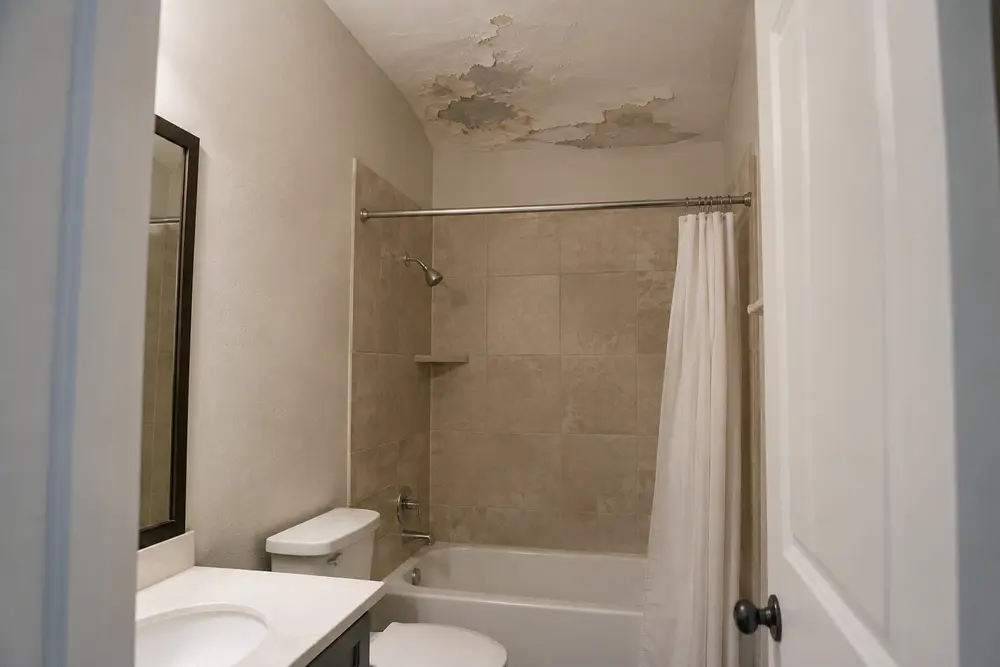
A fresh coat of paint doesn’t seal away a bathroom moisture problem. If you paint over bathroom mold while the drywall is damp, you may hide the stain without stopping the leak or dealing with growth beneath the painted face.
Primer can make a wall look fixed for a while. It can’t repair a shower leak or restore gypsum that has turned soft. The stain may return, or the new coating may bubble and peel.
You may be able to repaint eventually, but paint comes only after the repair. Start by locating the moisture source. Then decide whether the material can be cleaned and dried or needs to come out.
Paint Can Hide Important Moisture Clues
Painting over mold conceals evidence that can help you find the moisture source. A yellow ceiling stain that grows after rain points you in a different direction than scattered spotting that worsens after long showers. Cover that pattern too soon, and you’ve erased a useful clue.
The EPA’s mold and moisture guidance says moldy surfaces shouldn’t be painted or caulked before they’re cleaned and completely dry. Otherwise, the coating may peel. More important, the condition underneath keeps developing while the bathroom looks freshly painted.
Check the Drywall Before Coating It
Start with the wall’s condition. Press gently near the affected area without scraping or sanding it. Softness or sagging suggests more than a cosmetic stain. A musty odor can also justify checking the opposite side of the wall or the cavity.
A moisture meter can help compare the suspected area with known-dry drywall nearby. That comparison may reveal a leak pattern, but the meter doesn’t identify mold. One low surface reading also can’t prove that the backing or insulation is dry.
Infrared imaging has similar limits. It can show temperature differences that deserve investigation, but it doesn’t see mold through drywall. Tools support an inspection. They don’t replace one.
Track Down the Moisture Source
Central Texas bathrooms can develop moisture problems for several unrelated reasons. Don’t assume shower steam caused the stain merely because it appeared in a bathroom. Timing and location usually give you better clues.
Shower Humidity and Condensation
Diffuse spotting near a ceiling corner often grows worse when damp air lingers after bathing. Check that the exhaust fan runs and actually vents outdoors. A disconnected attic duct simply moves bathroom moisture somewhere you can’t see. Good bathroom exhaust installation also depends on sensible duct routing and adequate airflow.
Plumbing Leaks
A small stain beside a vanity may come from a supply connection or drain inside the wall. The visible mark can be much smaller than the wet area behind it. Stop the leak, then assess the nearby materials before deciding what stays.
Shower Assembly Failures
Water can pass through a failed joint or shower-door connection. Smearing more caulk across the surface won’t repair a defective waterproofing assembly behind tile. Find the entry point and inspect concealed material when softness or recurring staining suggests water has traveled.
Roof or Exterior Water
A bathroom ceiling stain that changes after rain deserves an attic or exterior investigation. Roof penetrations and flashing defects can imitate a condensation problem. Repainting the ceiling after every storm is maintenance theater, not a repair.
Match the Repair to the Material
Different materials don’t respond to moisture the same way. Use the condition of the material, along with the moisture source, to choose the response.
- Glazed tile or glass: Clean and dry the intact surface.
- Firm painted drywall: Correct the moisture source and clean the affected face after the board has dried.
- Soft or swollen drywall: Remove and replace the damaged section after the leak is repaired and the cavity is evaluated.
- Wet insulation: Contaminated porous insulation generally needs removal before the wall is closed again.
Drywall doesn’t automatically require demolition because a few spots appeared on the paint. A dry, firm panel with limited surface growth may be cleanable. Replacement becomes much more reasonable when the board crumbles or has mold on its back.
Common Painting Mistakes
Priming as soon as a stain appears is one of the easiest ways to hide a leak pattern. Photograph the area first and note when it changes. Once the wall is white again, you may have trouble seeing where the water traveled.
Treating stain blocker as waterproofing is another expensive mistake. Stain-blocking primer controls discoloration that might bleed through a finish coat. It doesn’t stop water moving through drywall.
Spraying bleach and reaching for a roller doesn’t prove that the surface is ready. The EPA doesn’t recommend bleach as a routine mold cleanup method. Fading the color doesn’t confirm that the drywall is dry, and dead mold can still affect sensitive people. Never mix cleaning products.
Caulking over a moldy joint leaves failed material underneath the new bead. Remove deteriorated caulk, address the moisture entering the joint, and let the area dry before recaulking. The same rule applies to painting over mold: surface coverage isn’t source correction.
Know the Limits of DIY Cleanup
A small surface area on sound material may be manageable if you can identify the source and avoid spreading debris. The EPA says a homeowner can often handle an area smaller than about 10 square feet, while a larger job may require added precautions. Its home mold cleanup guidance treats that size as a general benchmark, not a magic dividing line. Sewage exposure or suspected cavity growth can justify professional involvement even when the visible spot is small. Cutting or sanding moldy drywall without containment can carry dust into adjoining rooms.
Replace Drywall Only After the Leak Is Fixed
New drywall can become wet for the same old reason. Before closing the wall, repair the failed component and check adjacent materials. Damp insulation sealed behind a new panel defeats the whole exercise.
One-time wetting doesn’t always require replacement. The EPA advises completing the drying process within 24 to 48 hours to help prevent mold growth, though that window isn’t a guarantee that every material remains salvageable. What matters is whether the board becomes fully dry and stays structurally sound.
The before-and-after test is straightforward. Before repair, moisture damage remains and its source is active. After repair, the source is corrected and the wall is dry. A prettier surface alone doesn’t count.
Prime Only After the Repair Is Complete
Once the wall is fully dry and properly cleaned, primer can do the job it was designed to do. Use a stain-blocking product when harmless residual discoloration might bleed through. Follow the label and apply a bathroom-appropriate finish coat over the prepared surface.
Moisture-resistant paint can improve durability, but it can’t substitute for outdoor exhaust. Keep using the bathroom fan during bathing and afterward until the damp air clears. Watch the repaired area for renewed staining or peeling.
Know When Professional Help Makes Sense
Professional evaluation is sensible when the stain keeps returning or the source remains unclear. Hidden growth inside a ceiling or wall also changes the cleanup plan. Texas maintains licensing and consumer information through the Mold Assessors and Remediators program.
When Howard Environmental performs a mold inspection in Austin, we focus on the moisture pattern and the material’s condition before recommending what happens next. If sampling would answer a specific question, mold testing may support that assessment. Testing shouldn’t be used as a fancy excuse to ignore an obvious leak.
Common Questions About Bathroom Mold
Can Mold-Resistant Paint Prevent Bathroom Mold?
Mold-resistant paint can help protect a clean, dry surface under normal bathroom conditions. It won’t prevent growth where condensation remains chronic or water continues entering the wall.
Does Black Spotting Identify Dangerous Mold?
Color can’t tell you the mold type or establish its health risk. Black spotting may be mold or ordinary staining. The moisture source and affected material still need attention regardless of color.
How Long Should Drywall Dry Before Painting?
There’s no reliable fixed waiting period for every wall. Drying time changes with the amount of water and airflow. Compare the area with known-dry material and confirm that the source has stopped before painting.
Can I Prime an Old Water Stain With No Growth?
You can prime a residual stain after confirming that the leak was repaired and the material is dry and sound. A stain-blocking primer is useful at that stage because its job is to stop discoloration from bleeding through the finish coat.
References
- A Brief Guide to Mold, Moisture and Your Home (epa.gov)
- Bathroom Exhaust Fans (basc.pnnl.gov)
- Should I use bleach to clean up mold? (epa.gov)
- Mold Cleanup in Your Home (epa.gov)
- Mold Assessors and Remediators Homepage (tdlr.texas.gov)