
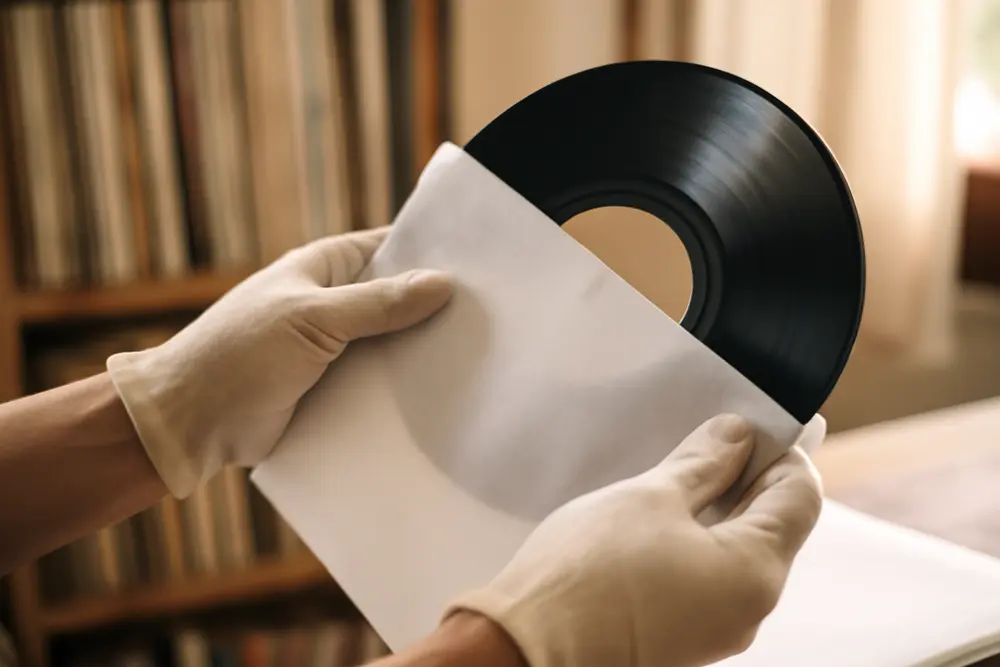
If you have a crate of LPs that smell like a wet basement and a thrift store had a love child, this one’s for you. I inspect mold for a living, and let me tell you, mold does not care that your first press of Kind of Blue changed your life. It cares that your sleeves are paper, your room is humid, and your airflow is lazier than a cat at noon. The fix is not mystical. It’s vinyl record preservation 101: keep the room in the safe zone, move the air, clean smart, and switch to archival inner sleeves so spores never get cozy in your grooves or jackets.
Why Mold Targets LPs
Mold is nature’s recycling program with no respect for your collection. It wakes up around 60 to 65 percent relative humidity and throws a party if the temperature is warm and the air is stale. Your vinyl discs are polyvinyl chloride, which mold does not eat, but your jackets and paper sleeves might as well be a buffet. Once paper absorbs moisture, spores latch on, grow threads, and release more spores that settle into inner sleeves and record surfaces. You end up with musty jackets, speckled paper, hazy films on grooves, and a resale value that cries quietly in Discogs.
Here’s the kicker: even if your records look fine, moldy packaging shares spores every time you slide an LP out. That recurring transfer is why collections can slide from pristine to funky in a single damp season. The solution starts with conditions that do not let mold get traction.
Ideal Room Conditions
There’s a sweet spot where your vinyl is happy and mold gets bored. Aim for 45 to 50 percent relative humidity and 60 to 70 degrees Fahrenheit. That window limits mold growth while keeping static, warping, and brittle paper in check. Bigger swings are the enemy. If your room flips from 35 percent in winter to 70 percent in July, paper fibers expand and contract, jackets puff, seams split, and records can dish or warp. Stability beats drama every time.
Use a digital thermo-hygrometer so you are not guessing. If readings creep above 55 percent for days at a time, bring in a dehumidifier. If you live in the Sahara of central heating, add a small humidifier but keep it clean and set modestly. HVAC is great, but vents can blast dust. Balance is the goal.
| Relative Humidity | Risk To Records & Packaging |
|---|---|
| 30 to 40 percent | Low mold risk, higher static, drier paper |
| 45 to 50 percent | Safe zone for vinyl and jackets |
| 55 to 60 percent | Watch list, monitor daily, improve airflow |
| Over 60 percent | Mold risk climbs fast, act now |
Museums and archives target similar humidity and temperature bands because organic materials behave better there. Your LP jackets are essentially thin cardboard books. Treat them like it.
Airflow That Stops Spores
Stagnant corners are where moisture condenses and spores settle. You do not need a wind tunnel, but you do need a gentle mix. A quiet fan on low, not pointed directly at the shelves, prevents pockets of humid air from hanging out behind crates. Keep records at least a few inches off exterior walls so cold surfaces do not hit dew point right behind your sleeves. If your shelves back up to a concrete wall, add a spacer or insulation panel that allows air to pass. Fix leaks immediately. A slow pipe drip above your jazz section is a mold origin story waiting to happen.
Archival Inner Sleeves 101
If you only make one upgrade, make it archival inner sleeves. Plain paper sleeves shed fibers, hold moisture, and get gritty. PVC sleeves can off-gas and imprint hazy films. Archival inner sleeves made from high density polyethylene, sometimes with a rice paper layer, are anti-static, smooth, and moisture resistant. They reduce abrasion, do not feed mold, and release less dust. That alone prevents half the gunk that ends up in your stylus.
Here is how to switch without drama. Work in a clean room that is already in the safe humidity range. Brush each record with a carbon fiber brush while it spins freely in your hand or on a platter. If the disc needs more than a brush, do a wet clean first, then re-sleeve only after the vinyl is fully dry. Place the open edge of the inner sleeve perpendicular to the jacket opening. That way airborne dust and sneaky spores do not shoot straight in every time you grab an LP.
Yes, you can keep original printed inners for artwork or lyrics. Store them empty inside the jacket or in a separate outer sleeve pocket. The record itself should live in an archival inner sleeve. Think of the archival inner as the actual home and the printed inner as art that visits.
Outer Sleeves And Jackets
Outer sleeves are your jacket’s raincoat. Choose polypropylene or polyester rather than PVC. Poly bags act as a barrier against handling grime and slow down ambient moisture spikes that would otherwise be absorbed by paper. Make sure jackets are bone dry before bagging, because airtight plus damp equals mold incubator. If a jacket ever feels cool and clammy, set it upright in a dry, ventilated space until it normalizes before you bag it again.
Acidic paper ages poorly. If you collect high value pressings, consider acid free, lignin free jacket inserts or buffered backer boards in storage boxes. It is a small investment that stops those yellowed edges and keeps spines from going soft. UV light also fades covers and can weaken paper fibers, so keep your shelves out of direct sun. If you like to display album art, rotate it often and use UV filtering frames.
Safe Cleaning Without Regrets
There is clean, and then there is I sprayed my Miles Davis with kitchen cleaner and now it looks like a windshield. Please do not. For routine maintenance, dry brush with a carbon fiber brush before and after play. For deeper cleans, use distilled water with a small amount of isopropyl alcohol and a non ionic surfactant made for records. Vacuum record cleaning machines and well tuned ultrasonic cleaners are great when used correctly. Always rinse with distilled water and dry completely before sleeving.
Avoid vinegar, bleach, hydrogen peroxide, essential oils, and anything that smells like a bathroom cleaner. Those can etch labels, leave residues, or react with PVC. Keep water away from paper labels. If you do a label guard clean, make sure the seal is real, not wishful thinking.
For jackets and paper sleeves, think dry first. Take the item somewhere with good airflow, low humidity, and no collection nearby. Wear gloves and an N95 or better. Lightly brush off loose growth outside or under a fume hood if you have one. A HEPA vacuum with a brush attachment held just off the surface and a piece of window screen between the tool and the paper can lift spores without chewing the artwork. If the paper is glossy coated, a lightly dampened cloth with 70 percent isopropyl can sometimes spot clean tiny mold specks, but test an unseen corner and stop if ink lifts. Uncoated paper prefers air drying and replacement over wet cleaning. If an inner sleeve is moldy, replace it. If a jacket is badly colonized and soft to the touch, quarantine it and consider professional paper conservation.
Long-Term Storage That Works
Store records upright and supported, never leaning like a tired barstool. Too tight squeezes warp sleeves and trap moisture. Too loose leans put pressure on discs and split spines. Heavy shelves with cross bracing beat flimsy bookcases that sag in the middle like a sad hammock. Keep boxes off concrete floors using pallets or feet. Attics, garages, and damp basements are hard mode. If climate control is not possible, use breathable archival storage boxes with desiccant packs, check them monthly, and keep a hygrometer inside one box to track conditions.
If you must use plastic totes, understand the tradeoff. They block dust but also trap moisture. Only use them for short term moves, add fresh desiccant, and crack the lids in a dry room every couple of weeks to release any built up humidity. Never seal a slightly damp jacket in a tote. That is how you grow a petri dish with liner notes.
During moves, double bag each record in its archival inner sleeve and an outer sleeve, then box snugly with dividers so the stack cannot sway. Cars and moving trucks turn into ovens or iceboxes. Limit time in extreme temperatures, and never leave boxes sitting on cold concrete. Acclimate boxes inside for a day before shelving so paper and vinyl adjust together.
How To Spot Trouble Early
Your nose is a decent early warning system, but do not bury your face in a suspect jacket. Musty, earthy, or sweet mushroom smells are red flags. Visuals include fuzzy spots on paper, circular rings or tide lines, and a greasy haze that keeps coming back after you wipe a record. Labels that look wavy or bubbled might have had moisture contact. Any of that means quarantine the item and investigate your room’s humidity and airflow before the whole shelf gets invited to the mold meet and greet.
What To Do If You See Mold
First, stop handling the rest of the collection. Carry the suspect records to a staging area away from everything else. Mask up with an N95 or better and wear gloves. Photograph the damage for reference. If only a few pieces are affected and the room humidity has been high, correct the room first with dehumidification and airflow. Replace any moldy inner sleeves immediately. Dry brush jackets and consider outer isolation sleeves after they are clean and dry.
If many items are affected, or if you suspect a building moisture problem like a leak, you are past DIY. This is when someone like me gets called. A professional inspection looks for hidden moisture, tests air and surfaces for spores, and maps out the steps to remove growth safely without spreading it across your living room. The goal is to fix the room so your collection is not right back in trouble two months later.
Why Archival Inner Sleeves Pay Off
Think of archival inner sleeves as security guards that also moisturize their hands. They reduce the friction that grinds micro grit into grooves. They do not hold damp like paper. They shed static so dust is less clingy. Over five or ten years, that means fewer deep cleans, quieter playbacks, and a collection that does not smell like a crawlspace. If you collect for value, inner sleeves are the cheapest insurance policy you will ever buy. If you collect for joy, they make your daily use easier and safer. Either way, they are the hero of vinyl record preservation.
Practical Room Setup Tips
Put a small digital hygrometer on the same wall as your shelves, about chest height. If readings creep up in summer, set a dehumidifier to 48 percent and run it continuously with a drain hose so you are not schlepping buckets. Aim a quiet fan across the room, not at the records. Leave a couple of inches between your shelves and the wall. Keep plants, humidifiers, and aquariums away from the collection. Use corridor spaces rather than exterior wall niches if your home gets winter condensation. Scan ceilings and window frames for water spots once a month. It takes five minutes and can save a hundred jackets.
Handling Habits That Matter
Wash your hands or use clean nitrile gloves. Touch labels and edges, not grooves. Do not stack records flat for more than a temporary moment. Slide records in and out with the inner sleeve, not naked. Turntable covers are not just dust shields, they are marketing tools for better habits. Close the cover when you are not playing. Leave records out only as long as it takes to listen. Procrastination is a humidity strategy for mold, not you.
What About Regional Climates?
If you live in a humid region, RH might spike every afternoon. That is normal outside and a problem inside. Keep windows closed during muggy hours and run AC, which naturally dehumidifies, plus a standalone dehumidifier if needed. In dry winter climates, add a small humidifier but target mid 40s and clean the tank often so you do not aerosolize biofilm. Coastal homes should keep collections away from exterior walls and uninsulated rooms. Mountains mean big daily swings, so the stability of interior rooms matters more than the view.
FAQ For Collectors
Can mold actually damage the vinyl?
It does not digest PVC, but it can etch labels, pit or stain plasticizers at the surface, and leave residues that cause noise and stylus wear. The bigger risk is spores migrating from paper to grooves over and over. Prevention beats restoration.
Are rice paper sleeves better than plain poly?
Both beat plain paper. HDPE sleeves are smooth and anti static. Rice paper layered sleeves add stiffness and make insertion easier. The key is using archival grade materials and avoiding PVC.
Should I sun my moldy jackets to kill spores?
Short, indirect sunlight can help dry a jacket, but UV fades ink and can curl paper. Prioritize dry air and gentle HEPA vacuuming. If you use sunlight at all, keep it brief and indirect.
Can I wipe mold with alcohol on paper?
Only on glossy coated paper, and only after testing a hidden spot. Uncoated paper absorbs alcohol and smears inks. When in doubt, dry methods plus replacement of inner sleeves are safer.
Is an ultrasonic cleaner safe for all records?
Used correctly with the right frequency and chemistry, yes. Avoid high temperatures, avoid over long cycles, always rinse with distilled water, and dry fully. Check label adhesives on budget pressings, which can be weaker.
Do silica gel packs help in boxes?
Yes, as part of a system. Use fresh indicating desiccant, enough for the box volume, and swap or recharge it regularly. Desiccant does not fix a damp room, it buffers a decent one.
Your Mold Inspection Backup Plan
If you fix the room, upgrade to archival inner sleeves, clean smart, and still battle musty jackets, it is time to look past the shelves. Hidden moisture inside walls, a sweating slab, or negative pressure pulling humid air inside can sabotage even the best storage plan. That is the kind of puzzle my crew solves daily. We measure humidity, check temperature gradients, track dew point, and find the source so you are not stuck polishing symptoms. Whether your collection is five LPs or five thousand, a stable room and proper materials are the difference between lifetime listening and a very expensive science project. Start with the easy wins today, and your records will keep their groove without growing a garden.