
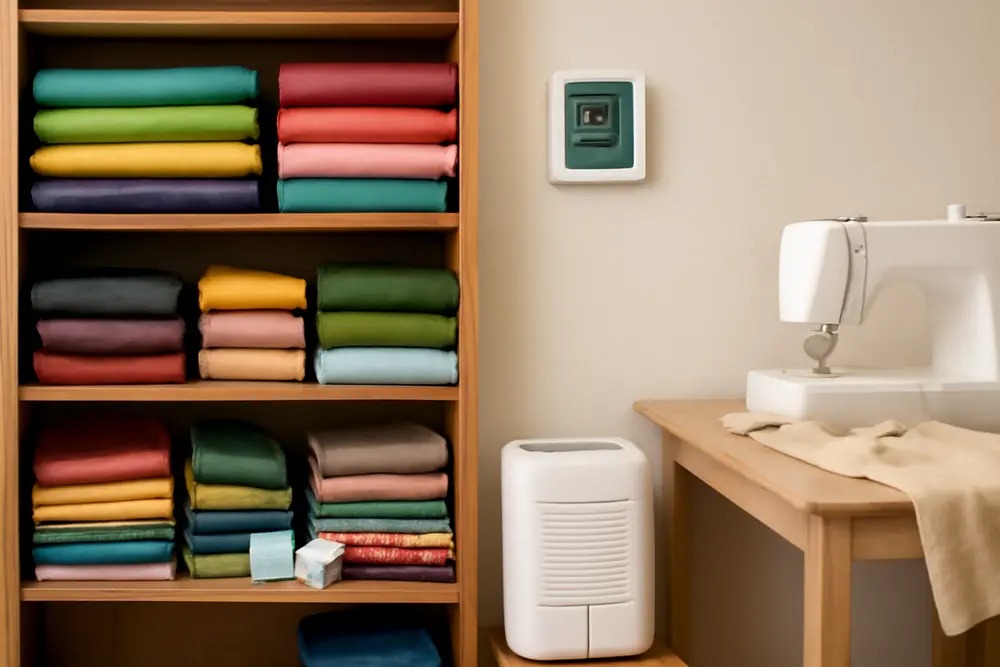
Your stash deserves oxygen, not a swamp. If you quilt, sew, or collect fabric like it’s currency, the fastest way to ruin that investment is to let humidity squat in your studio. As the mold inspector who gets called after someone finds their heirloom quilt smelling like the gym bag from 9th grade, I’m here to keep your cotton crisp, your batting fluffy, and your machines mold-free with simple targets, airflow tricks, and smart storage that breathes.
What RH Should You Aim For?
Sewing rooms and fabric storage stay happiest between 30 to 50 percent relative humidity, with day-to-day targets at 45 to 50 percent. That range keeps mold from getting traction while still being comfortable for humans and machines. In cold weather, run lower at 30 to 40 percent to avoid window sweat and condensation on exterior walls that can soak nearby fabric. These targets mirror what works in basements and crawl spaces too, where moisture loves to party. Source nerds can peek at the ranges used across homes and basements here: ideal indoor humidity and the colder-month tweak here: winter RH settings.
Dehumidifiers And Fans That Work
Set a dehumidifier with a built-in humidistat to 45 percent and let it hold the line. If you sew in a basement or a damp spare room, choose a unit with a continuous drain so you are not babysitting buckets. Put it where air moves freely, not crammed behind a shelving fortress. When you iron, steam, or dry pre-washed yardage indoors, you are spiking humidity. Counter it with airflow and exhaust. Aim for 4 to 8 air changes per hour during heavy moisture loads, crack a window if weather allows, run a fan that actually pushes air across the room, and give that moist air an exit path with a slightly undercut door or a transfer grille. If you dry fabric indoors often, borrow placement tips from indoor drying setups here: drying rack placement and from ventless dryer makeup air here: makeup air basics. Basement sizing help lives here: dehumidifier sizing.
Breathable Storage That Works
Plastic bins are fine for Lego, not always for fabric. If the contents are even a little damp, a sealed bin is a mold terrarium. Reach for breathable fabric storage like cotton or mesh bags, open shelving, and slatted racks. If you insist on sealed containers for dust protection, dry everything fully first, add an indicating desiccant pack, and leave a small vent or cracked lid so moisture is not trapped. Keep all fabric and batting off the floor and a few inches away from exterior or concrete walls to dodge condensation zones. Think of it as giving your stash room to breathe. For a gear-storage parallel that translates perfectly to textiles, see the breathable approach here: breathable gear storage.
Steam, Ironing, And Laundry Smarts
Steam adds water to the room, not just polish to seams. Ventilate during and 15 to 30 minutes after pressing sessions. Park drying racks away from cold glass or chilly walls and run a fan across the fabric, not at the ceiling. Do not press-dry damp stacks and shove them into a tote. Let them cool and dry completely before folding. If you are storing anything that was recently steamed, leave it out overnight. You are not just fighting mold on the fabric surface. You are also preventing moisture from soaking shelving and walls. For condensation control around storage zones, these tips translate cleanly: condensation-proof storage.
Basement And Closet Strategies
Basement studios are basically mold’s home court, so stack the odds. Insulate exterior walls, seal or control vapor at the slab, choose moisture-tolerant finishes, and use a dehumidifier with a drain line running to a sink or condensate pump. Keep shelving off cold walls, avoid carpet over bare concrete, and leave aisles so air can travel. In closets, skip wall-to-wall stuffed bins. Use ventilated shelving, do not push totes tight against exterior corners, and rotate doors open regularly so you do not create a stale microclimate. More on finishing choices and drainage-friendly setups here: basement humidity control.
Machine Cases Need Air Too
Hard cases and tight covers protect from dust but can trap humidity. Store machines on open shelving with the cover draped loosely or the case slightly cracked. Pop in an indicating silica gel canister and swap or regenerate it when the color changes. Before long-term storage, run the dehumidifier to target RH, remove lint and thread nests that can hold moisture, and give the case a quick airing. The same logic saves cameras and lenses and it applies well to sewing machines and metal tools: gear storage humidity hacks.
Daily Checks And Quick Fixes
Park a digital hygrometer near your fabric wall, another near your coolest wall or window, and one in any closet that holds the precious yardage. Track RH by season and set reminders to glance at the numbers when the weather swings. If you see window sweat or your room smells like vintage basement, act now: drop RH, increase airflow, and separate anything that feels damp. An aquarium room playbook works here too because moisture behaves the same way in small studios: monitoring and control. For window-sill drip lines and cold corners, wipe dry and adjust RH quickly to avoid the classic mold starter kit: stop window condensation.
Uh Oh, Found Musty Spots?
Do a quick triage. If fabric smells musty but shows no visible growth, aerate outside on a dry, breezy day, then launder hot if the fiber allows with oxygen bleach or borax. Dry completely before re-shelving. If you see specks or patches, HEPA-vacuum outside to lift spores, then launder. Skip chlorine bleach on wool or silk. If a quilt or batting is heavily colonized or the smell survives washing, it may be safer to retire it. Clean shelves with a mild detergent solution, dry them fast, and correct the source conditions. Porous foams and felts act like sponges, so be quick with humidity and airflow. For how porous materials trap moisture and how to avoid it, the parallels here help: porous surface tips. If your room keeps hitting 55 to 60 percent RH or higher for days, or you see growth returning, that is a job for professional inspection and testing before your stash turns into a science experiment.
Quick Reference Targets
• Everyday sewing room humidity control: 45 to 50 percent RH
• Winter cold-snap target: 30 to 40 percent RH
• Airflow while ironing or drying: strong cross-breeze, 4 to 8 ACH if you can manage it
• Storage style: breathable fabric storage first, sealed only when perfectly dry with desiccant
FAQ
Can I Use Plastic Bins If I Add Desiccants?
Yes, if the fabrics are bone-dry going in, you use a decent amount of indicating desiccant, and you give the bin a tiny vent so moisture is not trapped. If there is any doubt, choose breathable bags or open shelving.
What If My Basement Still Creeps Above 50 Percent RH?
Size up your dehumidifier, add continuous drainage, and check for hidden moisture sources like uninsulated cold walls or slab vapor. Improve airflow routes out of the room. Here is a solid sizing and setup guide: basement dehumidifier sizing.
How Close Can Shelves Be To Exterior Walls?
Leave at least a couple of inches for airflow and avoid cramming fabric tight against cold surfaces. The goal is to prevent condensation zones where fabric can sip moisture in silence.